
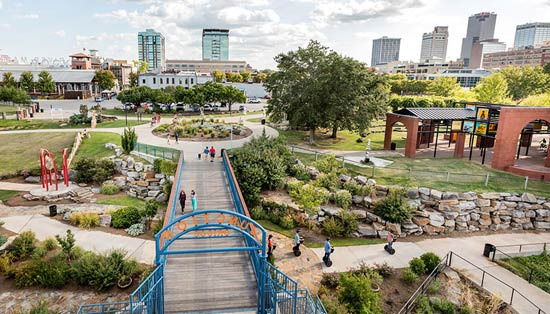
It's been a while since I moved to Little Rock, and sometimes friends ask me, 'What's it like there? Is it livable?'
It's not easy to give a short answer to that question, so I decided to organize my thoughts properly. This is the real picture of Little Rock from the perspective of an immigrant or someone who has moved from another state.
First, let's start with the clear advantages. The cost of living is noticeably low. Prices are about 13% lower than the national average, the median home price is around $220,000, and the average rent for a one-bedroom apartment is $953. For those who have lived in big cities, this is definitely a breath of fresh air. The burden of housing costs relative to income is much lower, which means more disposable income and an improved quality of life. Taxes are also relatively low, and the reality is that you can live in a much larger and better home for the same amount of money.
The healthcare infrastructure is stronger than expected, which is another advantage. Baptist Health (718 beds), CHI St. Vincent (600 beds), and UAMS Medical Center (535 beds) are all located in the city center, and UAMS has the only Level I trauma center in Arkansas. Arkansas Children's Hospital is also in Little Rock, providing peace of mind for families raising children in terms of healthcare access. Contrary to the preconceived notion that it's not a big city, the healthcare system is quite robust.
However, to be honest, there are some downsides as well. The most significant drawback is the small Korean community. Official statistics show that the Korean population is around 958, so there are far fewer Korean markets, restaurants, and churches compared to LA or Atlanta. There are a few Asian markets where you can find Korean ingredients, but there isn't a concentrated infrastructure like a 'Korean town.' For those who want to communicate in Korean or frequently eat home-cooked meals, this is an area that requires some adjustment.
Public transportation also has its limitations. There are CAT (Central Arkansas Transit Authority) bus routes, and the River Rail streetcar operates downtown, but living without a car is honestly challenging. Like most Southern cities in the U.S., it is designed around cars, so obtaining a driver's license and a vehicle is key to settling in quickly. And the summer heat is no joke. The average high temperature in July is 32.7 degrees Celsius, and the humidity makes it feel even hotter. Air conditioning costs take up a significant portion of summer expenses, and outdoor activities are limited. You also have to consider the potential for natural disasters like tornadoes.
It is true that there are statistically vulnerable areas in terms of safety. The overall crime rate is relatively high, so choosing where to live is important. However, there are definitely safe and pleasant neighborhoods like Hillcrest, Heights, and Chenal, so being thorough in your area selection when first settling in is crucial. This city has clear pros and cons, but what immigrants feel most immediately is that 'money goes a bit further here.' That extra cushion significantly reduces the burden during the initial settling period.
 NightMaker
 MacaronTroupe
 DJWashington








 Balancework |
 Make My Day |
 viroma |
 eatontown blog |
 Toaster Pizza Magic Show |
 US Home Buying Information Home Insurance |
 Esther 1983 |
 Arkansas Kim |
 productionblog |
  What can make money? |
  Oklahoma Hoya OK |
  prixon74 |
  Roman Pan |
  USALATU BLOG |
  Sunshine Blog |
  Minnesota Small Business |
  Strawberry Pancake Warrior |
  amolayo |
  korvon |
  Que Buena |
  virexo |
  silverpath |
  Komet Park |
  reliable |
  vexo90 |
  As Always Today |
  veltar87 |
  United States National Administrative Organization Stories |