
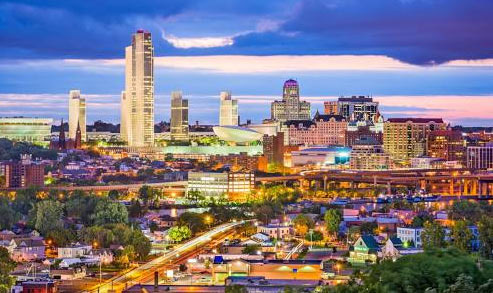
Albany is the capital of New York State, a historically and culturally significant city located in the northeastern United States. This city serves not only as a political and administrative center but also harmonizes art, education, and natural scenery. Let's take a closer look at Albany.
History
The history of Albany began in 1609 when Henry Hudson explored the area. At that time, this region was part of the Dutch colony, and in 1624 it officially developed into the commercial center of the Dutch colony. In 1664, when the British took control of the area from the Dutch, Albany established itself as an important port city. From the mid-18th century, it became part of New York State after the American Revolutionary War and was designated as the capital of New York State in 1797.
Population
Albany has a population of about 98,000, which is relatively small compared to other major cities outside of New York City. The city is home to many state government and related agencies, providing numerous public sector jobs, along with a focus on education, healthcare, and technology industries. The metropolitan area, including surrounding regions, has a larger population, with Albany at its center.
Average Income
The average household income in Albany is about $55,000, which is somewhat lower than the New York State average; however, due to the high number of people working in the public sector, it is a region where stable income can be expected. Additionally, Albany offers many opportunities in education and healthcare, with a high proportion of people engaged in these fields.
Climate
Albany has a temperate climate, with quite cold winters and significant snowfall. Summers are warm and humid, with average temperatures rising to around 80°F (27°C). In winter, temperatures often drop below 20°F (-6°C), with frequent snowfall and strong winds. Spring and fall feature mild temperatures and pleasant weather, making them suitable for outdoor activities.
Main Attractions in Albany
New York State Capitol: One of the most famous buildings in Albany, this is where the New York State Legislature is located. As a historic building, it is a tourist attraction in itself, with regular tours available. Architecturally impressive, it has played an important role in American history.
Empire State Plaza: A large public space located in the center of Albany, featuring many modern buildings and artworks. This area is also used as a center for political and social activities, attracting many tourists.
Albany Institute of History & Art: This museum offers various exhibitions and collections related to Albany's history and culture. It is an important site where art and history can be enjoyed together.
Washington Park: The main park in Albany, it blooms with flowers in spring and summer, serving as a beloved space for locals and tourists to relax. The park features beautiful ponds and walking paths, making it a great place to experience nature.
New York State Museum: This museum covers a wide range of topics related to New York State's history, natural history, and culture. Through various exhibitions and educational programs, it helps deepen understanding of New York State.
Thacher State Park: Located near Albany, this nature reserve offers various outdoor activities such as hiking, camping, and wildlife observation. Particularly, hiking provides beautiful views of the Hudson River Valley.
Albany is the political center of New York State, a city with an important historical background. Although it is a small city, it offers a rich culture, historical heritage, and many jobs centered around education and public institutions, providing a stable living environment. Additionally, its proximity to nature makes it a great city to live in, offering a relaxed atmosphere and a different charm compared to New York City.







 Gold Bar |
 Day by day |
 Dolly |

 laro90 |
  MEDBIO American Doctor Blog |
  SWAT TEAM BLK |
  DREAM BIG |
  frostbite |
  330 Forever My Love |
  El Dorado |
  dralix58 |
  Gorama Round |
  Skydiving |
  dreamport |
  Yellow Snowman |
  Toaster Pizza Magic Show |
  velvetnom |
  Anytime Journey |
  Mrs. Duluth |
  jaxter |
  Atlanta Mama |
  Baguette Blog |
  Tan Sol |