


Living in Hawaii, I sometimes think about this.
When you go out to Waikiki, it's crowded with people, and hotels and restaurants are filled with tourists.
But what would happen if these people suddenly decreased?
At first, you might think, "Well, the roads will be less congested, and the wait times at restaurants will be shorter," right? But the economy isn't that simple.
Hawaii is a region that heavily relies on tourism.
Since tourism-related economic activities make up a significant portion of Hawaii's economy, a drop in tourists doesn't just mean a few hotels will be less busy.
If hotel rooms are vacant, hotel staff hours will be reduced, and rental car companies will have excess vehicles.
If restaurant customers decrease, servers and kitchen staff will have fewer shifts, and sales at souvenir shops and shopping centers will drop.
Taxis, Uber, tour buses, travel agencies, and cleaning services will also be affected.
So, it's like a domino effect. Once one falls, you realize, "Oh my, it affects this too?"
In 2025, the number of visitors to Hawaii was about 9.64 million. Although it was a slight decrease from the previous year, the money spent by tourists increased to about $21.7 billion.
So, it's not a situation where we should panic and say, "Hawaii's tourism industry is in big trouble." Even if the number of people has decreased, their spending has increased.
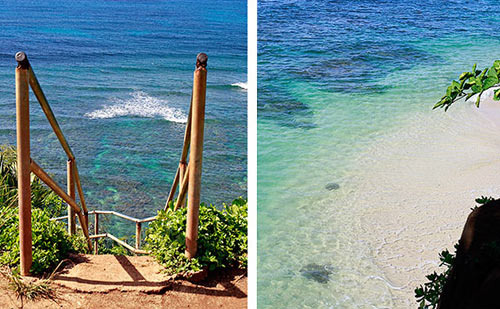 .
.
However, what's frightening is past experience. During the 2008 financial crisis and recession, Hawaii faced a significant drop in tourists.
It wasn't just the tourism industry that struggled; the entire local employment and consumption shrank.
An island economy like Hawaii's finds it hard to avoid shocks compared to other states. You can't just drive to a neighboring state to find a new market.
The pandemic made this even clearer. When flights stopped and tourists disappeared, the usually bustling Waikiki became eerily quiet.
Even those who complained about tourists realized it then.
"Oh no, if these people don't come, we're in big trouble too."
In my view, the biggest challenge for Hawaii's economy is this. It's not about abandoning the tourism industry, but rather not relying too heavily on it.
We also need to steadily develop industries like IT, research and development, healthcare, education, agriculture, and renewable energy. Just like you back up important data on your computer at home.
But if you store the entire local economy on just one hard drive called tourism, wouldn't that be risky?
There's no need to worry immediately just because the number of tourists has slightly decreased.
Hawaii is still a world-class tourist destination, and it's a place people want to visit at least once in their lifetime.
However, believing that tourists will always be abundant is also dangerous.
In Hawaii, when there are many tourists, people say, "Oh no, there are too many people," and when there are few tourists, they say, "Oh no, business is bad." It's quite ironic when you think about it.
Ultimately, Hawaii's future depends on how well we can create an economy that can withstand a temporary decrease in tourists.
 SoulWalker
 BlueStone89






 Smile Face |
 Helpful Life Stories |
 Casa Mia |
 Study Abroad Life Know-How Tips |
 pravix22 |
  HAWAII Korean Church News |
 Hawaii Tourist Information |


 Public School Education System |
  La Bean |
  American History This and That |
  Monte Sori |
  U donn |
  Sarah's Blog |
  Holy Cow |
  monster |
  houston mama |
  Reggae Party |
  Thou Thou |
  Tennessee Land |
  custardnew |
  Chimhanbang Korea ACU |
  See South Carolina |
  dorex |
  Taek Jun |
  Choi Cho |
  Anova US Beauty Information |
  whiskerbread |
  Yo Lock Me Up |