
I would like to talk about the history of Hawaii.
Hawaii is often thought of simply as a vacation spot, but it actually has a very interesting history and multicultural background.
In particular, the population changes in Hawaii are one of the key elements that show how this island has come to be as it is today.
If you are interested in Hawaii, exploring the history and culture of its people reveals that Hawaii is already one big story.
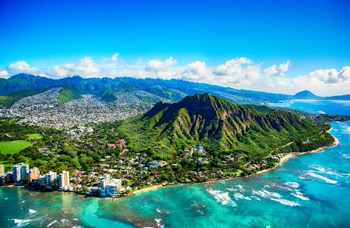
About 1,500 years ago, Polynesians arrived here by canoe and settled down. They created a unique culture in harmony with nature.
However, this peaceful period faced significant changes with the arrival of Europeans. In particular, after James Cook discovered the island in 1778, contact with the outside world began, leading to the spread of diseases that drastically reduced the native population.
From the late 19th century, Hawaii's sugar plantations became the economic center, requiring a large labor force, which attracted people from around the world to Hawaii.
- Chinese: The first immigrants, who began working on sugar plantations from the 1850s.
- Japanese: Large-scale immigration began in the 1880s, significantly impacting Hawaiian agriculture.
- Koreans: Koreans started settling in Hawaii from 1903, initially coming as laborers and now forming a strong Korean community.
- Filipinos: Many Filipino workers began arriving from the 1910s.
As people from different countries lived together, a multicultural society naturally formed.
Personally, I believe the charm of Hawaii lies in this diversity. Today, Hawaii is a multicultural society that is hard to find anywhere else in the world, and it is special not just because of ethnic mixing, but because people respect each other's cultures and coexist.
The current major composition of Hawaii's population is as follows: Asian: about 37%, Native Hawaiians and mixed race: about 26%, White: about 25%, other minorities: about 12%...
Just looking at these figures shows how many diverse people live here.
As of 2020, Hawaii's total population is about 1.4 million. Most of them are concentrated on the island of Oahu. Cities like Honolulu are bustling with people, while other islands have a much quieter and more relaxed atmosphere.
Tourism still plays a major role in Hawaii's economy, and I think this multicultural background adds to Hawaii's charm. Although English and Hawaiian are the official languages, it is also interesting that people often use a unique language called Pidgin English.
Looking at the population history of Hawaii, we can see that it is not just the beautiful nature but also the stories of diverse people that make this island special. People from different backgrounds have come together to create a unique culture, which seems to be the true charm of Hawaii.






 victoria 68 |
 Hawaii Tourist Information |

 TEX MEX STAR |
  HAWAII Korean Church News |
  laro90 |
  MEDBIO American Doctor Blog |
  SWAT TEAM BLK |
  DREAM BIG |
  frostbite |
  330 Forever My Love |
  El Dorado |
  dralix58 |
  Gorama Round |
  Skydiving |
  dreamport |
  Yellow Snowman |
  Toaster Pizza Magic Show |
  velvetnom |
  Anytime Journey |
  Mrs. Duluth |
  jaxter |
  Atlanta Mama |
  Baguette Blog |
  Tan Sol |