


Having lived in LA for over 20 years, I sometimes find English to be quite peculiar.
There are English words that seem to have the same meaning, but if used incorrectly, they can quickly change the atmosphere.
Recently, while browsing baby clothes, I saw something funny. There was a picture of a book on the front with the words "READ TO ME, YOU PEASANT" written on it.
Literally translated, it means "Read to me, you lowly one."
The shirt is designed to be humorous, portraying a baby treating their parents as peasants.
But do people actually use the term Peasant in America these days?
In front of a Peasant, not many would have the guts to call someone a Peasant.
And when you think about it, there are surprisingly many words in America that describe people as poor, uneducated, or unsophisticated.
Poor, broke, redneck, hillbilly, white trash, trailer trash, peasant....
They may seem similar, but when you look closely, they are not the same at all.
The term "Poor" is closer to just meaning lacking money.
Low-income is much more formal. When talking about families that are struggling, saying low-income household carries no emotional weight.
Broke is different. Saying "I'm broke" doesn't necessarily mean one comes from a poor family.
It can refer to not having money after paying this month's credit card bill or simply not having cash at the moment. Even someone earning over $300,000 a year might joke on a Monday morning, "I'm broke," just like a celebrity making $2 million a year could say, "I'm broke."
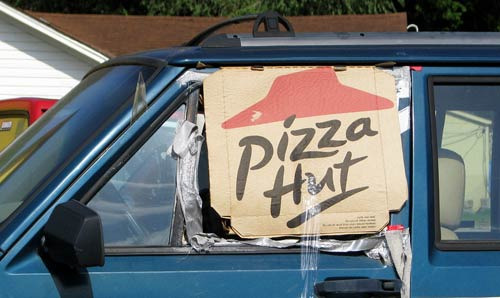
It carries a sense of a sad story of losing a job, running out of money, and facing tough circumstances.
However, Working class simply means the labor class and does not imply that someone is poor.
Blue-collar is similar. In LA, electricians, plumbers, and construction workers can earn significantly more than many office jobs.
So using blue-collar instead of poor would be incorrect.
The term that confused me the most was redneck.
When reading translated texts in Korean, it is sometimes described as a poor white person from rural America, but the actual nuance is much more complex.
It is associated with images of the American South or rural areas, pickup trucks, hunting, fishing, and country culture.
Even wealthy individuals might jokingly say, "I'm a redneck."
The issue is that what someone calls themselves is very different from what others might label them.
Hillbilly is similar. It has a strong connotation of being unsophisticated and is particularly linked to stereotypes about the Appalachian region.
Calling someone that among friends is very different from using it for a complete stranger.
And when it comes to white trash or trailer trash, it makes me think that there's no need to learn these terms in practical English.
They not only imply poverty but also carry judgments about being uncultured and low-class, making them quite insulting.
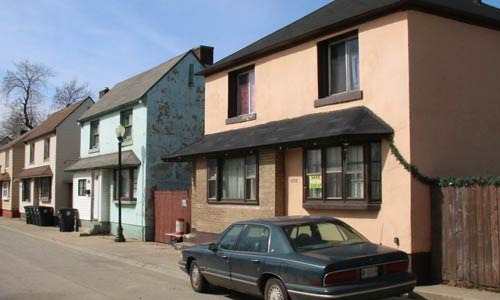
Peasant is similar.
Originally, it referred to farmers or serfs, a historical term. In a book about medieval Europe, it would be perfectly fine.
However, in 2026, if you call a normal person a peasant in LA, very few would interpret it as referring to an agricultural worker.
It would be taken as an exaggerated mockery, like saying, "You lowly one," or "How dare you, commoner?"
That's why the phrase "READ TO ME, YOU PEASANT" on the baby clothes is funny.
It depicts a clueless baby ordering their mom and dad around, saying, "Read to me, you commoner."
After living in America for 15 years, I've realized that being good at English doesn't necessarily mean knowing a lot of difficult words.
Rather, it's about knowing when to use a simple word in the right context.
If you need to talk about a poor family, you can just say low-income family.
If you're referring to ordinary working people, terms like working-class or ordinary working people sound natural.
If you're simply out of money, you can say you're broke.
However, using words like redneck, hillbilly, or peasant carries judgments beyond just income. White trash or trailer trash are even more loaded terms.
Interestingly, Korean has similar nuances.
Terms like "서민" (common people), "빈곤층" (poor class), "가난한 사람" (poor person), "촌사람" (rural person), and "상것" (commoner) can be somewhat interchangeable in a dictionary, but they cannot be used interchangeably in conversation.
English is the same.
Ultimately, the longer you live in America, the more you learn about the atmosphere of words rather than just their meanings.
So it's good to know these terms well. It makes understanding English much easier and helps you grasp American humor.
Especially when discussing someone else's background or class, choosing the right words makes your English sound much more cultured.
 StarlitTalk
 TomSawyer
 KingMaga






 pravix22 |
 American Hardcore Band |
 Rice Shop Uncle BLOG |
 Baguette Blog |
 solvix18 |
 Victory 1988 |
 There Are Such Things in the World |
 Anjollinya Blog |
 novapixel |
 Sunny's Travel in America |
  AUTO OK |
  aaoaa |
  Florida King |
  Encyclopedia of New York and Surrounding Areas |
  Study Abroad Life Know-How Tips |
  Conflite Teacher |
  Silent Sea |
  Montgomery Mom |
  Franco Family |
  coloradoman |
  lumora |
  Valley Bang |
  Cohesive Kong |
  werehere |
  CA Real Estate |
  problemo |
  galaxy88 |
  breezelove |
  Minnesota Sonata N |