
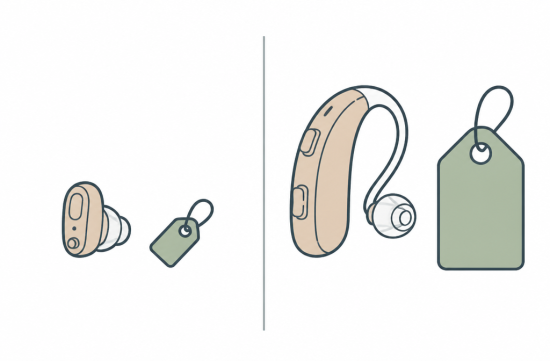
These days, when you walk through stores or pharmacies, you can noticeably see an increase in the hearing aid section.
A while ago, a friend checked the prices of hearing aids and was shocked by how high they were.
Prescription hearing aids, which are fitted through a hospital or audiologist, typically cost between $2,500 and $6,000 for a pair.
In fact, there are studies showing that consumers, even with insurance coverage, paid an average of about $2,592.
This amount includes not only the cost of the hearing aids themselves but also the fees for audiologist assessments, custom adjustments, and aftercare, making it quite a financial burden.
However, since October 2022, the situation has completely changed.
The U.S. Food and Drug Administration (FDA) has changed regulations to allow adults with mild to moderate hearing loss to purchase hearing aids without a prescription or a visit to an audiologist.
This is what we now refer to as OTC hearing aids, or over-the-counter hearing aids.
Looking at the prices, it's easy to understand why many people are turning to this option.
OTC hearing aids typically range from $200 to $1,500, with more feature-rich products usually priced between $800 and $1,500.
Even comparing the lowest price of prescription hearing aids to the highest price of OTC options shows a drop of more than half, so knowing this can save you both money and time.
The FDA estimates that this system could save consumers up to $2,876 per pair.
Another significant change is that these can now be easily purchased at pharmacy chains, large retailers, and online shopping sites.
The purchasing process has also changed significantly from before.
Most products now allow you to conduct a self-hearing test via a smartphone app, which adjusts the device's sound settings accordingly.
Many models also connect directly via Bluetooth for phone calls or music, making them quite different from the old image of hearing aids.
Some online retailers offer a trial period where you can use the product for a certain time and return it if it doesn't fit well, so it's a good idea to check the return policy before purchasing.
Additionally, there are more rechargeable models available now, which can save you money on batteries in the long run.
However, there is one important point to clarify.
There are cheap sound amplifiers on the market priced at $50 or $100 that are sold as hearing aids, but these are fundamentally different products.
These products are called PSAPs, or personal sound amplification products, designed for people with normal hearing to amplify sounds in specific situations, like hearing birds or during hunting.
They are not medical devices for those diagnosed with hearing loss, as they do not adjust sounds by frequency and simply amplify all sounds indiscriminately.
It's essential to check whether the packaging or online product description indicates that it is a legitimate OTC hearing aid recognized by the FDA or just an amplifier.
However, it's not always the case that the cheaper option is better.
OTC hearing aids require users to adjust the sound settings themselves via a smartphone app, which can be a bit challenging, and they are not suitable for those with severe hearing loss.
If you have elderly family members who are not very comfortable with smartphone operations, it would be much easier for children or family members to assist them with the initial setup.
Most insurance plans, including Medicare, do not cover hearing aid costs, so it's good to know that this applies equally to both prescription and OTC options.
I would recommend starting with a self-hearing test online or at a pharmacy, and if unsure, visiting a hospital first.
Given the significant cost difference, if a prescription is not absolutely necessary, it makes sense to explore OTC options first.
Ultimately, the choice depends on your hearing condition, but considering your budget, there seems to be no reason not to check it out in advance.
 AlpacaScarf





 Idaho's Sumi's House |
 holy cheese |
 Michigan Enthusiast |
 Anna Life |
 JESIKYEOALBA BLOG |
 American Golf Course Travelogue |
 Popular Song Exciting Song |
 Yo Lock Me Up |
 garlic bread |
 Weekend Movie Blog |
  Haha and Bomi Blog |
  glenview 89 |
  Valley Hong |
  novapixel |
  Mr. Midwest America |
  wildfire |
  legalway |
  postcard |
  cheesecake07 |
  My Miami Stories |
  windylotus |
  Mia Flori |
  velaro29 |
  velaro |
  foxtrot83 |
  moname |
  mapleline |
  US Legal Consultation on Trials |
  UNI Lover |