
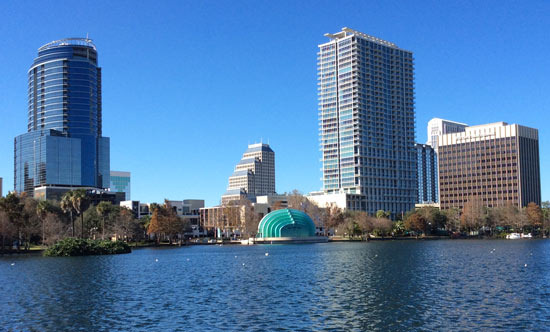
Living in Orlando, you may receive several calls a day from unknown numbers.
Here's a summary of which area codes are local to Orlando, which numbers to be cautious of, and basic information about the phone system in Orlando.
The primary area code for Orlando is 407. It is used throughout the Central Florida metropolitan area, including Orange County, Seminole County, and Osceola County, and most phone numbers related to public agencies, local businesses, hospitals, and schools in Orlando start with 407. The Orange County Sheriff's Office, Orlando City Hall, and local hospitals all use 407 numbers.
Since 2001, the 689 area code has been added as an overlay. This was implemented as the 407 area became saturated, allowing for the assignment of 689 in the same region. Those with a 689 number are also local to Orlando, and when calling each other, they must dial all 10 digits, including the area code. Numbers established before the overlay retain the 407 code, while many of the new numbers issued afterward have received 689.
There are useful number patterns to distinguish in everyday life. Numbers starting with 800, 888, 877, 866, 855, 844, and 833 are toll-free. These are commonly used by financial institutions, insurance companies, federal government agencies, and large corporations. Numbers starting with 900 are premium numbers that incur charges when connected, and many are associated with scams, so it's better not to answer them. 211 is the community service information number, 311 is for city administrative services, 411 is for directory assistance, 511 is for traffic information, and 711 is for hearing-impaired relay services.
There are specific types of phone scams to be particularly cautious of in the Orlando area. The first is IRS impersonation calls. They threaten that "you could be arrested immediately for unpaid taxes" and demand payment via gift cards or wire transfers. The IRS does not demand immediate payment over the phone and always contacts you first by mail. The second is scams related to social security number theft. They scare you by saying, "Your SSN has been used in a crime" and then ask for personal information. The third, due to the tourist nature of the city, is the prevalence of prize scams like "winning Disney tickets."
There have also been consistent reports of Korean-language scam calls targeting the Korean community. These often impersonate the Korean National Police Agency or the Financial Supervisory Service, or use voice phishing tactics claiming a family member has been in an accident. Since these calls come from U.S. numbers, caution is necessary even if they are not international calls. If you receive a call from an unknown number claiming to be a public agency and asking for account information or money transfers in Korean, it's best to hang up and verify directly with the official number of the agency.
Spam call blocking apps like Nomorobo, Hiya, and Robokiller are available for both iOS and Android. Carriers also offer basic spam blocking services for free or at a low cost, such as AT&T's Call Protect, T-Mobile's Scam Shield, and Verizon's Call Filter.
Registering with the FTC's National Do Not Call Registry can help reduce telemarketing calls, but it's important to note that scam calls and political calls are not restricted by this list.
 OldLocustRmn




 Victory 1988 |
 Smile Face |
 Helpful Life Stories |
 Casa Mia |
 Study Abroad Life Know-How Tips |
 You Only Live Once |
 Sunshine Blog |

 Lando Mao |
  savannah choi |
  Successful Manager Kim's Team |
  crystalo |
  Canvas Pro Blog |
  Time Management Enthusiast |
  Cap Com |
  nixxon |
  kevin Kim |
  beerdreamer |
  Kims Spring |
  White bunny |
  Kansas City Representative Singer |
  shadow 007 |
  sun walker |
  Choco Choco Star |
  midnight blue |
  honeypot |
  summer |
  adventure77 |
  flexible |