
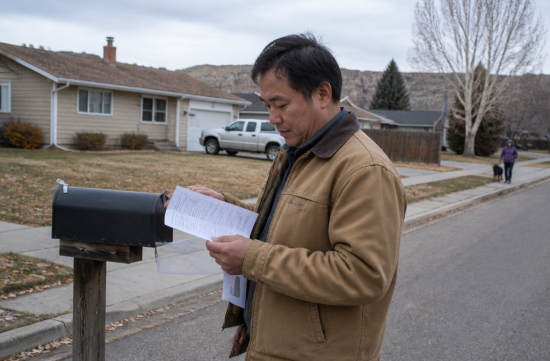
In November, discussions among homeowners in Yellowstone County about this year's property tax bills have increased significantly. There are reports of similar homes in the same neighborhood having vastly different tax amounts.
When tracing the cause, it mostly boils down to one thing: whether or not they registered for the Montana homestead exemption rate that takes effect in 2026.
First, let's clarify the system. The residential property tax structure changed with HB 231 and SB 542, which passed the state legislature in 2025.
Previously, a flat tax rate of 1.35% applied to residential properties. Starting in 2026, a tiered progressive tax rate will apply to primary residences.
According to the Montana Department of Revenue, the tiers are as follows: for market values up to $378,000, a rate of 0.76% applies.
From $378,001 to $756,000, the rate is 0.90%. For values up to $1.51 million, the rate is 1.10%, and above that, it is 1.90%.
The important point here is that a single tax rate does not apply to the entire home. The value is divided into tiers, and each tier is taxed at its respective rate.
Conversely, homes not registered as primary residences are treated differently. The Department of Revenue FAQ indicates that unregistered homes will be taxed at a flat rate of 1.9% in 2026.
A difference of 0.76% and 1.9% is more than double. This explains why some homeowners have seen a significant increase in their tax bills.
In fact, the county treasurer stated in a local broadcast interview that 56% of mobile homes in the county were affected by the tax increase. Some have reported bills nearly three times their usual amounts.
This is not something to dismiss as a simple administrative error. The cost of missing a single registration is quite substantial.
So, who was automatically registered and who needed to apply? If you received a property tax rebate in 2025 and had no changes in ownership or moved since then, you were automatically registered.
On the other hand, if you did not apply for the rebate, moved, or purchased or built a new home, you needed to apply yourself. The application portal was Homestead.mt.gov.
The application period for 2026 opened on December 1, 2025. The original deadline was March 1, but due to a surge in last-minute applications causing portal errors, it was extended to March 20.
According to state government announcements, as of the end of March, approximately 260,000 primary residences and about 36,000 long-term rentals were registered for the reduced tax rate. This suggests that many homes were likely missed.
Let's summarize the eligibility criteria. You must own the home and live in it as your primary residence for at least 7 months of the year.
The 7 months do not need to be consecutive. Short absences due to travel or hospital stays typically do not pose a problem.
You must not have any property tax delinquencies, and the homestead rate can only be applied to one home. You cannot bundle this rate with a second home.
If you have already received a high tax bill, there are still options. If you qualify but did not register, you can request a refund from the Department of Revenue.
According to the Department of Revenue, refund requests for 2026 can be made from January 1 to May 31, 2027. State law allows for refunds for only one year's worth of taxes.
However, the process is inconvenient. You must first pay the full amount of this year's taxes and then request the refund, so immediate cash flow relief is difficult.
Montana property taxes are typically paid in two installments, at the end of November and the end of May the following year. Be sure to check the exact deadlines on your bill and with the county treasurer's office.
You should also start preparing for 2027 now. The application period for 2027 opened on May 4, 2026, and will close on March 1, 2027.
The Department of Revenue FAQ states that the homestead exemption rate expires at the end of the year. If you continue to live in the same home, no additional action is needed, so it's important to check where you stand.
You can verify your registration status using the registration confirmation tool on the state government service site with your property geocode. For phone inquiries, call 406-444-6900.
If you are renting out properties, you also need to look into long-term rental exemptions. To qualify, you must rent to tenants for at least 28 days at a time and for more than 7 months in a year.
Recently, it seems that many property owners with investment homes are confusing this with primary residence applications. The applications for primary residence and rental are separate.
Additionally, there have been reports of a lawsuit challenging the constitutionality of SB 542. Depending on the ruling, the content may change, so it's important to keep an eye on announcements.
In my opinion, the intent of the system is to alleviate the burden on primary residents, so the direction is correct. What's unfortunate is that the guidance was insufficient, leading to many who are not familiar with English official documents missing out.
If I were in your position, I would check the tax rate as soon as I received the bill. If it shows 1.9%, it would be wise to prepare for both the refund request in January and the registration for 2027 simultaneously.
 OceanValley94
 Cinci







 B.I.G. Victor |

 Amber H |
 uplifted |

 Dr. Kelso |

 silents |
 tarvion |

 soonee |

 valtri |


 Childbirth Drabble Blog |
 strawberry |
 US Regional Information Local News |
 USA Business News |
 Blondee |
 E whisper |
 Potato House |
 freshmint |
 Ansaso |
 Golado |
 babybay |
 honeycom |
 French Macarons |
 Exploring American Life Information |
 Sunshine Blog |
 Community Cross |
 Sayonara H |
 What can make money? |
 Information Search LifeMAN |
 morvex37 |
 neontrail |