

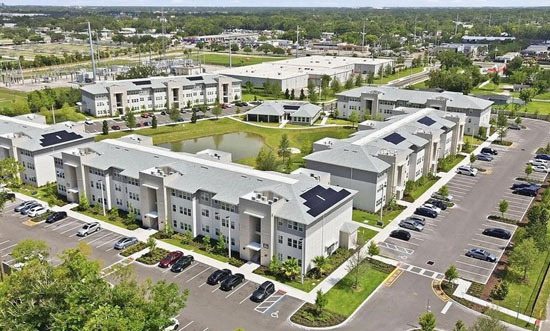
Have you ever suddenly thought while looking for a home in Orlando,
'How much do people in this neighborhood earn? Can I really live here on my income?'
According to the Census ACS 2023, the median household income in Orlando, FL is about $60,000.
This is about $18,500 lower than the national median income of $78,538, but once you understand the unique economic structure of this city, the numbers tell a different story.
What comes to mind when you think of Orlando? Disney World, Universal Studios, SeaWorld—it's the largest concentration of theme parks in the world.
This directly relates to income statistics. The tourism, leisure, hotel, and restaurant sectors are key to Orlando's job market, but they also have a lot of low-wage, part-time jobs.
Theme park cast members, hotel housekeepers, restaurant servers—many of these workers earn between $30,000 and $45,000 annually. The large presence of low-wage employment contributes to the median income being below the national average.
However, not all of Orlando is a low-wage city. The healthcare sector is surprisingly strong. Major healthcare systems like AdventHealth and Orlando Health employ tens of thousands of healthcare professionals, and their incomes are likely well above the median income.
Additionally, the simulation and defense technology cluster is noteworthy, with defense companies like Lockheed Martin, Raytheon, and L3Harris having significant facilities in Orlando. You can think of it as a city with a wide income distribution.
You might be concerned when looking at housing prices. As of 2024, the median price for single-family homes in Orlando is around $350,000 to $420,000. Applying the appropriate housing price ratio (3-4 times) based on the median income of $60,000 gives a range of $180,000 to $240,000, but the current market is much higher. The demand from high-income remote workers who moved to Florida after the pandemic has significantly driven up home prices.
Especially households that have moved from New York and California have a very high purchasing power relative to local income, pushing market prices upward.
Still, one of Florida's biggest advantages applies to Orlando as well: there is no state income tax. For someone earning $60,000, this can result in thousands of dollars in tax savings compared to other states with income tax. In terms of real disposable income, $60,000 could equate to $64,000 to $67,000 in other states. This is a point that can be easily overlooked when making simple comparisons based solely on numbers.
Let's also take a look at the rental market. The average rent for a one-bedroom in Orlando is about $1,400 to $1,800 per month as of 2024.
Dividing the median income of $60,000 by 12 months gives a monthly income of $5,000, meaning rent accounts for about 28% to 36% of income. This is around the reasonable benchmark of 30%, so compared to Miami or Tampa, it can be seen as a more manageable situation. Of course, if you have children or consider vehicle maintenance costs, the margin may not be very large.
Orlando has a complex income structure behind its image as a 'theme park city.'
The median household income of $60,000 is a result of a mix of low-wage employment in tourism services and high-income professional jobs in healthcare and defense. If you're wondering whether life in this city is feasible, the type of industry you work in and where you live will likely be much more important variables than the income statistics. It might be a good idea to start with those two questions to see if Orlando is the right city for you.
 NBABall
 EvanTuna






 Victory 1988 |
 Smile Face |
 Helpful Life Stories |
 Casa Mia |
 Study Abroad Life Know-How Tips |
 You Only Live Once |
 Sunshine Blog |

 Lando Mao |
  savannah choi |
  Successful Manager Kim's Team |
  crystalo |
  Canvas Pro Blog |
  Time Management Enthusiast |
  Cap Com |
  nixxon |
  kevin Kim |
  beerdreamer |
  Kims Spring |
  White bunny |
  Kansas City Representative Singer |
  shadow 007 |
  sun walker |
  Choco Choco Star |
  midnight blue |
  honeypot |
  summer |
  adventure77 |
  flexible |