

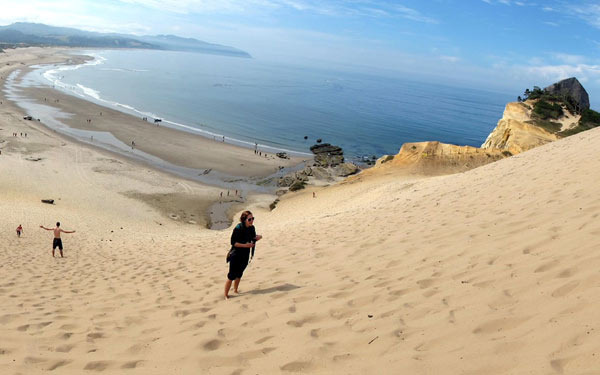
As you travel along the Oregon coastline, a landscape that is hard to find elsewhere suddenly appears.
Sand pushed up by the wind forms hills dozens of meters high, and a desert-like terrain stands side by side with the ocean.
This is the Oregon Dunes. Known as the place that inspired the famous sci-fi novel Dune, it is a unique landscape created by the mixing of wind, water, and forest.
The Oregon Dunes is a vast area of sand dunes formed by sand eroded from the Cascade Mountains millions of years ago, which was carried by rivers to the coast.
The winds blowing from the Pacific move this sand inland, creating hills, while some sand returns to the ocean, constantly changing shape. In this process, forests, wetlands, and coastal dunes overlap, forming a unique ecological and geological structure.
The Oregon Dunes is not just a random collection of hills made by wind piling up sand. It is the result of sand eroded from mountains flowing to the coast along rivers over millions of years, and then being pushed inland by the wind.
From the ocean side, it looks as if the beach has been pushed endlessly inland, and from the forest side, it gives the impression that the sand is encroaching upon the forest. The landscape, which is uncertain whose land it is between the ocean and the forest, adds to the mystery of this place.
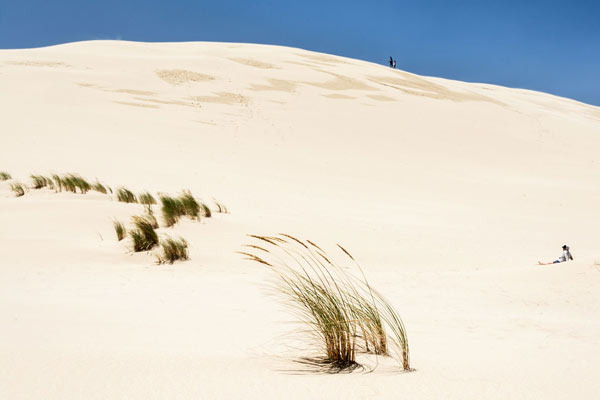
At first glance, the Oregon Dunes may look like a vast desert, but this area is not actually a desert. It is very close to the Pacific Ocean, strongly influenced by sea breezes and fog, and tends to have high humidity throughout the year. It also rains frequently, and a fairly moist environment is maintained in winter.
It is not a dry, hot climate like a desert, but a sandy terrain formed in a temperate maritime climate. Due to the moist air and frequent rain, the sand hardens or plants easily take root, allowing forests and dunes to coexist, which is rare in deserts. In other words, this area is a unique combination of a maritime climate and desert-like terrain.
These sand dunes were once a nuisance for local residents. Strong winds would blow sand over roads and railways, encroaching upon homes and farmland. To prevent this, people planted beach grass, an invasive species, to stabilize the sand, which effectively kept the sand from moving.
However, as a result, the ecosystem began to change, and some of the sand dunes disappeared. The human attempts to manage nature led to unexpected changes. The natural landscape created by this intertwined process is what we see today in the Oregon Dunes.
When the author of the novel DUNE, Frank Herbert, visited this area, he focused on this 'land of moving sand.' The hills that constantly change shape due to the wind, the immense power of the sand that could swallow cities, and the efforts of humans to stop it.
These elements led to the setting of the desert planet Arrakis in the novel. The depiction of the Arrakis inhabitants adapting to sandstorms and climate, the fate of humans having to fight against nature, and the dangers of technology that manipulates the environment closely resemble the actual history of the Oregon Dunes.
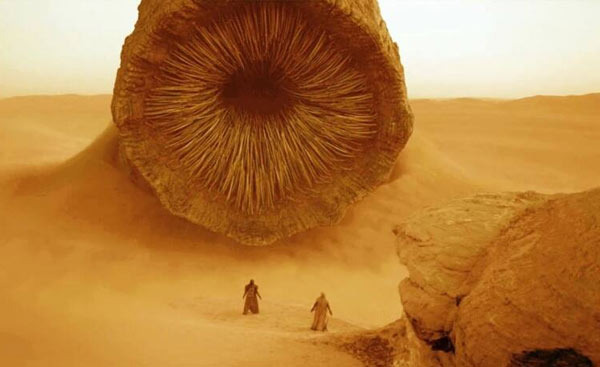
Walking through the Oregon Dunes, you can immediately understand why this nature sparked the imagination.
The reason the Oregon Dunes inspired the setting of the movie and original novel Dune is that this place is not just a "sand dune" but a living landscape. The sand dunes continue to move with the wind, covering roads and forests, and there is a history of humans trying to stop this by planting invasive species to stabilize the sand.
This scenario perfectly aligns with the theme of human attempts to defy nature and the resulting changes in the ecosystem structure. Frank Herbert felt that the sand here moved like a living being and had the "power to swallow cities."
Thus, the desert of Arrakis is not just a backdrop but a massive environment that confronts humanity and becomes a central theme. In simple terms, the Oregon Dunes was a place where nature quietly revealed its power, and the force of nature became the core of the worldview.
On days when the wind is strong in the sandy area, the sand blows fiercely enough to get into your eyes, and on calm days, a stillness settles like a desert. You can hear the sound of the ocean, but the landscape before your eyes seems entirely unrelated to the sea. That strangeness gives you the feeling of being an explorer rather than just a traveler.
To travel here, comfortable sneakers are recommended, and since the wind is strong, you should secure your hat or glasses tightly. Your feet sink deep into the sand, and you expend a surprising amount of energy. If the weather is good, you can overlook the Pacific Ocean, the forest, and the desert-like sandy area all at once from the top of the hill. The scene where the sky, sand, and sea come together in one frame is a unique view of this region.
Ultimately, the Oregon Dunes is not just a tourist attraction. The terrain created by nature moving on its own, the traces of human intervention, and the unique landscape born from all these collisions may be the essence of this place.
 NicoleKick






 fortbliss |
 Folding Instructions |
 yentra |
 Cali M Law Group |
 quanta7 |
 Oregon Our Neighborhood Story |
 Sunset Oregon |
 jammybear |
 Time Management Enthusiast |
 Tora Tora |
  yellowbutter |
  Dolly |
  US Embassy |
  NYC saladbar |
  Finding Superfoods |
  lightyear |
  song bang |
  vexomo |
  Indiana Jones |
  meloncat |
  novapixel |
  mortrix |
  Esther 1983 |
  Moscow Kim |
  My Two Way |
  toastyfox |
  FLORIDA Acus |
  tracker |