
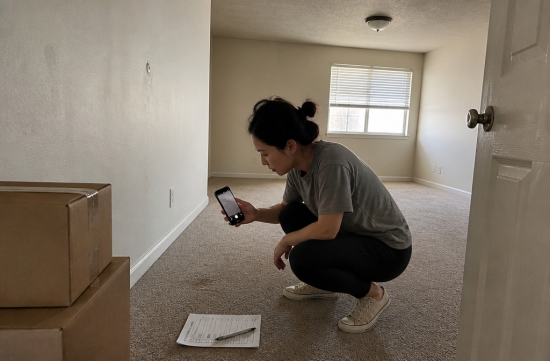
On the day you move out, you may clean the house thoroughly and return the keys, but a few weeks later, you might find that part of your security deposit is deducted for carpet stains and wall repairs. The problem is that you have no way to prove that those stains were there when you moved in. Ultimately, disputes over security deposits come down to documentation.
So today, I want to outline how to document your rental property with photos to ensure you get your full security deposit back, based on Illinois law. First, we'll review what the law states, and then we'll go through what and how to photograph step by step.
In Illinois, there is a state law called the Security Deposit Return Act. Previously, it only applied to buildings with five or more units, but starting January 1, 2024, that requirement has been removed. Now, the same rules apply even if you rent a single-family home.
There are two key deadlines. If the landlord wants to deduct repair costs, they must send a statement detailing the damages and costs within 30 days of the tenant vacating the property. This must include receipts or estimates.
If they sent an estimate, they must send the actual receipts within 30 days after sending the statement. If they did not send a statement at all, they must return the full security deposit within 45 days of the tenant vacating.
If the landlord refuses the statement or maliciously writes it and fails to return the deposit within the deadline, the court may require them to pay double the amount of the deposit, along with court costs and reasonable attorney fees.
Note that within Champaign County, Urbana has its own tenant ordinance, but that only applies within the city limits of Urbana. Savoy generally follows state law.
However, no matter how tenant-friendly the law is, if you cannot show that the damage was already there, you will be at a disadvantage in disputes. From the landlord's perspective, they only see the condition after you vacate. Therefore, you need to start taking photos not when you move out, but when you move in.
On the first day of moving in, take photos of the empty house before bringing in your belongings. Once furniture is in place, it will cover the floors and lower walls, making it difficult to compare later. This step is quite important.
The basic method is to take one wide shot and one close-up shot. Use a photo that shows the entire room to indicate the location, and get close-ups of scratches or stains.
There are easy-to-miss areas. These include carpet edges, bathroom silicone seams, inside the oven, refrigerator rubber seals, window screens, and the slats of blinds. These are items that often appear on deduction statements, so it's good to capture them.
As important as photos are, videos are also crucial. Start at the entrance and slowly walk through each room, which helps fill in the gaps between photos. Make sure to capture whether the faucets are working and if the lights and appliances turn on in the video.
You should also pay attention to date verification. Photos taken on your phone retain timestamp information, but this can be lost during file transfers. Uploading the original photos to the cloud or emailing them to yourself on the same day will naturally preserve the date.
To be even more certain, email the landlord or management office a move-in inspection checklist along with a few photos. It doesn't matter if you don't get a reply. The record of notifying them of the condition at that time serves as evidence.
The University of Illinois Student Legal Service also advises taking photos or videos during move-in and move-out. It's even better if a third party, not a family member or roommate, can verify the timing of the photos.
Now it's time to move out. After removing all your belongings and finishing the cleaning, take photos again from the same positions and angles as when you moved in. Being able to compare them side by side with the same framing adds credibility.
I recommend organizing the move-in photos into folders by room and then opening that folder on the day of move-out to take photos of the same spots one by one. It may seem tedious, but it only takes about 30 minutes.
Also, take photos of the cleaning condition. Areas like inside the refrigerator, oven, bathtub, toilet, and sink drain are often subject to cleaning fee deductions.
Make sure to document the return of the keys as well. If you confirm the date you handed over the keys and who received them via text or email, it clarifies when you vacated the property. The 30-day and 45-day deadlines both start from this date.
Don't forget to notify your new address in writing. The statement and security deposit will be sent to the last known address or the address provided by the tenant, so if you don't leave an address, it could complicate the process of receiving it.
One point to note is that normal wear and tear that occurs over a long period, such as faded paint from sunlight or marks from furniture legs, is generally not considered the tenant's responsibility. However, what constitutes wear and tear can vary by situation, so it's important to show the extent with photos.
If you receive a statement that you find unacceptable, first attach the move-in and move-out photos side by side and email your dispute. It's better to calmly address each item rather than express emotional reactions.
If the issue still isn't resolved, you might consider small claims court. In this case, the basis for judgment will ultimately be the dated photos and the messages exchanged. Having organized records will simplify the process significantly.
Contract terms and specific applications can vary, so if the amount is large or the dispute seems prolonged, it's advisable to check with local legal aid organizations. If you're near a college campus, student legal services can also be a good resource.
Security deposits are often set at the level of one month's rent, so even a small deduction can feel significant. Compared to that, taking a few dozen photos is a small effort.
If it were me, I would make sure to have a video of the empty house on the first day, room-by-room photos, and an email sent to the landlord as a basic set. If I take photos again from the same angles when moving out, I would hardly have to worry about security deposit issues.
 CocoaHunter





 Sugar Cream Door Bulletproof Noodles |
 urbanmint |
 |
| 
 Premium Gas Camp |
 CA Real Estate |
 kuku 100 |
 Smile Face |
 golfmaster |
 Hot Seat Driver |
 Plastic Rose |
  Sunset Oregon |
  victoria 68 |
  Montgomery Mom |
  squidogame |
  Noodle Noodle |
  Rhode Island Good People |
  Big North |
  Famous Attractions in the United States |
  Jin Soo V |
  Starbucks Reserve Roastery Closure |
  peppermint |
  Stable Co. |
  Purple Moons, |
  International Court |
  roma |
  horse |
  moodansa 77 |
  zymit |
  maplefox |