
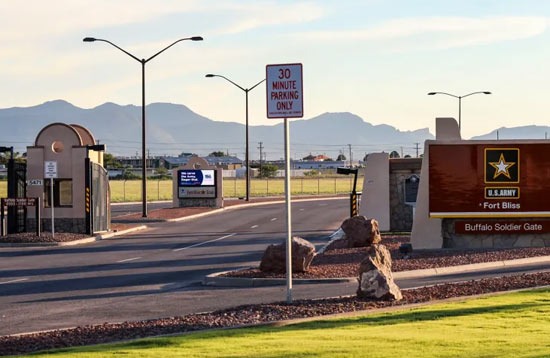
El Paso, Texas, is recognized today as one of the most strategic military cities in the United States, which holds significance beyond its geographical location. The military history dating back to the 19th century, vast military infrastructure, and the strong economic ties forged between the community and the military all contribute to El Paso's solid status as a key location for the U.S. Army.
The most decisive factor defining El Paso as a military city is undoubtedly Fort Bliss. This base is one of the largest military installations in the U.S. Army, boasting one of the world's largest training areas based solely on land size. The expansive desert terrain extending into New Mexico provides an optimal environment for all modern warfare training, including missile testing, large-scale armored unit maneuvers, and air tactical training.
In particular, Fort Bliss is home to the 1st Armored Division, one of the U.S. Army's elite units. Known as 'Old Ironsides,' this unit plays a crucial role in the armored and rapid response capabilities of the U.S. Army, making El Paso essentially the heart of American armored power.
El Paso is a city located at the point where the U.S. and Mexico border meet. This geopolitical location has been a key factor in maintaining its military significance from the conflicts with Mexico in the 19th century to the present day. Currently, in addition to its military role, it plays a frontline role in national security through close cooperation with the Department of Homeland Security and the Border Patrol.
Moreover, located at the far western end of Texas, El Paso serves as a strategic intermediate point connecting the U.S. West Coast and the Gulf region. With a well-established network of railroads and highways, the rapid movement of troops and military supplies is possible, making El Paso an important hub for military logistics rather than just a garrison.
El Paso is not merely a city where soldiers stay. It is a center for education and training that prepares the future of the U.S. Army. Fort Bliss has long served as the hub for air defense artillery and missile defense training, and as of 2026, advanced defense system training, including Patriot missile training, is conducted here.
Additionally, it is home to the U.S. Army Noncommissioned Officer Academy. This institution is a key entity in shaping U.S. Army leadership and organizational culture, and El Paso is recognized as a city that builds the spiritual foundation of the U.S. Army, beyond just being a gathering place for troops.
The military's role in El Paso's economy is absolute. Soldiers, civilian employees, and their families associated with Fort Bliss make up a significant portion of the city's population, and their spending forms the most stable foundation of the local economy. Military-related economic activities operate as a core pillar of the entire regional economy, which is a crucial reason why El Paso remains relatively stable even during economic downturns.
Furthermore, many veterans are attracted to El Paso's low cost of living and military-friendly atmosphere, often choosing to settle here. They provide skilled labor to the community, becoming an important asset that strengthens El Paso as a military community.
As of 2025, El Paso is evolving into a forward base for future Army projects testing AI-based drone tactical training, unmanned combat systems, and future combat scenarios. The dry climate and open desert terrain provide an optimal environment for experimenting with advanced sensors and unmanned systems, indicating that El Paso will continue to be a key stage for U.S. military strategy in the future.
Ultimately, the reason El Paso is called Texas's premier military city is due to the perfect combination of its advantageous training environment, the presence of elite forces, top-level military educational institutions, and the deep trust structure built between the military and civilian society. El Paso is not just a military city; it has established itself as one of the most stable and robust pillars of the U.S. defense system.







 fortbliss |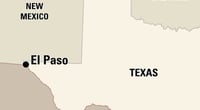
 Tomex Train Uncle |
 hexon |

 Spicy Immigration Life |
  laro90 |
  MEDBIO American Doctor Blog |
  SWAT TEAM BLK |
  DREAM BIG |
  frostbite |
  330 Forever My Love |
  El Dorado |
  dralix58 |
  Gorama Round |
  Skydiving |
  dreamport |
  Yellow Snowman |
  Toaster Pizza Magic Show |
  velvetnom |
  Anytime Journey |
  Mrs. Duluth |
  jaxter |
  Atlanta Mama |
  Baguette Blog |
  Tan Sol |