
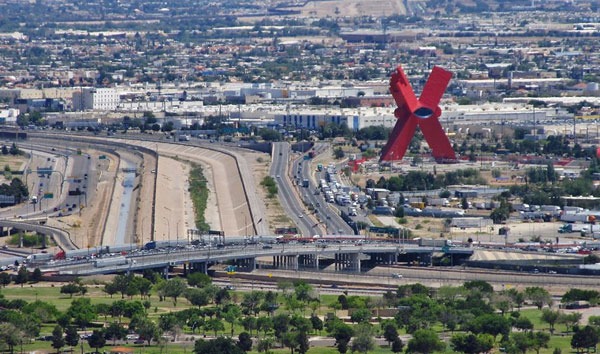
At the far western edge of Texas, El Paso borders Mexico across the Rio Grande, where the dry heat of the desert mixes naturally with the unique multicultural aspects of the border, making it distinctly different from other American cities.
First, looking at the population structure, the estimated population of El Paso city itself is between 680,000 and 700,000, and when combined with El Paso County, it reaches about 870,000. The entire metropolitan area, including Ciudad Juárez across the border, forms a massive border metropolitan region with over 2.5 million people. One notable aspect of El Paso is its high proportion of young people. Military families stationed at Fort Bliss and college students centered around UTEP are consistently moving in, and recently, there has been an influx of residents from other Texas cities like Austin and Dallas, seeking to escape high housing prices.
The racial composition is a key element in describing El Paso. About 81 to 83 percent of the total population is Hispanic or Latino, which is among the highest levels in major U.S. cities.
Non-Hispanic whites make up about 11 to 13 percent, Black residents are around 3 to 4 percent, and Asians account for about 1 to 2 percent. Because of this ratio, El Paso is effectively a bilingual city where both English and Spanish are used. Official documents, broadcasts, schools, hospitals, and store signs naturally mix both languages, creating a unique binational identity for El Paso.
The climate strongly defines El Paso's character. With the nickname 'Sun City,' it enjoys over 300 sunny days a year. Typical of the Chihuahua desert climate, summer days often exceed 100 degrees Fahrenheit (38 degrees Celsius), but the low humidity makes it relatively bearable in the shade.
Winters are short and mild, but being a high-altitude city at about 1,140 meters, there is a significant temperature difference between day and night. Snow occasionally falls but does not accumulate for long. From late July to early September, the monsoon season brings brief but intense showers that temporarily revitalize the desert.
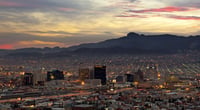
A prominent feature in the environment and terrain is the Franklin Mountains, which divide the city north and south. Franklin Mountain State Park, established within this mountain range, is one of the largest state parks within a U.S. metropolitan area and serves as a space for hiking and biking for the community.
As a desert city, water management is El Paso's most critical environmental challenge, and it operates one of the world's largest inland desalination facilities to proactively manage water scarcity. The policies for utilizing recycled water are also regarded as a model for cities worldwide.
El Paso is consistently mentioned as one of the safest major cities in the U.S. Contrary to its image as a border city, it has a low violent crime rate and a strong sense of community. Additionally, compared to other major Texas cities, the cost of living and housing is relatively affordable, making it increasingly attractive for those seeking a cost-effective lifestyle.
The vibrancy of Hispanic culture, the unique landscapes created by the desert and mountains, and the rapidly modernizing industrial structure are all coming together to transform El Paso from a simple border city into a city of future growth.





 candytip |
 Gold Bar |
 Pirate Ship Popcorn Maker |
 Montgomery Mom |
 Anjollinya Blog |
 fortbliss |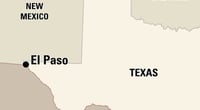
 Tomex Train Uncle |
 hexon |

 Spicy Immigration Life |
  road98 |
  Churros Train Conductor |
  gleeful |
  Burbank Lee |
  Olivia's Blog |
  Bushing Around Life |
  Active |
  Cherokee Rose |
  Kor. Master |
  Holey Moley |
  Conflite Teacher |
  Hodong Prince Over Flex |
  Mist inn |
  citrus pop |
  Onion Ring |
  phoenixia |
  viewtop |
  loverun |
  Kim Do Sun |
  SEVEN SEVEN |