

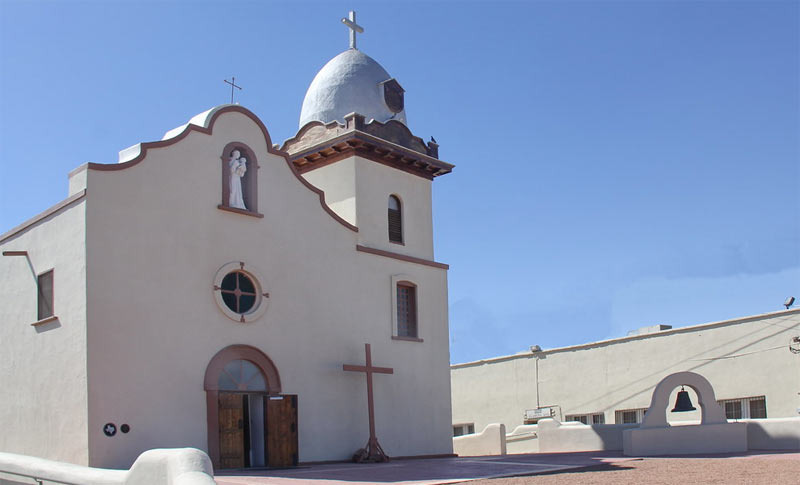
In El Paso, there are places that hold special stories within the landscapes that pass by us every day.
One of them is Ysleta Mission.
When I first learned about this place, I thought it was just an old church building.
However, if you look a little deeper, you can see that it is more than just a building; it is a root that has supported the identity of the city of El Paso and this region.
Ysleta Mission is said to be one of the oldest continuously operating Catholic churches in the United States, established in 1682.
It was built by Spaniards and the Tigua Native Americans, and it was created as a space where indigenous people from faraway New Mexico settled amidst the turmoil of colonial rule and war.
Initially, it was intended to introduce faith and Spanish culture to the indigenous people, but over time, it became not just a mission but the center of a community that cultivated a new way of life. Beyond its religious significance, it was a place where education, healthcare, and agriculture were integrated into daily life.
When I look at Ysleta Mission, I see the overlapping roles of mission monasteries throughout Texas and California.
During the Spanish colonial period, these missions were not just about building churches; they were projects aimed at creating a 'new society.' The missions served as places of worship and schools, where indigenous people were taught farming techniques and handicrafts, and at times, they were also places of healing and refuge.
Yet, within that, there was both light and shadow. On one hand, they brought civilization and education, but on the other hand, they became tools that stripped indigenous people of their traditions and autonomy.
Today, Ysleta Mission is still operated by the Catholic diocese, continuing its religious activities while also welcoming many visitors as a historical site. While some missions are managed by national or local governments, those that still exist as 'living churches' offer a different experience when visited.
It is not just about viewing an old building; it is about entering a place where people still pray and continue their lives.
Therefore, every time I enter this mission, I feel both reverence and warmth. Each brick of the old building seems to carry the traces of hundreds of years, and it feels like the joys and sorrows of the people contained within are being conveyed.
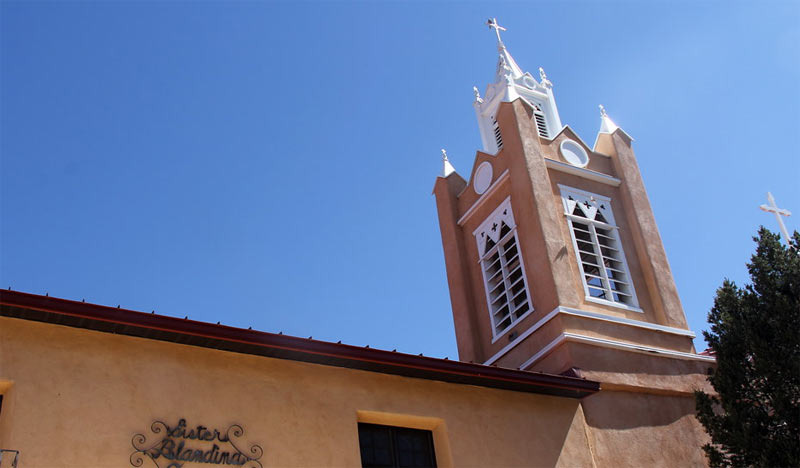
The missions in California are also famous.
Places like 'Mission San Diego de Alcalá' in San Diego and The Alamo in San Antonio are well-known tourist spots, but they also share a history of living alongside local communities, just like Ysleta Mission.
Some are managed by the National Park Service, while others are still operated by Catholic denominations. Regardless of the managing entity, visitors seem to draw the same inspiration from them. The question arises: 'What hopes did people hold here? What should I build and protect in my own life?'
Personally, the message from Ysleta Mission resonates more deeply with me.
It is astonishing and fills me with pride to know that such an old story lives in the land of El Paso where I reside. It is not just a building preserving the past; it is a space that still rings with church bells every week, calling people together and providing solace from the weight of life.
Ultimately, mission monasteries seem to tell us this: Life is always filled with new challenges and conflicts, but if we establish faith and a sense of community within that, we can endure for many years. And that spirit does not have to be strictly religious. For some, it may be the desire to protect family, and for others, it may be the will to pursue dreams.
While living in El Paso, sometimes when I pass by Ysleta Mission, I pause for a moment and touch the wall. The cold stone that carries the weight of hundreds of years feels strangely warm. Perhaps it contains the prayers of the indigenous people, the hopes of Spanish missionaries, and the footprints of those of us who live today.






 candytip |
 Gold Bar |
 Pirate Ship Popcorn Maker |
 Montgomery Mom |
 Anjollinya Blog |
 fortbliss |
 Tomex Train Uncle |
 hexon |

 Spicy Immigration Life |
  Bushing Around Life |
  Active |
  Cherokee Rose |
  Kor. Master |
  Holey Moley |
  Conflite Teacher |
  Hodong Prince Over Flex |
  Mist inn |
  citrus pop |
  Onion Ring |
  phoenixia |
  viewtop |
  loverun |
  Kim Do Sun |
  SEVEN SEVEN |
  yentra |
  Make My Day |
  Victory 1988 |
  Tonky |
  viroma |