
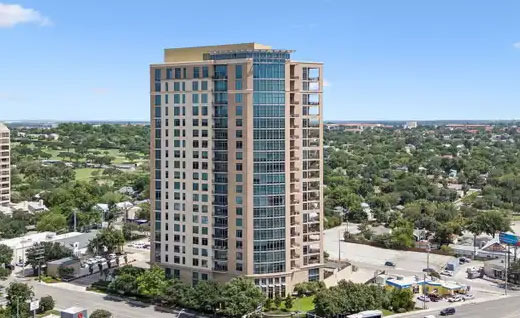
Recently, someone looking for a condo in San Antonio showed me a listing and asked,
"The HOA fee is $350 a month; is that reasonable?"
However, what that person was really worried about wasn't the $350 a month.
"What if they suddenly ask for $5,000 or $10,000 after I buy it?"
This refers to Special Assessments.
For condo buyers, this can be even more frightening than the monthly HOA fee.
San Antonio is a city where HOAs are quite common.
According to 2025 data, about 71% of listings have an HOA, which is significantly higher than the national average of 40.5%.
However, the median HOA cost for all listings is only about $40 a month.
"Wow, San Antonio's HOAs are really cheap."
But you shouldn't think that way.
This is because many single-family home communities are included in that statistic.
When looking at condos alone, the story changes.
Condo HOAs in San Antonio typically range from $200 to $600 a month.
Why is there such a difference?
Single-family home HOAs often only manage neighborhood entrances, landscaping, and common facilities.
Condos are different.
They have to manage the building's exterior, repair roofs, and maintain common plumbing, pools, elevators, lobbies, and gyms.
There is also insurance for the entire building.
So, they need to collect money every month.
This part is easy to understand.
But the really important thing is how the HOA manages that money.
For example, let's say an old condo needs $500,000 to replace its roof.
If the HOA has saved enough in the Reserve Fund, there won't be a big problem.
But if they only have $100,000 in the account, where will they get the remaining $400,000?
Ultimately, they may have to collect that from the homeowners.
That's the Special Assessment.
If there are 100 units, that would simply mean $4,000 per unit.
For larger projects, it could be $10,000 or more.
So, I believe it's not a good idea to just be happy hearing that the HOA is cheap.
If it's too cheap, you should ask,
"Is this building managing its money properly?"
In Texas, it's essential to look at this aspect more closely.
After the Surfside condo collapse in Florida, regulations on reserves and building inspections have been significantly strengthened.
Texas does not require all condos to maintain the same minimum reserve ratio.
So, in the end, I have to look at the documents myself.
When the HOA documents come out during the condo contract, some people just skip over them because they are thick.
But I want to emphasize that you should at least check three things.
First, how much money is currently in the Reserve Fund.
Second, are there increasing numbers of units that are behind on their HOA fees.
Third, are there any Special Assessments that have already been decided or are under discussion.
It's also good to see if there have been any major repairs like roofs, plumbing, or elevators in recent years.
This can also be an issue when applying for a loan.
"I have an 800 credit score; what could be the problem?"
It might not be your credit that's the issue.
The condo building itself could be the problem.
If the HOA's financial status is poor, there are many delinquencies, or there are significant lawsuits, it may be deemed a condo that does not meet the standards of lenders like Fannie Mae.
This could lead to fewer banks willing to lend or worse conditions.
You might love the house, but the bank could say it's difficult to get a loan because of the building.
In San Antonio, you should also check the rental regulations.
People in military-related jobs or the medical field may have the possibility of moving to another city.
"If I live here for a few years and get transferred, I can rent it out."
But if you think that way, there may be rental restrictions in the HOA regulations.
There could be a minimum rental period or limits on the percentage of units that can be rented.
This could complicate your plans.
Ultimately, you shouldn't just judge whether the monthly HOA fee is $300 or $400 when buying a condo.
I would rather look behind that money.
Is there enough money in the HOA account?
Are there any major projects planned for the future?
How many homeowners are not paying their dues?
Are there discussions about Special Assessments?
And can I rent it out later?
Condo prices are available on Zillow, and HOA amounts are listed in the property information.
However, the truly scary numbers may not be included there.
Suddenly receiving a few thousand dollars in Special Assessments after signing the contract.
So, when buying a condo, you need to look not only at the unit but also at the HOA's financial records.
 YellowSnowman
 VelvetSky82







 |
| 
 Premium Gas Camp |
 CA Real Estate |
 cheesepup |
 breezem |
 TEXAS Fishing Boat |
 solvix18 |
 Helpful Life Stories |

 Texas Migration Story |
  explorer |
  dictionary |
  Mr Bull Jung |
  radiant |
  Georgia 88 |
  Great TOWN NEWS |
  Open Flex Mind |
  Hartford Blog |
  unified |
  Generation X |
  ringwinds |
  American Food Information & Calories |
  Hawaii Maui Kahului |
  calvorn |
  fernando park |
  newyorker 101 |
  coffeee |
  |
|  Christopher |
  sylven |