
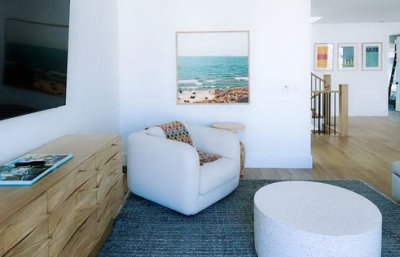
When discussing rental options in Albuquerque, the first question that often arises is why there is such a significant difference in rent among units. Simply put, Albuquerque is developed primarily with low-density complexes, so as the number of rooms increases, the difference in area and amenities becomes much larger compared to other major cities.
According to data from Rentometer and RentCafe, the average rent for a studio is $790, for a 1-bedroom it is $960, for a 2-bedroom it is $1,240, and for a 3-bedroom it is around $1,840. The areas are approximately 450 square feet for a studio, about 700 square feet for a 1-bedroom, around 950 square feet for a 2-bedroom, and about 1,200 square feet for a 3-bedroom. If these terms are unfamiliar, think of it this way: when moving from a one-bedroom apartment to a two-bedroom, the rent can jump by nearly $300, which is a relatively large gap compared to other major cities.
To summarize, it looks like this:
- Studio: average $790, about 450 square feet
- 1-bedroom: average $960, about 700 square feet
- 2-bedroom: average $1,240, about 950 square feet
- 3-bedroom: average $1,840, about 1,200 square feet
When comparing two units side by side, the differences in demand are clear. Studios and 1-bedrooms are primarily sought after by students near the University of New Mexico or remote-working singles. In contrast, 2-bedrooms are popular among those in their 20s to 30s looking for roommates to share rent, as well as newlyweds, while 3-bedrooms are often sought by families with children, particularly those from early Korean immigrant families. Albuquerque has a lower cost of living compared to other states, making it a consistent choice for Korean families settling down, and these families often start with a 2-bedroom to keep an eye on their budget before considering a 3-bedroom.
On the supply side, recent new constructions have the highest proportion of 2-bedrooms. This can be easily explained: from a developer's perspective, 2-bedrooms can cater to both roommate demand and small family needs, making it easier to manage rental rates. Conversely, the proportion of studios in new constructions is actually decreasing; given Albuquerque's characteristics, where land is inexpensive, it seems more advantageous in terms of rental efficiency to build larger units of 1-bedroom or more rather than very small units.
The implications of the rent gap are also worth noting. The jump from a studio to a 1-bedroom is about $170, which is not a large difference, but the gap widens to between $300 and $600 when moving from a 1-bedroom to a 2-bedroom and from a 2-bedroom to a 3-bedroom. This can be interpreted to mean that Albuquerque is a market where rent is based more on area than the number of rooms. In other words, even for the same 2-bedroom unit, the actual experience can vary significantly depending on location and the age of the complex.
For Korean households, it is advisable to consider a 2-bedroom as a baseline when settling in, and then decide on a 3-bedroom based on family planning or whether parents will be living together. Since Albuquerque generally has a lower rental burden compared to other major cities, starting with a 3-bedroom is often manageable within budget, but since there is a limited supply of 3-bedrooms in new developments, it is better to start looking early to find the right property at the desired time. The reference point is July 2026.
 JolieSleepy
 KingMaga




 moo moo |
 ultron78 |
 garlic bread |

 urbanmint |
 frostbite |
 Golden |
 Investment Campus Home Ownership |
 Southwestern |
 corner kick |
  treasure |
  strawberry |
  Augusta Univ |
  B.I.G. Victor |
  Victory 1988 |
  Swift Falcon |
  venture |
  SPAM 101 |
  choi family |
  zoryan |
  cloud0 |
  SKy Face |
  wonder |
  Dragon Lee |
  productionblog |
  What can make money? |
  Oklahoma Hoya OK |
  prixon74 |
  Roman Pan |