
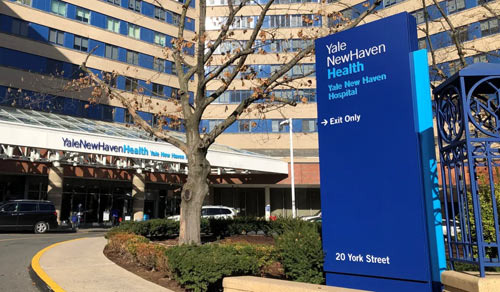
If I had to pick one aspect of living in New Haven that brings peace of mind, it would be the healthcare environment.
While the city isn't particularly large, the quality of its hospitals is comparable to that of major metropolitan areas in the U.S.
The reason for this is the presence of the Yale School of Medicine and the extensive Yale New Haven Health system.
If you get sick in New Haven, the hospital you need to know about is Yale New Haven Hospital. Its main campus is located at 20 York Street and is directly connected to the Yale School of Medicine, making it a teaching hospital. It is the largest hospital in Connecticut and handles a wide range of serious conditions, from emergency medicine to cancer, heart disease, neuroscience, and organ transplants.
This hospital is not just a place for treating patients; it is also an educational facility where Yale medical professors provide care and medical students and residents receive training. The structure allows for new treatments and clinical research to be integrated into actual medical practice, which is why complex cases and critically ill patients often come from other parts of Connecticut to this facility.
The second place to note is the Saint Raphael Campus of Yale New Haven Hospital. Located on Chapel Street, it was originally a separate hospital. Founded in 1907 by the Sisters of Charity of Saint Elizabeth, it operated as a Catholic hospital for many years before merging with Yale New Haven Hospital in 2012.
This hospital also has a significant history. In the 1950s, it was one of the first to operate a radiation therapy center in southern New England and played a pioneering role in cardiac surgery. Now, it operates as the second major campus of Yale New Haven Hospital, focusing on various specialties, including heart and lung diseases.
Combining the York Street and Saint Raphael campuses, the total number of beds exceeds 1,500. Considering that New Haven has a population of about 140,000, this represents a substantial medical facility for the size of the city. Therefore, in New Haven, hospitals serve not only as healthcare facilities but also as one of the largest employers in the region.
The third facility is the Shoreline Medical Center. Located in Guilford, about a 20-minute drive east of New Haven, it is a crucial medical facility for residents of the eastern coastal area who find it challenging to reach the large hospitals in downtown New Haven.
This center also has a 24-hour emergency room. The emergency medical network of Yale New Haven Health connects York Street, Saint Raphael, and Shoreline, providing extensive healthcare coverage not only in New Haven but also in the surrounding suburban areas.
For Korean families, this medical infrastructure is a significant advantage. When you're young, you might not think much about how close a hospital is. However, when you start raising children or taking care of your parents, the situation changes. Having a major university hospital just a few minutes away by car can make a substantial difference in emergencies, such as when a child suddenly falls ill or in cases of heart or cerebrovascular emergencies.
Of course, like any American hospital, insurance issues are a separate matter. Just because a good hospital is nearby doesn't mean treatment will be affordable, so it's essential to check whether your insurance includes Yale New Haven Health in its network. The out-of-pocket costs can vary significantly depending on your insurance when seeing a specialist.
Nevertheless, when evaluating the city of New Haven, I believe that healthcare is undoubtedly a strong point. With a world-class medical school and large university hospitals, emergency rooms, and specialized care facilities all concentrated in one area, it stands out. While housing prices, school districts, and safety can vary by neighborhood, when it comes to medical infrastructure alone, New Haven is certainly a solid city in Connecticut.
 Trendy
 AcornQueen








 Karina's Blog |
 Jimbeam 88 |
 Taco Bell Candy Note Blog |
 Splendid Mission |
 Florida Gario |
 My Heart Popper |
 Dream Mong |
 Lee Sang Don |
 Jenny's Mom blog |
 Buckwheat Muktudari Notebook |
  Idaho's Sumi's House |
  Mr. Midwest America |
  wildfire |
  kerkee |
  legalway |
  postcard |
  cheesecake07 |
  My Miami Stories |
  windylotus |
  Mia Flori |
  velaro29 |
  velaro |
  foxtrot83 |
  moname |
  mapleline |
  US Legal Consultation on Trials |
  UNI Lover |
  California Dreamer |
  Choco Mint Creator |