

Albuquerque is a city with a surprisingly rich array of museums and cultural facilities for its population size.
It is home to a variety of institutions focused on themes such as Southwestern Native American culture, New Mexico history, scientific exploration, and contemporary art.
This means that newcomers can fully enjoy cultural activities.
Below, we summarize some particularly noteworthy museums and cultural facilities in Albuquerque.
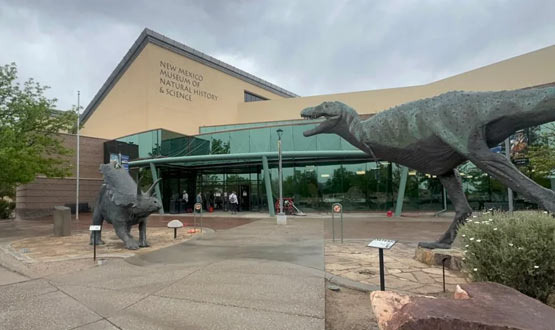
The New Mexico Museum of Natural History and Science is a prominent museum located near Old Town in Albuquerque.
It features exhibits on dinosaur fossils, volcanic geological history, and a Cenozoic mammal exhibit, along with active educational programs for children.
Notably, several dinosaur fossil specimens excavated from the New Mexico region are on display, making it popular among visitors interested in paleontology.
Admission is approximately $8 to $10 for adults, with discounts available for New Mexico residents.
The Dynamax Theater, located in the same building, also screens large-format documentaries.
The Albuquerque Museum is situated near Old Town Park in downtown and hosts permanent and special exhibitions focused on New Mexico history and Southwestern art.
It has an extensive collection covering the Spanish colonial period, Native American culture, and modern history.
Special exhibitions of contemporary art are frequently held, and works by local artists are regularly displayed.
There is a free admission event on Thursdays, making it a popular spot for residents. (Free admission times may change, so it's advisable to check the official site).
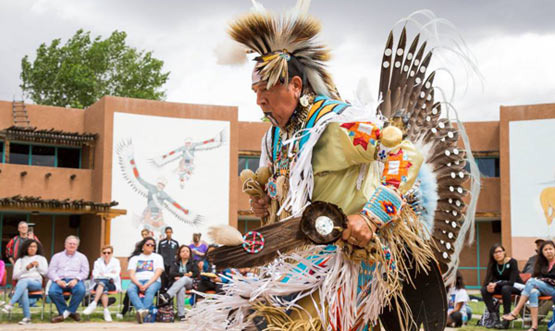
The Indian Pueblo Cultural Center is a unique cultural facility operated jointly by 19 Pueblo Native American tribes in New Mexico.
It features permanent exhibits where visitors can experience and learn about Native American history, art, and cultural life, along with regular programs such as traditional dance performances, pottery demonstrations, and Native food experiences. The on-site restaurant offers traditional New Mexican dishes like Fry Bread, Posole, and Chili Stew.
The 19 Pueblo Native American tribes in New Mexico are not a single tribe but rather communities like Acoma, Taos, Jemez, Cochiti, and Isleta, each with its own government, language, and traditions. Their ancestors settled in the Rio Grande Valley and the surrounding areas, engaging in agriculture and trade.
After the Coronado expedition arrived in 1540, conflicts intensified with the onset of Spanish colonial rule and Catholic missions, culminating in the Pueblo Revolt of 1680, which temporarily expelled the Spanish. However, in 1692, Spain regained control of New Mexico.
Following Mexico's independence in 1821, New Mexico became Mexican territory, and during the U.S.-Mexican War in 1846, General Stephen Kearny's troops entered Santa Fe and occupied the city without significant battle. However, in 1847, armed uprisings against U.S. rule occurred in the Taos and Mora regions. Subsequently, the Treaty of Guadalupe Hidalgo in 1848 ceded New Mexico to the United States, incorporating the Pueblo communities into the U.S. This site is regarded as a good starting point for understanding these cultural roots.
The National Museum of Nuclear Science and History is a unique museum located near Kirtland Air Force Base southeast of Albuquerque.
It covers the entire history of nuclear energy, from the Manhattan Project to modern nuclear policy, and features large outdoor exhibits including actual nuclear weapon models and strategic bombers. The museum's location in Albuquerque is historically significant due to the nearby Los Alamos National Laboratory and Sandia National Laboratories. It is a fascinating place for those interested in the history of nuclear energy in the U.S.
In the performing arts, the KiMo Theatre is an iconic venue in Albuquerque. Built in 1927, this theater is a unique Pueblo Deco architectural landmark and is designated as a historic site.
The theater regularly hosts plays, concerts, film screenings, and local art events, with ticket prices being relatively reasonable. Information about performances around Albuquerque can be found on the City of Albuquerque Cultural Services website or in the cultural section of the local weekly publication, Albuquerque Journal. The city's arts scene, while small, is vibrant, and newcomers are encouraged to experience various cultural events early on.
 KoreaForever
 Cupcake
 HoldOnToday



 Anjollinya Blog |
 Taco Seattle |
 Mr Song Song |
 Living Economy Information Blog |
 Blog Korea |
 New Mexico Friends MAX |
 Mrs New Mex |
 Say Yes in English |
 frostbite |
 silents |
  Springs Korea |
  nixon |
  mini hometown |
  Gleeee |
  MacMorningBlog |
  ASURA |
  Elastico |
  shaket |
  vionoo |
  chocolate |
  Whisper |
  Star Voyager |
  InDiGo |
  Rocky Mountains |
  Whoever It Is, I Don't Know |
  Why Not Me |
  Plastic Rose |
  Rice Shop Uncle BLOG |
  Victory 1988 |
  Gook Rule |