
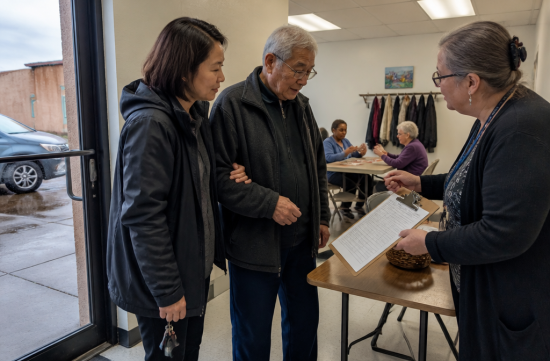
On rainy days, I find myself feeling inexplicably happy. It feels like the world is giving me permission to pause for a moment.
However, for those caring for their parents, that permission rarely comes. Even when it rains, medications must be managed, hospitals must be visited when the sun is out, and ears must remain open even at night.
Imagine a day like this: rushing to your parents' house right after work to prepare dinner, checking the medication, and returning home just before midnight.
November is National Family Caregivers Month. This year's theme from the Caregiver Action Network is "Care Connects Us."
The name sounds warm, but the numbers are cold. According to a 2025 report from AARP and the National Alliance for Caregiving, there are 63 million family caregivers in the U.S., a 45% increase from ten years ago.
Nearly one in four of them spends over 40 hours a week on caregiving. It's like having another job, but without a paycheck.
One in five reported their health as fair or poor. I paused for a long time in front of this number.
So today, I want to talk about respite care. It's a service that allows caregivers to take a break by having someone else or an organization provide care.
There are three main forms. Someone can come to the home, caregivers can be taken to an adult day center during the day, or they can stay in a facility for a few days.
The issue, of course, is money. Who pays for it varies by situation, so you have to knock on different doors.
The first door is dementia. The Medicare GUIDE model is a pilot program that helps dementia patients living at home, providing respite costs for some patients with unpaid family caregivers.
According to data from CMS released in July 2026, the cap for the 2026 program year is $2,625 per patient. Coinsurance and deductibles are waived.
However, there are conditions. You must be an Original Medicare subscriber, and respite is available for patients with moderate to severe dementia, and you must register with a participating organization.
You can find participating organizations on the Participant List on the CMS GUIDE page. If there are no organizations nearby, this door won't open, so check this first.
The second door is hospice. If you are using hospice, Medicare covers inpatient respite care in hospitals, hospice facilities, and nursing homes for up to five days at a time.
Your out-of-pocket cost is 5% of the Medicare-approved amount. You can use it multiple times, but there is a caveat: it's only "occasionally."
Expecting Original Medicare to cover respite care outside of these pathways would be problematic.
The third door is the VA. Veterans registered with the VA who meet clinical criteria can receive respite care in the form of home health aides, adult day health care, or nursing homes.
Services vary by region, and there may be copays. The VA Caregiver Support Line number is 855-260-3274.
The fourth door is the state government. In New Mexico, the Aging and Disability Resource Center at 1-800-432-2080 is a starting point.
If you live in Bernalillo County, you can also contact the city's Department of Senior Affairs at 505-764-6400. This service is for residents over 60 and their caregivers, and a coordinator will come to your home to connect you with homemaker/respite or adult day services.
According to the city's information page, In-Home Respite is for full-time caregivers of seniors with dementia, and household income must be below $30,000 annually.
While it's not a break itself, New MexiCare helps alleviate financial issues. It's a state program that assists those caring for friends or family, and applications are now accepted in all 33 counties, including Bernalillo.
Eligibility is for those over 60 who need help with two or more daily activities, with a monthly income of $3,387 for individuals and $6,774 for couples. Facility residents or full Medicaid and waiver recipients are not eligible.
The state government also secured a $1.2 million federal Lifespan Respite grant in October 2025. This program will continue until September 2028, and there are plans to create a caregiver respite registry. It's welcome news, but it won't relieve tonight's fatigue.
If I were in your shoes, I would write down the type of insurance, the diagnosis, the monthly income, and the tasks you cannot do alone.
Then, I would make the call with that paper in hand. If you're worried about speaking English, ask for a Korean interpreter at the beginning.
Your parents may be wary of strangers. In that case, I recommend starting with half-day services instead of a few days. A half-day can turn into a full day, and a full day can become a habit.
Eligibility and out-of-pocket costs vary by individual circumstances, so be sure to confirm with the coordinator or Medicare counselor before applying.
Taking a break is not an escape. You need to rest to go the distance, to smile, and to be able to open that door again.
The rain is letting up, and people are trying to rise again. This month, I hope you can make just one phone call for yourself.
 MySassyGirl







 American Politician Community |

 memorabilia |

 orvian89 |

 looksee 78 |

 vivavida |

 silents |

 Southwestern |

 Seatea |

 frostbite |
 refresh |
 rainyday |
 springw |
 American History This and That |
 goldenleaf |
 mistily |
 selviro |
 strongman |
 Waiting for Godot |
 Sunny Mom |
 Blondee |
 El Dorado |
 passive |
 gardener 007 |
 zanero |
 Arlington house |
 Cali M Law Group |
 Delicious Food Finder |
 ultron78 |
 pet dog |