

Recently, during consultations, there were inquiries about whether USDA loans are available for properties in downtown Providence. To put it simply, downtown Providence is not classified as a USDA-eligible area due to its population size, so we expanded the search to nearby areas and provided information on other loan combinations.
Looking at the housing prices in Providence, as of June 2026, the average home value in Providence is $362,325 according to Zillow. When considering the entire state of Rhode Island, the median sale price as of May 2026 is $508,195, which is a 2.1 percent increase from the previous year. The recent market shows that downtown Providence has lower price ranges compared to the state average, but conditions can vary depending on the area within the city. Areas with older homes, like near the university or in the West End, still have relatively affordable price ranges, while more desirable areas like the East Side often exceed the state average.
Returning to USDA loans, about 77 percent of Rhode Island is classified as eligible areas, including coastal small towns like Narragansett and Charlestown. However, most densely populated urban areas like Providence are generally excluded, so if you are considering USDA loans, it is practical to look at areas outside the city limits from the start.
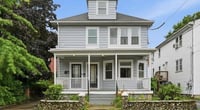
What is commonly used in downtown Providence are conventional loans and FHA loans. Conventional loans can be applied for with a credit score of 620 or higher, and rates improve significantly with scores above 680. Down payments can start at 3 percent, but if it is less than 20 percent, PMI will apply. FHA loans can be accessed with a credit score of 580 or higher with a 3.5 percent down payment, making them a popular choice for first-time homebuyers in Providence, where many older homes exist. However, it is advisable to check in advance whether older buildings meet the minimum standards required during the FHA approval process.
Providence County applies the standard conforming loan limit of $832,750 as of 2026, and there are no areas designated as high-cost in Rhode Island. Given the price ranges discussed earlier, most transactions will fall within this limit, so the need to consider jumbo loans is relatively low.
When checking school districts, it is important to note that there can be significant variations even within the same city. While referencing ratings from GreatSchools or Niche, keep in mind that school district boundaries change frequently, so it is wise to verify the assigned school for the specific address before purchasing. For families moving from out of state, it is also important to note that Rhode Island's property tax rates are calculated differently than those in neighboring Massachusetts or Connecticut.
There are also many investors looking for properties in Providence for rental income. Demand for rentals is steady near the university, but older buildings may incur higher repair costs than expected, so it is essential to factor in inspection costs before purchasing. If the down payment is less than 20 percent, PMI will affect initial cash flow, so it is safer to calculate returns based on a conservative scenario that excludes vacancy periods and management fees. It is also important to consider that rental demand and vacancy rates can vary by area within the same city.
Ultimately, if you want to focus on downtown Providence, it is helpful to compare between conventional and FHA loans, and if you can expand your search to the outskirts, consider including USDA loans as an option. For families moving from out of state, it is beneficial to know that the New England region, which includes Providence, has a high proportion of older homes, which can assist in property selection. This article is not investment or legal advice, and loan conditions may vary by state and county, so it is recommended to consult with a professional before making any actual agreements.
 GreenApple
 OutsideCity







 |
| 
 Premium Gas Camp |
 CA Real Estate |
 cheesepup |
 breezem |
 USALATU BLOG |
 pixelhaven |
 Sunny Sunday |

 Sammy Beach |
  Bliss O |
  blue ocean |
  greenlight |
  Watanaka Karametibaksa |
  castle |
  xelton52 |
  carefree |
  vrixen73 |
  AZ Road Master |
  Victory 1988 |
  summita |
  business lim |
  Colorado Lee |
  Make My Day |
  Fros Pro |
  lioness |
  La Bean |
  American History This and That |
  Monte Sori |