

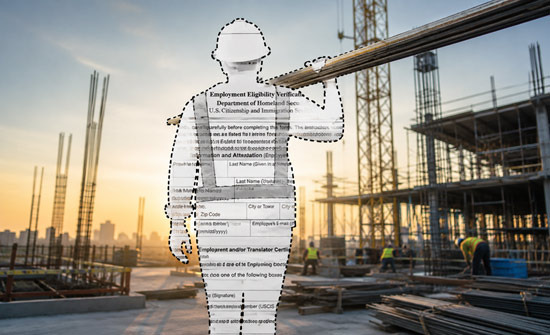
If you live in LA for a long time, you will see countless fights over immigration issues.
Illegal immigrants should be deported, the border should be secured, American jobs should be protected.
It sounds simple. If we reduce the number of people, Americans will fill those positions and wages will rise.
But if the world worked that simply, why would we need economists?
By 2026, there are discussions about the possibility of the U.S. experiencing 'net negative migration,' where more immigrants leave than enter.
Major urban areas in the U.S. are already having fewer children. The elderly population is increasing. If the workforce shrinks, the question arises: who will build houses, care for the elderly, and pay taxes?
There are already reports of warning signs in LA. In fact, Korean small business owners are already feeling a sense of crisis.
With increased immigration enforcement, some small businesses report a drop in customers and an increase in employee absences.
There is also a phenomenon where immigrants are reducing their outings due to fears of enforcement.
In public schools, student attendance has decreased by 4.5%, and since attendance is linked to school funding, an analysis suggests a financial loss of over $100 million this school year.
The troubling part is that this is not just an issue for LA.
In South Texas, industry reports indicate that housing construction has been delayed by 9 to 12 months due to labor shortages, and in Idaho, there are mentions of decreased agricultural production.
The situation in elderly care is even more serious. When American parents age, someone will eventually need to help them bathe, feed them, and take them to the hospital.
Having lived in LA, I realize that the foundation of the U.S. economy relies more on immigrant labor than one might think.
Just look into restaurant kitchens, visit construction sites, or see the hotel cleaners. It becomes even clearer when you go down to California's agricultural regions.
That said, this is not to say we should simply allow illegal immigration. Border management is necessary, and the issue of illegal residency must be addressed. Criminals should, of course, be dealt with according to the law.
However, thinking that "deporting immigrants will allow Americans to take those jobs and everyone will be better off" is too simplistic.
In the 1950s, the U.S. also implemented large-scale deportation policies. But the demographic structure then is completely different from now.
At that time, the U.S. birth rate was much higher than it is now. Children were continuously being born, and after several decades, those individuals entered the labor market.
Now, it's the opposite. The baby boom generation of the 1960s is retiring, while younger generations are having fewer children.
Social Security and Medicare rely on working individuals paying taxes, but the number of working individuals is decreasing.
Ultimately, immigration has become a population issue and an economic issue before it is a humanitarian or political one.
Of course, a decrease in immigration for 1-2 years will not suddenly collapse the U.S. economy.
What economists are truly worried about is if this trend continues for 5 or 10 years.
Those who have been in business in LA for a long time know. Too many people can be a problem, but too few people also means business cannot thrive.
Customers are people, employees are people, and taxpayers are people.
What the U.S. really needs to consider is not whether to accept immigrants, but who to accept, how many, and how to enable them to work legally.
 GreenApple
 TIMETOGO







 novapixel |
 NEXT ROUND |
 Encyclopedia of New York and Surrounding Areas |
 washington mom |
 California Dreamer |
 Study Abroad Life Know-How Tips |

 coloradoman |
 Victory 1988 |
 Sunny's Travel in America |
  newyorker 101 |
  coffeee |
  |
|  Christopher |
  sylven |
  Sammy Beach |
  Bliss O |
  blue ocean |
  greenlight |
  Watanaka Karametibaksa |
  castle |
  xelton52 |
  carefree |
  vrixen73 |
  AZ Road Master |
  summita |
  business lim |
  Colorado Lee |
  Make My Day |