
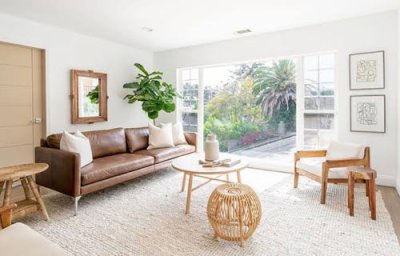
More amenities mean higher management fees. One person looking for a condo in Chino compared a community with a clubhouse and pool to one with only basic amenities and confirmed this simple principle. The prices of the two properties were similar, but the HOA fees differed by over $100. The more amenities there are, the more maintenance items increase, and thus the management fees collected each month also rise.
The HOA costs in the Chino Hills area, where Chino is located, generally range from $200 to $400 per month (based on local data). Across California, condo and HOA fees typically average between $300 and $400 per month. The Inland Empire region tends to have lower management fees compared to coastal cities, but there can be significant differences depending on the amenities offered.
What does the HOA fee cover? It generally includes maintenance of the building's exterior and common areas, master insurance, shared facilities like pools and gyms, landscaping, trash collection, and contributions to a reserve fund. The more amenities a community has, the higher the costs associated with each of these items. For a community with a clubhouse, spa, and gated security, it is natural for the management fees to be set higher.
Looking back at the two properties mentioned earlier, the community with the clubhouse and pool allocated a significant portion of its fees to facility maintenance and reserve funds, while the one with only basic amenities spent most of its fees on landscaping and basic insurance, leaving a relatively small portion for the reserve fund. Having more amenities is not necessarily a burden. In fact, if the operational costs of the amenities are managed systematically and the reserve fund is also growing, it may be a community better prepared for long-term building aging. In the Chino area, new townhome-style condos and existing low-rise complexes are often traded, so even at the same price point, it is practically useful to examine the amenity composition and management fee allocation method one by one.
So why is the reserve fund important? Communities with more amenities tend to age faster. If a major repair arises when the reserve fund is insufficient, special assessments may be imposed. According to California Civil Code Section 5550, HOAs are required to conduct a reserve study at least every three years and review it annually. Buildings with three or more units are also required to inspect balconies and decks under SB 326. When considering communities with many amenities, it is practically more important to first check the reserve fund contribution rate and recent special assessment history rather than just the amount of management fees.
- Check HOA financial statements and reserve studies
- Review special assessment history for the last three years
- Check delinquency rates and any lawsuits
As you go through the checklist, aspects that were not visible through management fees alone become apparent. For example, even if two communities have similar management fees, one may have steadily increased its reserve fund over the past three years, while the other may have stagnated for several years. The latter may appear problem-free on the surface, but it is more likely to lead to special assessments when a major repair is needed. If considering a community with many amenities, it is practically useful to compare how the maintenance costs for those amenities are allocated within the management fees and whether the reserve fund is growing accordingly.
Lending institutions also look at this aspect. If the delinquency rate, reserve fund ratio, and lawsuit history do not meet the criteria, the property may be classified as a non-warrantable condo, which can block loans. If you are near a school district preferred by Korean families, refer to ratings from GreatSchools or Niche, but keep in mind that school district boundaries change frequently, so it is advisable to check the assigned school for the specific address before purchasing. If coming from another state, the property tax and insurance rates may differ, so you need to recalculate total expenses including HOA fees. Chino is an area where new developments are actively taking place within the Inland Empire, and it is expected that more new condos will emerge in the coming years. However, just because they are new does not mean the reserve fund is already sufficient, so it is particularly advantageous to carefully check financial statements during the initial years. This article is not investment or legal advice, and it is recommended to consult with professionals before making any actual contracts.
 SkewerFighter
 Christina







 |
| 
 Premium Gas Camp |
 CA Real Estate |
 cheesepup |
 breezem |
 Raccoon Ramen Night |
 DREAM BIG |
 Information on All Regions of the United States |
 Shoot Me |
 explorer |
  dictionary |
  Mr Bull Jung |
  radiant |
  Georgia 88 |
  Great TOWN NEWS |
  Open Flex Mind |
  Hartford Blog |
  unified |
  Generation X |
  ringwinds |
  American Food Information & Calories |
  Hawaii Maui Kahului |
  calvorn |
  fernando park |
  newyorker 101 |
  coffeee |
  |
|  Christopher |
  sylven |