
When you stand at the rental car counter, you always get the same question. Just before you receive the car keys, they always ask, "Would you like to add insurance?"
Hearing that question makes you a bit anxious. The worry about what might happen in case of an accident starts creeping in.
However, when you look at the price list, your jaw drops. Some places charge as much as $45 a day.
Hertz has a fixed daily rate of $45 for loss damage waiver, regardless of the car type. Renting for just a week can easily exceed $300.
Enterprise offers a wider range. Prices can start from $19.99 a day and go up to $100, depending on the car type.
Overall in the industry, the typical range is between $24 and $45 a day, with economy vehicles costing around $15 to $42. Sometimes, if you add it on the spot at the counter, you might find it cheaper, around $10 to $20.
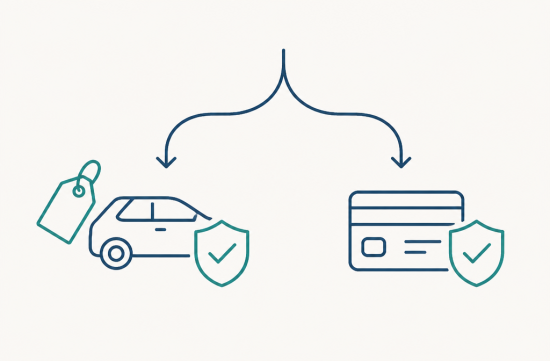
The problem is that you might already be paying for this coverage elsewhere. It's more common than you think for personal auto insurance and credit card benefits to overlap.
If you pay the full rental fee with a credit card, some cards offer benefits that cover the rental company's collision damage waiver, or CDW. However, there is one condition.
You must decline the insurance sold by the rental company at the counter for the card benefits to apply. If you enroll in both, the card benefits become useless.
This is where the distinction between primary and secondary coverage becomes important. Secondary coverage means your personal auto insurance handles the initial claim, covering the remaining amount, such as your deductible.
On the other hand, primary coverage means the credit card company handles it first without affecting your personal insurance. This means that an accident won't show up on your personal insurance record, making it much more appealing.
Cards like Chase Sapphire Preferred and Sapphire Reserve, Capital One Venture X, and Ink Business Preferred offer primary coverage. Capital One Venture X covers up to $75,000 based on the actual cash value of the vehicle.
The Amex Gold Card includes CDW that covers the vehicle's price for up to 30 consecutive days. Most cards set a cap on the coverage period between 30 and 31 days.
If you rent for longer than that, the coverage from the card will end after the specified period. If you plan to rent a car for more than a month, be sure to check this detail.
Also, it's easy to overlook that this benefit only applies to credit cards, not debit cards. You must make both the reservation and payment with the same credit card for the conditions to be valid.
It's also important to clearly understand what the card covers. The coverage typically only applies to damage or theft of the rented vehicle itself.
Liability for damage to other vehicles or injuries to other people is usually not included. This is why you still need liability coverage from your personal auto insurance.
Peer-to-peer car-sharing rentals, like Turo, are often excluded from coverage by almost all cards. Luxury cars, classic cars, and exotic sports cars are also frequently on the exclusion list.
These specific conditions can vary slightly from card to card. Therefore, it's a good idea to read the benefits guide from your card issuer before traveling.
The most reliable way to confirm benefits is to call the number on the back of the card. If you tell the representative your travel destination and rental period, they can inform you of the coverage.
Personally, I find this process a bit cumbersome. However, if a single phone call can save you hundreds of dollars, it's worth it.
If your card only offers secondary coverage and you want to ensure primary coverage, you can also purchase an affordable primary product from a separate provider. This is usually much cheaper than what the rental car company offers at the counter.
If you've ever felt that paying an annual fee for a card was a waste, consider this aspect. If you rent a car two or three times a year, the insurance benefit alone can easily justify the annual fee.
When making a reservation, searching for the rental car company name along with the card brand can make it easier to check the latest conditions. Terms can change frequently, so relying on last year's information can be misleading.
Ultimately, the moment comes when you have to make a decision at the counter. Even if the staff asks in a subtly anxious tone, there's no need to panic.
If you know what coverage your card provides in advance, that moment becomes much less burdensome. You can respond calmly and confidently.
If it were me, I would check the benefits page on the card issuer's website before making a rental reservation. It's also wise to verify that your personal auto insurance liability limits are sufficient.
If the rental period is around ten days, the counter insurance fees can easily exceed $200. That's money you could spend on meals or accommodations during your trip.
Of course, I understand the fear of accidents and the desire to just sign up for everything to feel at ease. Still, if you're already paying for coverage, I believe there's no need to pay for it again.
Ultimately, the key is to develop the habit of checking your card benefits just once before renting. Just that one step can make the counter experience much less uncomfortable on your next trip.
 MichiganTime







 Silent Sea |
 Pointy |
 Idaho's Sumi's House |
 holy cheese |

 Raccoon Ramen Night |
 Cap Com |
 Information on All Regions of the United States |

 Shoot Me |
  rouge88 |
  toffee |
  King County |
  DREAM BIG |
  Good News Good Thoughts |
  peelynew |
  Helpful Life Stories |
  chicpo |
  monorama tone |
  Kentucky Fried Chicken |
  bloomberg |
  morninpo |
  my town K blog |
  bravik31 |
  Various Knowledge and Information in the USA |
  orvik90 |
  San Gabriel Mountains |
  quanta7 |
  Fransco Family |
  leonee |