

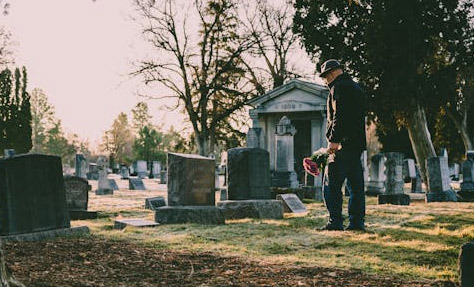
The funeral culture in America has undergone significant changes over the past 100 years. The traditional aversion to cremation in American Christian culture stems from theological contexts. The reasons can be summarized as follows:
Traditional Reasons for Aversion to Cremation in Christian Culture
In Christianity, the resurrection of Jesus was a bodily resurrection, and there is a belief that believers will also be resurrected at the final judgment. Therefore, the preservation of the body is considered important, and burial has been preferred. Believers chose burial over cremation in the sense of following the example of Jesus.
While cremation was common in ancient Roman and Greek cultures, it was seen as a pagan practice, and Christianity chose burial to distinguish itself. Cremation was associated with non-Christian ideas such as the reincarnation or annihilation of the soul.
The Bible views the body as the temple of God (1 Corinthians 6:19), and it was considered desirable to preserve that sacred body without damage. Cremation, which involves burning the body, was viewed negatively.
Traditional burial became a place for the community to say their final goodbyes to the deceased, and the time for mourning, prayer, and remembrance was considered important. There were concerns that cremation could simplify or omit this process, leading to less expression of communal loss.
However, more and more denominations are allowing cremation, often chosen for environmental and economic reasons. The traditional focus on burial is now rapidly shifting towards eco-friendly and practical methods such as cremation, tree burials, and natural burials.
Changes in American Funeral Culture Over the Last 100 Years
| Year | Cremation Rate |
|---|---|
| 1960s | About 4% or less |
| 1990 | About 20% |
| 2010 | About 40% |
| 2020 | About 56% |
| 2025 | About 60-65% |
| 2040 Prediction | Over 78% (Predicted by the National Funeral Directors Association) |
100 years ago, traditional burial was predominant, but now cremation has become mainstream. Natural burials, which involve decomposing under a tree instead of traditional cemeteries, have shown a quiet spread since the 2000s. Although they currently account for only about 5-10% of the overall funeral market, this minority is expected to see a steady increase in demand as an alternative to cremation in the 2030s.
Casket Prices – Impact of Inflation + Consumer Trends
Casket prices have also risen significantly. In particular, traditional burial caskets account for the largest portion of funeral costs.
-
Average casket price in the 1980s: about $1,000
-
Early 2000s: $2,000-3,000
-
Current prices in the 2020s:
-
Basic: $2,500-4,000
-
Premium (wood/metal decoration): over $8,000
-
Due to the increase in DIY funerals and online purchases, consumers are also trying to purchase outside of funeral homes. However, it is still common for funeral homes to charge more for direct purchases.
Cultural and Religious Influences are Changing
-
The atmosphere that tabooed cremation in Christian funerals → is now mostly accepted
-
The Catholic Church has allowed cremation since 1963, but the method of storing ashes remains conservative
-
Islam and Judaism prefer traditional burials, but practical issues are increasing concerns
-
The increase in atheists/non-religious populations → preference for simple cremation + family gatherings
As of 2025, the funeral culture in America is rapidly transitioning from the traditional burial focus to eco-friendly and practical methods such as cremation, tree burials, and natural burials.







 Make My Day |
 viroma |
 eatontown blog |
 Toaster Pizza Magic Show |
 US Embassy |
 Khan Film Blog Production |
 Illinois Mom |
 Rice Shop Uncle BLOG |
 allstar realty |
 Enjoyable American Life Diary |
  round1 |
  Way to easy |
  musicque |
  road98 |
  Churros Train Conductor |
  gleeful |
  Burbank Lee |
  Olivia's Blog |
  Bushing Around Life |
  Active |
  Cherokee Rose |
  Kor. Master |
  Holey Moley |
  Conflite Teacher |
  Hodong Prince Over Flex |
  Mist inn |
  citrus pop |
  Onion Ring |
  phoenixia |
  viewtop |