
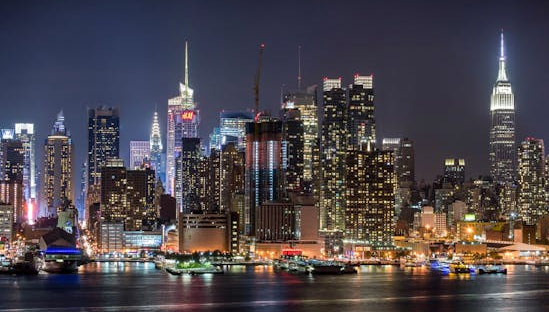
The skyscrapers of New York City are iconic buildings that represent the history of the city itself.
New York boasts the most famous skyline in the world, and the skyscrapers that form this skyline reflect economic, technological advancements, and social changes. Below, we will explore the history of New York's skyscrapers, focusing on key architectural landmarks.
The Birth of Early Skyscrapers
The history of skyscrapers in New York City dates back to the late 19th century. The skyscrapers of this era were symbolic structures that reflected commercial needs and the rapid growth of the city.
The Flatiron Building - 1902
- Location: 175 5th Ave, New York City
- Architect: Daniel Burnham
- Height: 87 meters (22 stories)
- Features: The Flatiron Building is one of the oldest skyscrapers in New York, famous for its linear design and unique triangular shape. This building is a landmark of New York City and is considered an important example of early skyscraper architecture.
Early 20th Century: The Era of Tall Buildings
The early 20th century was a period of rapid increase in skyscrapers in New York City. This was the result of a combination of technological innovation and urbanization, with the invention of elevators and the introduction of steel structures playing significant roles.
Empire State Building - 1931
- Location: 350 5th Ave, New York City
- Architect: Samuel R. Hines
- Height: 381 meters (102 stories), maximum height 443 meters
- Features: The Empire State Building is a symbol of New York and was the tallest building in the world when it opened in 1931, attracting global attention. This building is a prime example of Art Deco architecture, constructed during the Great Depression of the 1930s, symbolizing New York City's economic recovery.
Chrysler Building - 1930
- Location: 405 Lexington Ave, New York City
- Architect: William Van Alen
- Height: 319 meters (77 stories)
- Features: The Chrysler Building is a representative building of the Art Deco style and an icon of skyscraper architecture in the 1930s. It is particularly famous for its metallic decorations and intricate Art Deco details, and at one time was recognized as the tallest building in the world after competing with the Empire State Building.
1970s-1980s: The Rise of Modern Skyscrapers
The 1970s marked a new era for skyscrapers. The advancements in construction technology and the expansion of commercialization led to the emergence of various skyscrapers that transformed New York's skyline.
World Trade Center - 1973
- Location: 2 World Trade Center, New York City
- Architect: Minoru Yamasaki
- Height: North Tower 417 meters (110 stories)
- Features: The World Trade Center was a pair of twin buildings located in Lower Manhattan, which were the tallest buildings in the world at the time and a symbolic architectural representation of the American economy and finance. Destroyed in a terrorist attack on September 11, 2001, it has since been restored as One World Trade Center, symbolizing New York's rebuilding and recovery.
Rockefeller Center - 1933
- Location: 45 Rockefeller Plaza, New York City
- Architect: John D. Rockefeller Jr.
- Height: 266 meters (70 stories)
- Features: Rockefeller Center is a hub of business and culture in New York, famous for the annual Christmas tree installation. It is also well-known as the location of NBC, attracting many visitors to the iconic Rockefeller Plaza.
21st Century: The Emergence of Super Tall Buildings
Entering the 21st century, super tall buildings have become an increasingly important trend in New York City. Thanks to technological advancements, high-quality materials, and design innovations, buildings over 500 meters tall have become possible.
One World Trade Center - 2013
- Location: 285 Fulton St, New York City
- Architect: David Childs
- Height: 541 meters (104 stories)
- Features: One World Trade Center is a newly restored building on the site where the original World Trade Center was destroyed. This building symbolizes America's recovery and is recognized as the tallest building in New York City and one of the safest buildings in the world. Additionally, including its spire, it reaches a height of 1776 feet (540 meters), commemorating the year of American independence, 1776.
New Landmarks for Investment Banking and Finance
Recently, super tall buildings have become new bases for the finance industry and large corporations, with many mixed-use buildings featuring luxury apartments and hotels. For example, the Hard Rock Hotel and the Vessel at Hudson Yards have emerged as new economic symbols.
The history of skyscrapers in New York City is intertwined with the industrial revolution, technological advancements, and commercialization. Landmarks such as the Empire State Building, Chrysler Building, and World Trade Center have been significant architectural representations of New York City's growth and development, and today they remain icons representing the skyline of New York City. As we enter the 21st century, One World Trade Center, luxury apartments, and super tall mixed-use buildings further enhance New York's skyline.








 newyorker 101 |
 Things to Do to Buy a House |
 U.S. Weather Bureau News |
 International Court |
 Lunch and Dinner Mexican Taco |
  DREAM BIG |
  frostbite |
  330 Forever My Love |
  El Dorado |
  dralix58 |
  Gorama Round |
  Skydiving |
  dreamport |
  Yellow Snowman |
  Toaster Pizza Magic Show |
  velvetnom |
  Anytime Journey |
  Mrs. Duluth |
  jaxter |
  Atlanta Mama |
  Baguette Blog |
  Tan Sol |
  US Embassy |
  Korean Mom |
  My NYC |