
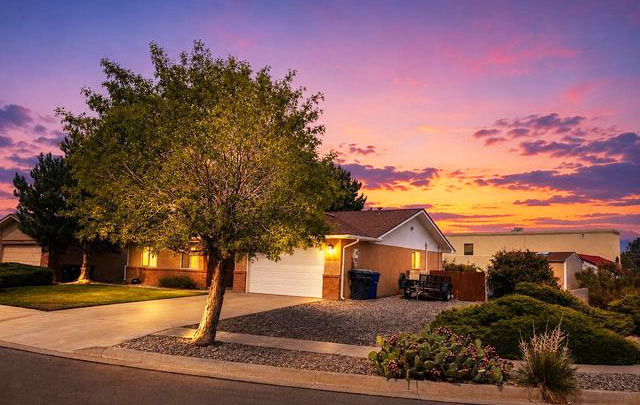
Like most sunbelt cities in the U.S., Albuquerque is fundamentally a car-centric city.
However, it's not completely devoid of public transportation. Albuquerque's public transit is mainly divided into two systems: the ABQ RIDE bus system and ART (Albuquerque Rapid Transit). ABQ RIDE has a bus network that covers the entire city of Albuquerque, with over 30 routes in operation.
The base fare is $1 for adults for a one-way trip, $2 for a daily pass, and about $30 for a monthly pass. The frequency varies by route, but major routes run every 30 minutes, while some routes operate every 60 minutes. Honestly, the intervals are not short enough to fully rely on for daily commuting.
ART (Albuquerque Rapid Transit) is a BRT (Bus Rapid Transit) line that opened in 2017. It runs east-west along Central Ave (Route 66), operating in dedicated lanes, making it faster than regular buses.
The fare is the same as regular buses, and the service frequency is about 7-10 minutes during peak times. Since it connects downtown, the UNM campus, and the Nob Hill commercial district, living near this line definitely increases the usability of public transportation. However, in the early days of ART's operation, local businesses near Central Ave experienced a drop in sales during the construction period, and there were complaints about the design of some stops. It is now considered to have stabilized to some extent.
Looking at the main road conditions and traffic, Albuquerque's key arterial roads intersect at Interstate 40 (east-west) and Interstate 25 (north-south). The point where these two highways meet is referred to as 'The Big I,' and congestion occurs during rush hours (7-9 AM, 4-6 PM).
However, the level of traffic congestion is different from that of major cities like New York, Los Angeles, and Chicago. According to the TomTom traffic index, Albuquerque is among the mid-sized cities in the U.S. with relatively low traffic congestion. The average commute time is reported to be about 20-25 minutes.
Bicycle infrastructure is also gradually improving. The city of Albuquerque is developing a bike path network of about 400 miles, including the Paseo del Bosque Trail, and the bike path along the Rio Grande is very popular among locals. While bike-sharing services are currently limited, electric scooters are operated by companies like Bird and Lime.
Uber and Lyft also operate normally in Albuquerque. The average wait time is about 5-10 minutes, and fares are lower compared to major cities. In conclusion, living in Albuquerque is very convenient with a car, and somewhat inconvenient without one, but if you live near the center, you can manage with a combination of buses and bicycles.
 SumiHouse
 MagicBean





 Rice Shop Uncle BLOG |
 Baguette Blog |
 solvix18 |
 novapixel |
 UNI Lover |
 Say Yes in English |
 New Mexico Friends MAX |
  Mrs New Mex |

 frostbite |
  Springs Korea |
  nixon |
  mini hometown |
  Gleeee |
  MacMorningBlog |
  ASURA |
  Elastico |
  shaket |
  vionoo |
  chocolate |
  Whisper |
  Star Voyager |
  InDiGo |
  Rocky Mountains |
  Whoever It Is, I Don't Know |
  Why Not Me |
  Plastic Rose |
  Victory 1988 |
  Gook Rule |