
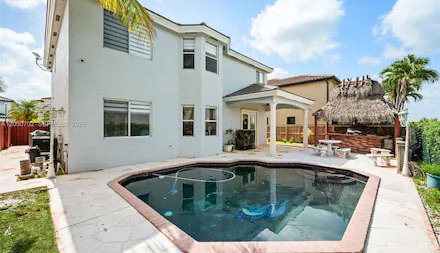
Before moving to Miami, I researched how much housing and rent would cost.
However, strangely, no one really talked about summer electric bills in detail.
I only realized how high they could be after receiving my first summer electric bill without giving it much thought.
Ah, in Miami, air conditioning is part of the living expenses.
Most of the electricity in the Miami-Dade area is supplied by FPL, which stands for Florida Power & Light.
When looking solely at the electricity rates, it's hard to say that this area is particularly expensive compared to the rest of the U.S. The issue is how much you use.
In Miami, air conditioning is not just a nice appliance; it's almost a survival necessity.
From June to about September, it can be hot outside, but the humidity is truly intense.
Even if you set your home to 75–78°F, which is about 24–26°C, the air conditioning will cycle on and off repeatedly.
Especially if you live in an older apartment, the difference is significant. If the window insulation is poor and the air conditioning unit is old, the cool air keeps escaping while the unit runs continuously. You might even feel like you can hear the electricity being consumed.
For a one-bedroom apartment, it's quite possible to see summer bills ranging from $150 to $250 a month. Of course, this varies greatly depending on the size of the home, the age of the building, the efficiency of the air conditioning, how many people live there, and the set temperature. If it's a single-family home, the story changes again.
So, when looking for rentals in Miami, I want to advise not to just focus on the rent.
If you visit a place and the air conditioning looks too old, it's a good idea to ask how much the previous tenant's summer electric bill was. Whether the windows are double-paned and the direction they face for sunlight throughout the day is also surprisingly important. You can see significant differences in electric bills for homes of the same size.
On the other hand, winter seems to be a bit more manageable.
From December to February, you start to understand why people want to retire in Miami. There are many days that are neither too hot nor too cold, and air conditioning use drops significantly. Unlike northern areas, you rarely need to run heating all day.
So in winter, for a small apartment, electric bills can drop to around $60 to $100 depending on usage. After seeing the summer bill, the winter bill can make FPL seem quite generous.
If you want to reduce your electric bill even a little, the first thing to change is your temperature control habits. There's no need to keep the house cool all day if no one is home. Using a smart thermostat to raise the temperature a bit while you're out and lower it again before you return is a good method.
However, turning off the air conditioning completely in Miami is something to be cautious about. The humidity is so high that if the inside of your home becomes excessively damp, you could face mold issues.
It's also a good idea to check the filters regularly. If the filters are clogged, cooling efficiency drops, and the air conditioning has to work harder. If you have an old unit, considering switching to a high-efficiency product like Energy Star could be worth it in the long run.
Ultimately, summer electric bills in Miami should not be considered separate from rent when budgeting for living expenses.
If you're preparing to move to Miami, don't just calculate $2,500 for rent and leave it at that. You need to factor in car insurance, electric bills, and especially the cost of air conditioning in the summer.
Think of it this way: you enjoy the warm winter sunshine for free, but in the summer, you're paying the air conditioning company. This perspective can make the cost of living in Miami seem a bit more realistic.
 vibecitywalker1987
 KimsElectric







 Smile Face |
 Helpful Life Stories |
 Casa Mia |
 Study Abroad Life Know-How Tips |
 pravix22 |
 Florida King |
  My Miami Stories |
 Komet Park |
 Mr Song Song |
 Victory 1988 |
  Cap Com |
  nixxon |
  kevin Kim |
  beerdreamer |
  Kims Spring |
  White bunny |
  Kansas City Representative Singer |
  shadow 007 |
  sun walker |
  Choco Choco Star |
  midnight blue |
  honeypot |
  summer |
  adventure77 |
  flexible |
  Shintongbangtong Shin Naerin James Park |
  truepixel |
  Kathy's Blog |
  Hae Naem |
  quatspace |