
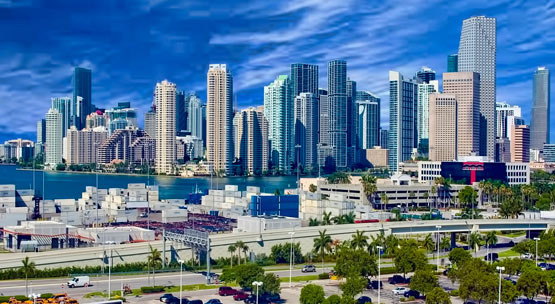
One of the things that confuses first-time visitors to Miami is the structure of its administrative areas.
Many people are unsure about the differences between Miami, Miami Beach, and Miami-Dade County. I was quite confused at first as well. Let me clarify.
First, Miami-Dade County is the largest administrative unit. Located at the southeastern tip of Florida, this county has a population of about 2.8 million, making it the most populous county in Florida. Within the county, there are 34 independent municipalities, as well as unincorporated areas that are directly operated by the county. The City of Miami is one of these 34 and is also the county seat. Other separate municipalities within the county include Doral, Miami Beach, Coral Gables, Hialeah, Homestead, and North Miami.
The City of Miami is divided into several neighborhoods. The official administrative division consists of 5 districts, each represented by a commissioner. However, the local divisions that residents use in their daily lives are much more detailed, with notable neighborhoods including: Downtown, which is Miami's business and commercial center, featuring Bayfront Park and Bicentennial Park; Brickell, known as the financial district with high-rise condos and international banks, and one of the fastest-growing areas in Miami; and Wynwood, which transformed from a warehouse district into a hub for street art, galleries, and restaurants.
Little Havana is the cultural center for Cuban immigrants, with Calle Ocho (SW 8th Street) as its main street. Little Haiti is home to the Haitian immigrant community, located around Edison Avenue. Overtown is the oldest African American residential area in Miami and holds historical significance. Allapattah was once a neighborhood with a large Central American immigrant population, but it is currently undergoing rapid gentrification. Coconut Grove is one of the oldest settlements in Miami, where lush residential areas coexist with marinas. Coral Gables is a separate city but is adjacent to the southwest of Miami, featuring upscale residential areas and the University of Miami campus.
Miami Beach is a separate city located on an island facing the City of Miami across Biscayne Bay. It is divided into South Beach, Mid Beach, and North Beach, and the globally recognized image of Miami is largely shaped by Miami Beach. The area with a significant Korean community is Doral, which is a separate city within Miami-Dade County located west of Miami International Airport. It is a residential area where Latinos and Koreans coexist, with a concentration of Korean businesses and churches.
 FunUSALife
 MonthlyLoot




 Smile Face |
 Helpful Life Stories |
 Casa Mia |
 Study Abroad Life Know-How Tips |
 pravix22 |
 Florida King |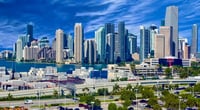
 My Miami Stories |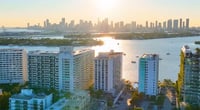
 Komet Park |
 Mr Song Song |
 Victory 1988 |
  Cap Com |
  nixxon |
  kevin Kim |
  beerdreamer |
  Kims Spring |
  White bunny |
  Kansas City Representative Singer |
  shadow 007 |
  sun walker |
  Choco Choco Star |
  midnight blue |
  honeypot |
  summer |
  adventure77 |
  flexible |
  Shintongbangtong Shin Naerin James Park |
  truepixel |
  Kathy's Blog |
  Hae Naem |
  quatspace |