

A few days ago, an older colleague nearing retirement was shaking her receipt and laughing at a local café. "Here, the coffee price doesn't have tax, so the bill is nice and clean." That comment stuck with me oddly long.
In fact, the first two questions people considering retirement relocation to Delaware usually ask are about taxes on pensions and whether there really is no sales tax. Today, I want to calmly address those two questions based on official data.
First, let's talk about pensions. According to the Delaware Division of Revenue, residents over 60 can deduct up to $12,500 from their taxable income for pensions and qualified retirement income.
Specifically, the deduction is based on the lesser of $12,500 or the actual amount of pension and retirement income. If the pension is $8,000, then only $8,000 is deducted.
Interestingly, the definition of "qualified retirement income" is quite broad. It includes dividends, interest, capital gains, and net rental income.
Distributions from qualified plans like IRA, 401(k), and 457 plans are also included. This means that even those without a workplace pension can benefit, which I found to be the most encouraging part.
If you are married, each spouse can claim the deduction separately. If both are over 60 and have retirement income, it effectively applies twice for one household.
What about those under 60? For regular pensions, not military pensions, the deduction limit drops significantly to $2,000. I honestly found it a bit amusing to see such a huge difference in numbers just from one birthday.
Military pensions have separate regulations regardless of age, and there is a recent bill to raise the limits. If applicable, be sure to check the applicable year.
Distributions that incur penalties, like early withdrawals, typically do not qualify for this deduction. If you plan to cash out your IRA before retirement, keep this in mind.
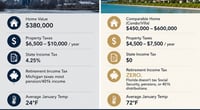
Social Security is simpler. Delaware does not impose state income tax on Social Security benefits or Railroad Retirement benefits.
This means Social Security is completely excluded from calculations, and on top of that, the $12,500 pension and retirement income deduction is added. Many people confuse these two and end up overlapping the limits.
However, Delaware is not a state without income tax. The tax rate starts at 0% and rises to a maximum of 6.6% for income over $60,000.
This means that any pension or part-time income after retirement that exceeds the deduction limit will be subject to this tax rate. If you only focus on the term "tax-free," you might be surprised in April.
Now, let's talk about sales tax. Delaware has no state or local sales tax. The price you see at the register is the amount you pay.
Instead, the state government collects a gross receipts tax from businesses. This tax is applied to the seller's revenue, not the consumer, so it doesn't appear on the receipt.
Of course, that cost might be somewhat included in the price. Still, the absence of sales tax on large purchases like cars, appliances, and furniture makes a significant difference for retirees' wallets.
As someone who loves cars, this is the most noticeable benefit for me. However, when buying a vehicle, even without sales tax, there may be separate registration fees, so be sure to check the DMV guidelines first.
There are also small benefits regarding property taxes. Homeowners over 65 can receive a property tax credit of 50% on school property taxes, up to a maximum of $500.
However, there's a catch. Those who moved to Delaware after January 1, 2018, must reside for at least 10 years before applying.
There has been a proposal to reduce this residency requirement, but I have not yet confirmed whether it has passed. The application deadline is usually April 30, so checking directly on the county website is the most accurate.
Looking at the numbers, Delaware's retirement tax structure seems to provide multiple layers of small deductions rather than a single large one. The tax-free status of Social Security, the retirement income deduction, and the 0% sales tax stack up.
I think this reflects a very Delawarean approach. It's not flashy, but the benefits become more apparent the longer you live here.
However, I do worry that these benefits are more advantageous for retirees who already have homes and pensions. For first-generation immigrants living in rentals, property tax credits might feel irrelevant.
So, I always tell the older folks around me this: deductions don't just come automatically; you have to claim them directly on your tax forms.
Taxes can vary significantly based on income type, marital status, and when you move. Since it depends on individual circumstances, be sure to consult a tax professional before filing.
If I were in your shoes, I would start planning how to withdraw income from different accounts about 1-2 years before retirement. Using the $12,500 as a baseline, I would strategize the order of withdrawals.
How important is tax when choosing where to retire for you? Honestly, I think having neighbors to grow old with is more important than taxes, but I'm curious about your thoughts.
 BerryRoboCop





 Burbank Lee |
 vibranto |

 sparkling |

 oh my salami |

 saffronroute |

 Live and that's it |



 Doori Ark |


 Min's blog |
 skykong |
 My Circle |
 novapixel |
 urban legend |
 coolriver |
 Good Neighborhood, Wealthy District Information |
 Ro Ro Car |
 Amber H |
 new sugar |
 Palm 1000 |
 loran |
 donutfield |
 Tennis City |
 sunny7 |
 Questions about firearms while living in America |
 Shoot Me |
 mochifox |
 zucchini |
 Anna Life |
 Exciting FM Radio |