
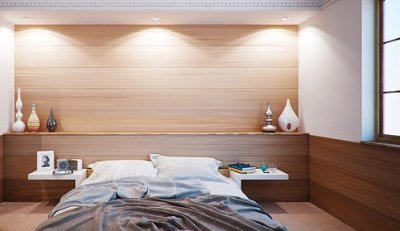
Let's start with a question that many people might have: How much will the rent increase if I add one more room? This is a question that anyone looking for an apartment in Salt Lake City has likely considered at least once.
The first dilemma is whether to start with a studio or go for a 1-bedroom from the beginning. Salt Lake City is a city that has seen a steady influx of young single workers due to the tech industry known as Silicon Slopes, so the answer to this question becomes clearer when looking at the rental prices by unit type.
A studio averages about 410 square feet, with rent ranging from the $900s to the $1,170s depending on the source, but generally, it tends to settle around $1,100 to $1,150. This unit is primarily sought after by young professionals in their early 20s and international students living alone near downtown or college areas.
Next, you might wonder how much more you need to pay if you move to a 1-bedroom. A 1-bedroom averages about 665 square feet, with rent typically between the $1,200s and $1,430s, with a median around $1,350 to $1,400. The preference for this unit type is particularly high among tech workers who work from home, as it offers a separate room.
Then comes the question of when to move to a 2-bedroom if you start a family. A 2-bedroom averages 990 square feet, with rent ranging from the $1,400s to the $1,780s, varying by source. Newlywed couples, families with one child, or two roommates living together make up the primary demand in this range.
Finally, you may wonder if a 3-bedroom is necessary if you have two or more children. A 3-bedroom averages 1,320 square feet, with rent typically between the $2,100s and around $2,500. At this point, most tenants are families looking to settle down, considering school districts.
When looking at downtown, Sugar House, and the west valley area, there are significant variations even with the same number of rooms. Downtown has a strong walkability advantage but is primarily stocked with studios and 1-bedrooms, while suburban areas in the valley make it relatively easier to find 2-3 bedroom townhouse options.
In recent years, the proportion of 1-bedrooms and studios in new developments in downtown Salt Lake City has noticeably increased. As the influx of tech workers and single-person households rises, developers are focusing on smaller units. Conversely, the share of 3-bedrooms in new constructions continues to decline.
Looking at the rent differences between unit types, moving from a studio to a 1-bedroom typically costs about $200 to $250 more, from a 1-bedroom to a 2-bedroom about $350 to $400 more, and from a 2-bedroom to a 3-bedroom about $350 to $400 more as well. The increase in cost for each additional room remains relatively consistent, which is a characteristic of this city.
Given the high proportion of tech workers, many recent developments are incorporating built-in desk spaces or shared co-working lounges, considering the work-from-home trend. Even if the unit sizes are similar, the presence or absence of these amenities can lead to rent differences of $50 to $100 for the same 1-bedroom.
For Korean families, it may be practical to consider a 2-bedroom as a basic option while factoring in school and commuting distances, only considering a 3-bedroom if the budget allows. For those newly settling in the U.S., starting with a studio or 1-bedroom to get familiar with the area before moving may also be a good approach. This article notes that the figures are based on various real estate data platforms as of the first half of 2026.
 Ginabalu
 UrbanHarbor71







 moo moo |
 ultron78 |
 garlic bread |

 urbanmint |

 Tan Sol |
 morvex37 |

 Augusta Univ |
  B.I.G. Victor |
  Victory 1988 |
  Swift Falcon |
  venture |
  SPAM 101 |
  choi family |
  zoryan |
  cloud0 |
  SKy Face |
  wonder |
  Dragon Lee |
  productionblog |
  What can make money? |
  Oklahoma Hoya OK |
  prixon74 |
  Roman Pan |
  USALATU BLOG |
  Sunshine Blog |
  Minnesota Small Business |