


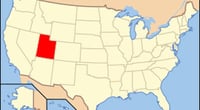
Salt Lake City, Utah, has experienced rapid growth in the technology sector over the past decade, earning it the nickname "Silicon Slopes." Recent market trends indicate that while this growth has not completely stalled, the explosive pace seen in the past has somewhat slowed down.
The population of the metropolitan area, including Salt Lake County and nearby Utah County, continues to show a net influx. However, with housing prices rising significantly, there has been an increase in young people moving to nearby Idaho or Nevada, suggesting that the scale of net influx has somewhat diminished compared to the period immediately following the pandemic.
In addition to established tech companies like Adobe, Qualtrics, and Overstock, recent investments in semiconductor and data center industries are also on the rise. The logistics industry is expanding, centered around the Utah Inland Port project, and the biotech startup ecosystem linked to university hospitals is steadily growing.
According to data from the Bureau of Labor Statistics, the unemployment rate in the Salt Lake City area has remained around 3%, which is lower than the national average. While income growth rates, particularly in the tech sector, have been relatively high, recent evaluations suggest that wage growth has slowed compared to previous years.
Airport expansion construction is nearing completion, and light rail (TRAX) line extensions and urban redevelopment projects are underway in multiple locations. Plans for power grid investments to attract data centers are also being discussed at the state government level, indicating a relatively solid infrastructure support.
Institutions like the Brookings Institution have identified Salt Lake City as a key growth hub in the western U.S., but they also point out that housing supply shortages and air quality issues could be factors that limit long-term population influx.
For Korean households, the established Korean community, school districts, and stable job base are seen as advantages. However, given that housing prices have already risen significantly, a cautious approach that considers rental income and long-term holding rather than new purchases may be necessary.
 LightYard
 Valley 9







 garlic bread |
 Sugar Cream Door Bulletproof Noodles |
 urbanmint |
 |
| 
 Premium Gas Camp |

 Enjoyable American Life Diary |

 Vasila's Newlywed Blog |
  draxen |
  gallery |
  milkyotter |
  Zoom Zoom Zoom |
  Minnesota Lakes and Clouds |
  noraro |
  tervox95 |
  vale vale |
  yentra |
  Golden life |
  andrew park |
  Peter Pan Pet |
  Balan |
  Cali M Law Group |
  neroyo |
  Dreams Come True as Desired |
  Khan Film Blog Production |
  coloradoman |
  Living Economy Information Blog |
  rustley |