

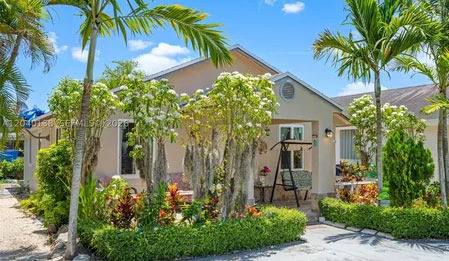
When preparing to move to Tampa, you might find yourself pondering this question.
With rent prices being quite high, wouldn't it be better to buy a home rather than pay that amount every month?
Let's take a look at the numbers.
We'll estimate the median rent for a 2-3 bedroom in Tampa at $2,100 per month, and the median home price at around $390,000.
Compared to a few years ago when home prices were skyrocketing, the market has calmed down a bit lately, and the gap between renting and buying has narrowed.
First, let's calculate the Price-to-Rent Ratio.
Dividing $390,000 by the annual rent of $25,200 gives us about 15.5.
Typically, if this number is below 15, buying is more favorable, while above 21 indicates renting is better.
A ratio of 15.5 is quite close to favoring buying.
However, if you immediately think, "Then I should just buy a house," that's a bit premature.
You need to calculate how much you would actually be spending each month.
Let's assume you put 20% down on a $390,000 home.
Putting down $78,000 initially and taking out a loan for the remaining $312,000 at a fixed rate of 6.75% for 30 years results in a monthly mortgage payment of about $2,020.
This is actually slightly less than the rent of $2,100.
But being a homeowner doesn't end there. You also have property taxes and homeowners insurance to consider.
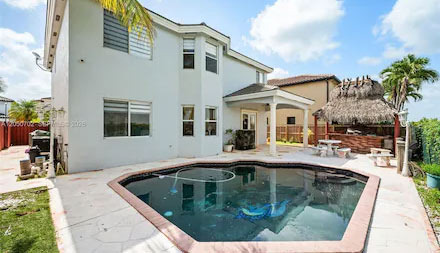
Including these costs, you can estimate your monthly housing expenses to be around $2,500.
This means you would be paying about $400 more per month than renting. Over a year, that's approximately $4,800.
You also need to think about repair costs. When renting, if the air conditioning breaks, you just call the landlord, but if it's your home, you have to fix it yourself.
In Florida, a major air conditioning repair can be quite expensive.
Insurance is also an important factor in Tampa. Given the rising homeowners insurance rates in Florida's coastal areas, it's wise to get insurance quotes before viewing homes.
Even for homes at the same price, insurance costs can vary significantly based on location, roof age, and flood risk.
Another consideration is the $78,000 down payment.
If you didn't buy a home, you could invest that money elsewhere. For example, assuming an average annual return of 7%, it could grow to about $109,000 in five years. Of course, investment returns are not guaranteed, but you should consider this opportunity cost when buying a home.
On the flip side, buying a home has its advantages.
Part of your monthly mortgage payment goes toward paying down the principal, and if home values increase over time, your assets grow as well. This is especially true if you plan to live in Tampa for more than five or ten years. You also reduce the worry of rent increases every few years.
Therefore, I believe how long you plan to live in Tampa is quite important.
If your job is stable and you plan to stay for at least five years due to your child's school, and you have enough emergency funds left after a 20% down payment, then in the current Price-to-Rent Ratio, it makes sense to seriously consider buying.
Conversely, if you might move to another city in 2-3 years and putting down $78,000 would leave you with almost no savings, there's no need to rush.
Looking at the numbers, Tampa's market leans slightly towards buying rather than renting.
 Cricket
 mintcloudwalker1951






 |
| 
 Premium Gas Camp |
 CA Real Estate |
 cheesepup |
 breezem |
 Yes Dorian |
 Kyo Sho |
 My Two Way |
 Living in Florida |
  Cap Com |
  nixxon |
  kevin Kim |
  beerdreamer |
  Kims Spring |
  White bunny |
  Kansas City Representative Singer |
  shadow 007 |
  sun walker |
  Choco Choco Star |
  midnight blue |
  honeypot |
  summer |
  adventure77 |
  flexible |
  Shintongbangtong Shin Naerin James Park |
  truepixel |
  Kathy's Blog |
  Hae Naem |
  quatspace |