

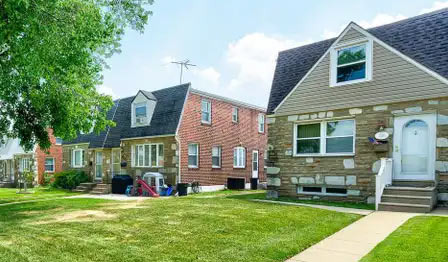
The city where America was founded, Philadelphia, has a median household income of $50,000 per year. This is about 36% lower than the national average of $78,538.
Let's explore why this city, one of the major metropolitan areas in the East, has such a low median income and what this means for the real estate market.
Philadelphia's median income of $50,000 is influenced by several structural factors. First, the concentration of universities in the city is very high. Major universities such as the University of Pennsylvania (UPenn), Temple University, Drexel University, and Saint Joseph's University are located in and around the city center, including tens of thousands of student households in the statistics. Their presence significantly lowers the median income. If we consider only employed households, the actual income may be higher than this.
The income disparity within the city is also extreme. Affluent neighborhoods like Center City, Rittenhouse Square, and Fishtown have median incomes ranging from $85,000 to $120,000, while some areas in North Philadelphia remain at $25,000 to $35,000. The overall figure of $50,000 for the city represents the median of this extreme polarization, making it difficult to accurately capture the reality of any specific area with a single number.
Housing prices in Philadelphia are relatively accessible compared to other East Coast cities. Condos and single-family homes in the city center often trade in the range of $200,000 to $400,000, and homes in Northeast Philadelphia or the outskirts can be found in the $150,000 to $250,000 range. The price-to-income ratio varies by area, ranging from 3 to 6 times. Compared to New York or Boston, the perceived entry barrier is lower.
The core foundation of Philadelphia's economy is healthcare and education. Major healthcare institutions like the UPenn Health System, Jefferson Health, and Temple Health, along with numerous universities, serve as the city's largest employers. Additionally, over the past decade, commercial development in Midtown and gentrification in areas like Fishtown and Point Breeze have led to an influx of high-income professionals. This trend may gradually raise the income distribution in the region.
However, Philadelphia has its unique cost structure. In addition to Pennsylvania's income tax, there is a City Wage Tax imposed by the city of Philadelphia, which applies to both residents and workers in the city. This wage tax reduces the actual disposable income to some extent. For investors, the tax structure on rental income is also a separate consideration that needs to be examined.
While Philadelphia's median household income of $50,000 is significantly below the national average, the coexistence of its East Coast metropolitan location, relatively accessible housing prices, and a stable employment base centered around healthcare and education is notable. Given the extreme income disparities by region, approaching the data based on zip codes rather than the overall city figure allows for a more accurate assessment for both residents and investors.
 PnutJumpCpt
 shaquilleoatmeal






 |
| 
 Premium Gas Camp |
 CA Real Estate |
 cheesepup |
 breezem |
 festive |
 Pennsylvania Information News |
  heartwarming |
 DelphiaMo |
 Medical Latest Trends News |
  vrixen73 |
  AZ Road Master |
  Victory 1988 |
  summita |
  business lim |
  Colorado Lee |
  Make My Day |
  Fros Pro |
  lioness |
  La Bean |
  American History This and That |
  Monte Sori |
  U donn |
  Sarah's Blog |
  Holy Cow |
  monster |
  houston mama |
  Reggae Party |
  Thou Thou |
  Tennessee Land |