

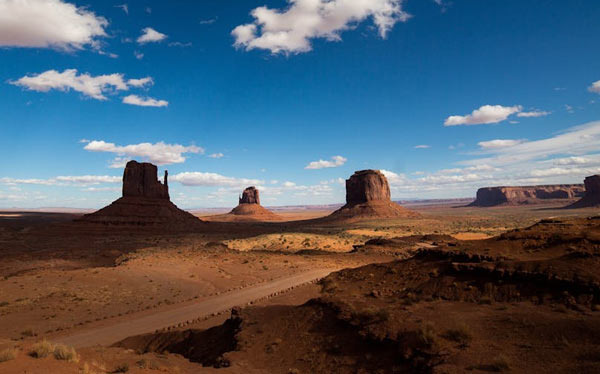
The Arizona desert is not just dry land; it offers a unique landscape with geological diversity and ecological richness.
The desert landscape in this region is well known for its following features.
Diverse Desert Terrain
Arizona is the only state in the U.S. where four major desert regions intersect:
-
Sonoran Desert: The largest and most biologically diverse area, characterized by the giant saguaro cactus.
-
Mojave Desert: Located in the northwest, it features unique vegetation such as the Joshua tree.
-
Chihuahuan Desert: Spanning the southeast, it is characterized by various cacti and dry plains.
-
Great Basin Desert: Located in the north, it provides a dry environment at high altitudes.
These diverse desert terrains create different ecosystems and landscapes, offering visitors a variety of experiences.
Unique Rock Formations and Canyons
The Arizona desert is famous for its various rock formations and canyons formed by millions of years of erosion and geological activity:
-
Grand Canyon: A massive canyon formed by the Colorado River, it is a representative site showcasing the geological history of the Earth.
-
Monument Valley: A region filled with massive rock pillars made of red sandstone, it has served as a backdrop for many films and photographs.
-
Slot Canyon: A narrow and deep canyon, where the light and shadows change impressively depending on the angle of sunlight.
These terrains are places where one can feel the power of nature and the passage of time, inspiring many explorers and photographers.
Diverse Cacti and Vegetation
The Arizona desert is filled with various cacti and plants adapted to the dry environment:
-
Saguaro Cactus: A symbol of the Sonoran Desert, it is a giant cactus that can reach heights of 12 meters.
-
Prickly Pear Cactus: Grows in wide plains and bears edible fruit.
-
Ocotillo: A unique plant with slender stems that bloom with red flowers.
These vegetations demonstrate remarkable adaptability to survive in the desert's dry environment.
Stunning Sunsets and Starlight
The clear skies and low humidity of the desert provide optimal conditions for sunset and stargazing:
-
Sunset: The combination of red rocks and wide plains creates a spectacular scene painted in golden and crimson hues.
-
Stargazing: In areas with low light pollution, the Milky Way and constellations can be observed clearly.
This natural beauty leaves a deep impression on many visitors.
Rich Biodiversity
Despite the dry environment, the Arizona desert is home to a variety of flora and fauna:
-
Animals: Coyotes, jaguars, desert tortoises, various snakes, and lizards inhabit the area.
-
Birds: Cactus wrens, roadrunners, and various raptors can be observed.
These creatures play a crucial role in maintaining the desert's ecosystem.
The Arizona desert is like a vast natural museum in itself. With its diverse terrains, ecosystems, and natural beauty, it offers visitors an unforgettable experience.



 celtics |
 candytip |
 Gold Bar |
 Pirate Ship Popcorn Maker |
 Montgomery Mom |
 Toaster Pizza Magic Show |
 Kitchen Ideas |
 USA East News, Information |

 Arizona AZ Cowboy |
  silverpath |
  Komet Park |
  reliable |
  vexo90 |
  As Always Today |
  veltar87 |
  United States National Administrative Organization Stories |
  springwaltz |
  dense |
  Tiger Milk Foam Research Institute |
  Oreore Mushroom |
  optimistic |
  Good Good |
  berion88 |
  bravo777 |
  skyblue |
  Project Tomorrow |
  apricotla |
  Soy Angelino |
  nati8 |