
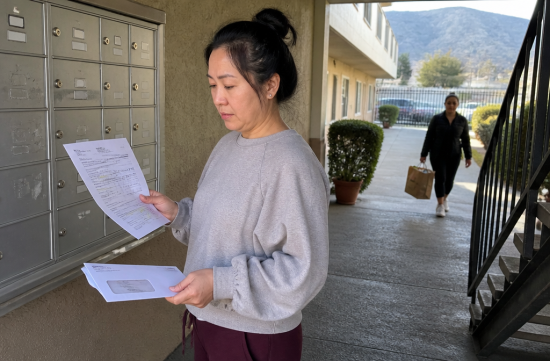
If your lease renewal is scheduled for January, you may soon receive a rent increase notice in your mailbox. The first question that comes to mind is likely, 'Is this amount legally permissible?'
To put it simply, if your unit falls under state law AB 1482, the rent increase cap in Burbank as of January 1st is 8.7%. However, simply multiplying your current rent by 8.7% is not the end of the story, so let's break it down step by step.
Where does the 8.7% figure come from? It is the lesser of 5% plus the local inflation rate or 10%.
The index used here is the regional CPI as of April. According to the U.S. Bureau of Labor Statistics (BLS), the LA area CPI-U increased by 3.7% over the 12 months leading up to April 2026.
So, adding 5% and 3.7% gives us 8.7%. Data from the LA rental industry also applies this figure to increases effective from August 1, 2026, to July 31, 2027.
The key date is not when you receive the notice but when the increase takes effect. Even within the LA area, the increase effective on July 1 of this year was 8.0%, while the one effective on October 1 was 8.7%.
California as a whole does not have the same number. The Alameda rent program indicates a cap of 8.8% for the same period, so be sure to check which region the numbers you see online pertain to.
The next question is, 'Is my home subject to this law?' This is where things can get a bit complicated.
Buildings that received their occupancy permit less than 15 years ago are exempt from the cap. If you live in a relatively new apartment, check this first.
Single-family homes and condos may also be exempt. However, the lease must include the legally required exemption language.
If this language is absent, the cap applies even to single-family homes. The same goes for properties owned by corporations, REITs, or LLCs with corporate members. Therefore, I would recommend checking the lease agreement before the notice.
Now for the calculations. If your current rent is $2,500 and has remained the same for the past 12 months, you can raise it by up to $217.50, which is 8.7% of $2,500.
The new rent cap would be $2,717.50. This part is straightforward.
A commonly overlooked aspect is the base rent. The cap applies not to the current rent but to the lowest rent charged during the 12 months prior to the increase taking effect.
For example, if you paid $2,400 in January 2026 and then increased it to $2,500 in July, the base for the increase on January 1 of next year would be $2,400.
Adding 8.7% to $2,400 gives you $2,608.80. Therefore, the maximum amount you can increase from the current $2,500 is only $108.80, which is nearly half of what simple calculations would suggest.
If you raise the rent multiple times within 12 months, they are considered cumulatively. You cannot avoid the cap by spreading out the increases.
Also, pay attention to the notice period. If the cumulative increase over 12 months is 10% or less, a 30-day written notice is required; if it exceeds 10%, a 90-day written notice is necessary.
If the increase takes effect on January 1, this means that for a 30-day notice, the written notice must arrive by early December. Exempt units do not have a percentage cap, but if the increase exceeds 10%, the 90-day rule still applies. Fixed-term leases have different renewal conditions, so check those clauses as well.
Some may wonder, 'Isn't it 3% in LA?' That 3% refers to units under the LA Rent Stabilization Ordinance (RSO), which does not apply to Burbank as it is a separate city.
So, is there a specific cap for Burbank? From what I have checked, there is no city-specific cap currently in effect, and state law serves as the guideline.
The city's tenant protection ordinance focuses more on eviction and relocation costs than on the increase amount. The city FAQ states that in cases of no-fault eviction, relocation costs can be up to three months' rent at the current rate.
A variable is the soft cap. The city council directed staff to draft a soft cap ordinance with a 4% limit by a 3-1 vote on October 29, 2025.
If the discussions proceed as planned, tenants may have to choose between accepting an increase over 4% or receiving relocation costs equivalent to three months' rent based on the new rent. The vice mayor also clarified that this is not yet finalized.
The private guidance site RentCheckMe, renewed in June this year, states that it has not yet been adopted, and I have not found any updates on its adoption. The Burbank Leader reported that the city council's composition will change significantly after the November 3 election, so this discussion may be revived.
Therefore, when you receive a notice, I recommend checking the tenant protections page on the city website for the latest ordinances. If new ordinances are enacted, the assumptions behind the calculations may change.
I would approach it in this order: look for the exemption language in the lease, check the building's occupancy permit date.
Next, find the lowest rent from the past 12 months and add 8.7%. If the amount on the notice exceeds that figure, it would be wise to ask the landlord for a written explanation of the calculation.
The actual application may vary depending on the building and contract terms. If in doubt, consult organizations like the Housing Rights Center or the LA Legal Aid Foundation (LAFLA).
8.7% is certainly not a small number from a tenant's perspective. However, the cap is just that—a cap—and does not mean you must raise it by that amount.
With time until January, if you plan to stay long-term, I recommend bringing this up to negotiate the increase amount first. This is a quite realistic proposal for landlords aware of vacancy costs.
 TexasLoneStar






 uplifted |
 Dr. Kelso |

 silents |
 Choco Choco Star |
 gentle |

 American Blog Forge |

 Yo Lock Me Up |
 garlic bread |


 Popular Song Exciting Song |
 Amber H |
 The Good Life |
 Western US Medical Student Association |
 American Food Information & Calories |
 Big North |
 babybay |
 Ford Kim |
 honda civic |
 whimsical |
 nova nova |
 figtop |
 Yahoo LALA |
 Korea News Economic News |
 calvor |
 timistic |
 Lee Sang Don |
 victoria jung |
 The Long Shot |
 Univ Student |