

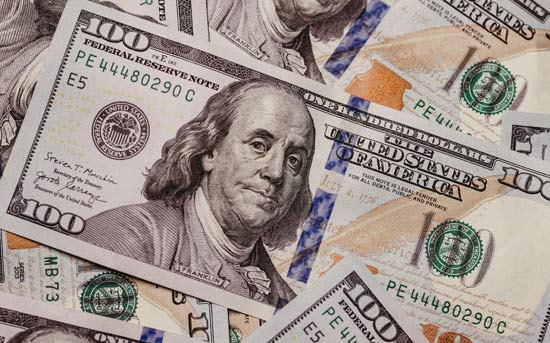
These days, when the topic of the U.S. dollar comes up, I first think, "Haven't we been too complacent wearing the crown of the reserve currency for too long?"
As you know, the dollar is the base currency for global transactions. We buy oil in dollars, international bonds are in dollars, and the foreign exchange reserves of central banks around the world are in dollars. So, when the U.S. runs low on money, it can just print bonds and convert them into dollars.
The problem is that while this may seem fine now, the story changes if it goes on for too long.
Because the world needs dollars, even if the U.S. accumulates debt, the market responds with, "But it's still the U.S." and continues to buy. Even if the national debt exceeds tens of trillions of dollars, U.S. Treasury yields remain the benchmark, so at this point, it's almost like the whole world is extending credit to the U.S.
However, if you look at the structure of this debt, it gets even more amusing. The creditors are the central banks, pension funds, and financial institutions of various countries holding U.S. Treasury bonds, including Japan, China, and the UK, while within the U.S., the Federal Reserve, Social Security funds, and Wall Street hold a significant amount. The debtor is, of course, the U.S. government. In summary, the U.S. government borrows money, and the whole world reverently holds that paper.
The real fun begins now. If the debt grows too large, the interest costs start to snowball, and if the U.S. begins to print more money to cover that, the value of the dollar starts to slide. As the dollar weakens, other countries might think, "Oh, this is a bit risky?" and reduce their holdings, which means the U.S. will have to offer higher interest rates to sell bonds.
Raising interest rates increases the fiscal burden, leading to more debt... thus completing a wonderful vicious cycle. This is both the privilege and the trap of being the reserve currency. Because it's too easy to accumulate debt, fundamental fiscal dieting is postponed, and the approach becomes "let's just hold on for now."
For now, it doesn't seem to be a problem. When the world becomes unstable, international finance tends to hoard dollars and seek refuge under the dollar umbrella.
It's like going back into a house that's on fire because "this house is still the safest." However, in the long run, cracks are starting to show. Some countries are diversifying their trade currencies to euros and yuan, central banks are quietly accumulating more gold, and they begin to wonder, "Can we really rely solely on the dollar?"
Ultimately, the U.S. debt is homework that must be paid off with the future taxes of American citizens. The world is the creditor and stakeholder, but in the end, the ones who will be presented with the bill are the U.S. government and its citizens. The dollar still sits on the throne, but that crown is quite heavy.
It may look like lying on a soft cushion of reserve currency, but if the alarm goes off wrong just once, a significant restructuring day may come.
The current dollar system ultimately stands on a thin plate of "trust." When it's maintained, nothing happens, but once it starts to crumble, it can happen faster than expected.
It may appear to be a glamorous mansion on the outside, but it's a safe house that needs to be checked regularly for cracks in the inner walls.
I believe whether the U.S. continues to grow its debt in a "we are special" mode will be told by the speed of increasing debt and policy direction.







 Moscow Kim |
 coloradoman |
 Montgomery Mom |
 GOGO SING |
 Hajiwon Blog Hair Salon |
 garlic bread |
 Yo Lock Me Up |
 California Information News |

 My Town My Way Blog |
  manchester |
  constant |
  Leapfrog Move |
  vibranto |
  Tora Tora |
  yellowbutter |
  Dolly |
  US Embassy |
  NYC saladbar |
  Finding Superfoods |
  lightyear |
  song bang |
  vexomo |
  Indiana Jones |
  meloncat |
  novapixel |
  mortrix |
  Esther 1983 |
  fortbliss |