
Recently, I heard a story about a friend who received a home security quote and couldn't help but laugh. They only installed a few cameras and sensors, but the monthly monitoring fee was much higher than expected.
In fact, many people sign contracts without fully understanding them, relying solely on real estate or neighbor recommendations when moving. A few months later, they realize the true cost of the contract when they receive the bill.
Some companies even require a three-year commitment, meaning if you move in the middle of the contract, you might have to pay a cancellation fee.
For example, ADT starts at $24.99 per month for basic monitoring, and plans that include cameras can go up to $39.99. Vivint is similar, with monthly fees rising to $49.99 as the number of devices increases.
If you hire a professional for installation, it can add another $10 to the cost. Fixed monthly expenses can be quite daunting.
Even if you only calculate $30 a month, that adds up to $360 a year, and over three years, it exceeds $1,000. With that amount, you could buy a complete self-monitoring system.
However, before considering monitoring costs, there's one important point to address. A study conducted on burglars incarcerated at the University of North Carolina at Charlotte found that many respondents said they would abandon a house if they saw noticeable cameras or warning signs.
Of course, recent FBI data shows that residential burglary rates across the U.S. have been steadily declining for several years. This doesn't mean we should let our guard down, but it also suggests that there's no need to panic.
Nowadays, there are many self-monitoring systems that can eliminate monitoring fees altogether. Once you purchase the equipment, you receive alerts and can check in directly on your phone.
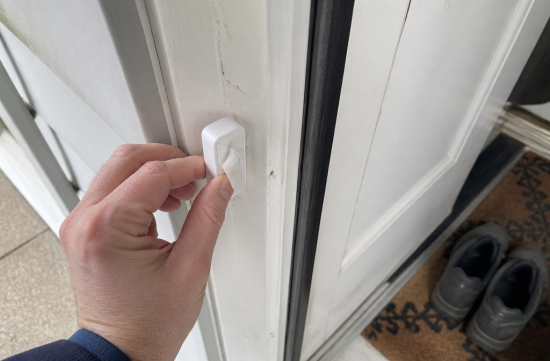
Another advantage is that you don't need to call in an installer. Most products just require you to open the box, stick it up with double-sided tape, and connect it to the app.
SimpliSafe allows you to set up equipment starting at around $250, and self-monitoring is completely free. However, if you want to store camera footage, you'll need to add a $9.99 monthly plan.
Wyze starts with a $49.99 starter kit, and self-monitoring is also free. Even with professional monitoring, it's only $9.99, making it one of the cheapest options in the industry.
Ring Alarm includes sensors and a siren in its $199 starter kit, and app-based monitoring is free. I appreciated that Abode offers a free self-monitoring plan with no feature limitations.
Some Eufy cameras can store footage on the device without uploading it to the cloud, so you won't incur monthly fees. However, keep in mind that storage capacity is limited.
If you're worried about package theft, you don't necessarily need a full system. A single video doorbell can provide sufficient monitoring of the front door.
One thing to note is the potential for homeowner insurance discounts. Many insurance companies offer discounts only if you have a professional monitoring contract, so it's wise to check with your insurer before switching to self-monitoring.
This difference can be even more significant if you're renting. Self-monitoring equipment, which you can take with you when you move, is much more practical than a long-term professional monitoring contract.
A friend renting an apartment in Texas had a similar experience. The entire complex had cameras, but the area right in front of their door was a blind spot, so they added a doorbell camera for peace of mind.
Moreover, many apps now include automation features that turn on lights or connect with smart locks when a door opens, even without a paid plan. This means that paying more doesn't always guarantee more features.
Of course, self-monitoring has its clear downsides. If an alarm goes off, the monitoring center won't call the police for you, so it's ultimately up to you to make decisions and take action in that moment.
You should also be aware that if the Wi-Fi or power goes out, you may not receive alerts. If you live in an area with frequent power outages, check if the product has battery backup.
In such cases, choosing a hub with battery backup, along with a few smart plugs that automate lighting, can be a good strategy. Just making your home look occupied can provide some level of deterrence.
So, if you often leave home for extended periods or need immediate response capabilities, you might lean towards professional monitoring. But if that's not the case, I don't see a reason to pay $20 to $50 a month for security.
It seems that the more money you spend on security, the safer you are, but the key is how quickly you can check alerts and respond. Personally, I would start with self-monitoring and only add a paid plan when absolutely necessary.
There's no one-size-fits-all answer to home security, but there are surprisingly close ways to reduce monthly expenses. That much is certain.
 SilverFox








 Idaho's Sumi's House |
 holy cheese |
 Michigan Enthusiast |
 Anna Life |
 JESIKYEOALBA BLOG |
 vrixen73 |
 Texas Migration Story |
 sunny flower |
 envora21 |
 havero70 |
  Savion |
  pintos |
  coloradoman |
  Good Good |
  oh my salami |
  Lemonade Cider Planning Director |
  Way to easy |
  American Hardcore Band |
  Dala Dala |
  Pointy |
  Springs Korea |
  nixon |
  mini hometown |
  Gleeee |
  MacMorningBlog |
  ASURA |
  Elastico |
  shaket |
  vionoo |