

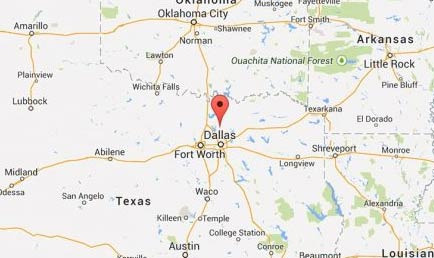
When you think of Texas, Dallas, Austin, and Houston come to mind first, but just north of Dallas lies the city of Plano.
With a population of over 290,000, a plethora of corporate headquarters, and an Asian population percentage of 22.3%, it is surprisingly less known. Honestly, when I first came here, I thought, "Why has no one told me about Plano?"
The history of Plano dates back to its official establishment as a city in 1873. True to its name, which means 'flat land' in Spanish, Plano is situated on the wide, flat plains of the Blackland Prairie. The opening of the Houston and Texas Central Railroad in 1872 laid the groundwork for its growth, and until the 1960s, it was a small town with a population of just 3,695. However, in the 1980s, major corporations like JC Penney and Frito-Lay began relocating their headquarters here, leading to explosive growth, and by 1980, the population had already surpassed 72,000. In 1994, it was even recognized as an 'All-America City.'
The city covers an area of 71.6 square miles (about 185 km²) and, as of 2024, has a population of 293,286. It is part of the Dallas-Fort Worth metropolitan area and falls within Collin County, making it the ninth largest city in Texas. It's quite substantial to consider it just a "suburban city of Dallas."
When it comes to tourist attractions, you can't miss Legacy West. Opened in June 2017, this mixed-use development is known as the largest of its kind in North Texas, combining shopping, dining, and office spaces in one location. Nearby are the North American headquarters of Toyota, Liberty Mutual, and the JP Morgan Chase campus, making it vibrant even during weekdays. If you love nature, the 800-acre Oak Point Park is highly recommended. It features a 1,500-seat outdoor amphitheater, a 5-mile natural trail, and a 3.5-mile concrete walking path, making it perfect for families with kids or for those who want to walk alone. On the western edge, there is also the 200-acre Arbor Hills Nature Preserve.
If you're interested in history, the Heritage Farmstead Museum is fascinating. Centered around the Farrell-Wilson House, built in 1892, it is a living history museum that recreates late 19th-century prairie life. Costumed docents explain Victorian-era tools, making it popular for educational purposes for children. Downtown Plano has an old-town vibe with brick buildings and connects to the Arts District, which is home to galleries, bars, and independent restaurants. The Plano Balloon Festival, held annually, is also one of the city's signature events.
Viewing Plano merely as a 'corporate city' or 'suburban residence' means missing out on a lot. With strong school districts, a variety of Asian grocery stores and restaurants, well-maintained park infrastructure, and a relatively safe living environment, it's clear why immigrants choose to settle here. Its accessibility, being about a 30-minute drive from DFW Airport and also 30 minutes to downtown Dallas, cannot be overlooked. Saying it's a city you should visit at least once is no exaggeration.
 BubbleWarrior
 BulgogiParty





 moonshine 7 |
 golfmaster |
 Tesla X |
 Another Eden Channel BLOG |
 Victory 1988 |
 vrixen73 |
 Hajiwon Blog Hair Salon |
  Dala Dala |

 sunny flower |
  UCLA Captain |
  lattecu |
  dynamite |
  frostingline |
  Hakuna Matata |
  Your Curiosity Resolved |
  Way to easy |
  Chino Min |
  nexabyte |
  Sunset Oregon |
  victoria 68 |
  Montgomery Mom |
  squidogame |
  Noodle Noodle |
  Rhode Island Good People |
  Big North |
  Famous Attractions in the United States |
  Jin Soo V |