
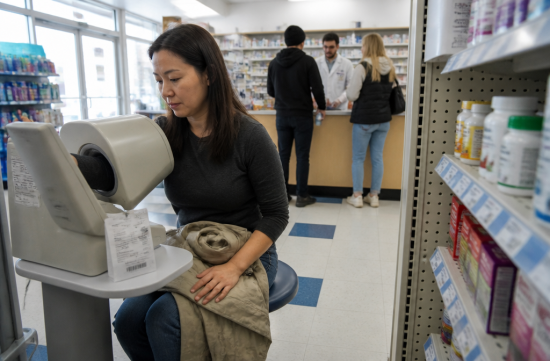
Last week, after my morning walk, I stopped by the local pharmacy and tried the automatic blood pressure monitor. The numbers on the screen were 132/84.
At that moment, a lot of questions popped into my head. Should I be taking medication at this level, or can I just let it go?
When I got home, I looked it up and found that new hypertension guidelines were released in the U.S. in 2025. The American Heart Association (AHA) and the American College of Cardiology (ACC) announced them on August 14, 2025, replacing the 2017 guidelines.
First, let's clarify the numerical criteria. The stages of blood pressure remain the same as in the 2017 guidelines.
Normal is below 120/80. If the systolic is between 120 and 129 and the diastolic is below 80, it's called elevated.
If the systolic is between 130 and 139, or the diastolic is between 80 and 89, it's classified as stage 1 hypertension. Anything 140/90 or above is classified as stage 2.
So, my numbers fall into stage 1. I was honestly a bit surprised because the standard I often heard in Korea was 140/90, which is higher than this.
However, just because it's stage 1 doesn't mean I'll be prescribed medication right away. This is where the biggest change in the new guidelines lies.
The new guidelines recommend using the PREVENT risk calculator. It's a tool that estimates the risk of developing cardiovascular disease within the next 10 years.
If you have stage 1 hypertension and your 10-year risk is 7.5% or higher, they recommend starting medication along with lifestyle changes. This also applies to those who already have cardiovascular disease, diabetes, or chronic kidney disease.
The PREVENT calculation includes information such as age, gender, cholesterol levels, blood pressure, diabetes status, smoking history, and kidney function. Notably, the race category has been removed compared to previous calculations.
On the other hand, if the risk is below 7.5%, you start with lifestyle changes. If after 3 to 6 months of effort your average blood pressure is still above 130/80, then medication is considered.
Stage 2 hypertension is a different story. Regardless of risk, the recommendation is to start both lifestyle changes and medication, which is the same as in 2017.
The treatment goal is to achieve below 130/80. For those at high cardiovascular risk, they recommend lowering systolic pressure to below 120.
One thing I want to highlight is that the 7.5% figure is a guideline for decision-making, not a guarantee that illness will occur if you exceed it.
Therefore, the guidelines emphasize that decisions should be made in consultation with a doctor. Ultimately, it's about discussing your health situation with someone who knows your body.
There were also noticeable changes in lifestyle recommendations. The discussion about salt is a prime example.
They recommend reducing sodium intake to less than 2,300mg per day, ideally lowering it to 1,500mg. This is a significant number for our diets, which often include soups, stews, and kimchi.
The recommendations regarding alcohol have also become stricter. It's best not to drink at all if possible, and if you do, to significantly reduce your intake.
They actively encourage measuring blood pressure at home. Don't rely solely on the numbers from the doctor's office; check at home and keep a consistent record of your treatment progress.
I really resonated with this part. Many people get nervous at the doctor's office, causing their numbers to spike. Conversely, there are cases where readings are normal at the office but high at home, so it makes sense to consider both sets of numbers.
There are also tips for measuring at home. Avoid coffee, exercise, and smoking for 30 minutes before measuring, and sit quietly for about 5 minutes with your feet flat on the floor and your back supported.
Keep your arm comfortably elevated at heart level, and wrap the cuff over bare skin. Don't just take one reading; measure two or three times at one-minute intervals and record the average for a more reliable record.
This guideline emphasizes that managing hypertension is important not only for heart disease but also for reducing the burden of kidney disease, type 2 diabetes, and dementia. The connection between blood pressure and brain health really hit home for me.
So, what am I going to do? For starters, I plan to measure my blood pressure at home every morning at the same time and keep a record.
On sunny days, I'll try to extend my walking time a bit, and I've decided to only have half of the broth from ramen. These may be small habits, but I believe they will make a difference over time. I'm also going to try to only put out one plate of salty side dishes.
And during my next regular check-up, I plan to bring my records and ask my doctor about my 10-year risk level.
Deciding whether to take blood pressure medication isn't something that can be determined by just one number. Many factors, such as age, cholesterol, and diabetes status, come into play, so be sure to discuss it with your doctor or pharmacist.
If you've ever hesitated in front of a pharmacy blood pressure monitor like I did, why not start keeping a record from today?
The joy of seeing those numbers gradually decrease is surprisingly significant. Wishing everyone a warm and healthy autumn.
 mintcloudwalker1951


 Diana Blues |

 Dragon Lee |
 Churros Train Conductor |

 Tora Tora |

 neroyo |

 Amore |

 The Day the Sun Rises |

 Delicious Food Finder |


 Moo Tang Clan |

 luido |
 Total Beauty |
 crystal |
 Good Hotels |
 raspberry7 |
 Que que |
 Well Done Sir |
 dance dance |
 sweetpepe |
 vegas mom |
 Olivia's Blog |
 cathywhite |
 heartbreaker |
 Giant Squid and Sweet Potato Soup |
 Valley Hong |
 The Gelaton |
 Twist Kim |
 berlon93 |
 Physical Laws and Science |
 good thinking |
 Solo Yolo |