

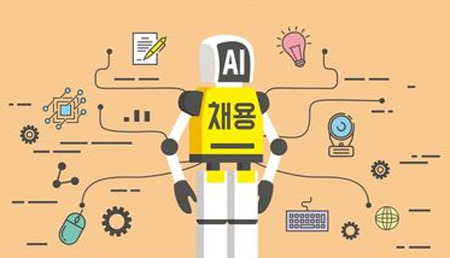
When talking with HR professionals in New York, I often hear that the hiring market has changed significantly these days.
From my own experience in the workforce, I can understand why.
In the past, when hiring someone, employers looked at which university they graduated from, how many years of experience they had, and where they had previously worked.
Internship experience and an additional certification were also competitive advantages. These factors are still important today.
However, it has become difficult to assess a person's abilities based solely on these criteria.
One of the key factors companies are looking at now is how quickly and accurately someone can perform tasks using AI.
It seems that simply knowing how to use ChatGPT won't be recognized as a special skill for long.
Honestly, saying "I know how to use ChatGPT" is no different from saying "I know how to search the internet."
What matters is not just the fact that you use AI, but how you apply it to your work.
For example, let's say there are two employees with seven years of marketing experience.
One takes two days to research competitors, find market data, organize it in Excel, and create a report.
The other uses AI to organize the basic data in a few hours and spends the remaining time verifying the data and strategizing.
If the quality of the results is similar, it's obvious which employee the company will value more.
However, it's a misconception that someone who simply copies what AI produces will be able to last long in the job.
Anyone who has used AI knows how confidently it can provide incorrect information.
Someone who is skilled at using AI without any specialized knowledge is not much different from carrying around someone else's answer sheet.
Therefore, the people who will be valued in companies moving forward are those who know their jobs well, can use AI, and can make final judgments with their own minds.
To add one more point, they are also proactive individuals who take initiative without being told.
Those who have been in the workforce for a long time know this.
There is a clear difference between someone who does their job well and someone who just does what they are assigned.
There are people who only act when their boss says, "Please analyze last month's customer data and bring it by Friday."
On the other hand, there are those who notice something unusual while reviewing the data and say, "The customer churn rate has been increasing since last month; we should investigate the cause."
From the company's perspective, the value of these two individuals cannot be the same.
Especially as AI advances, merely doing assigned tasks may become increasingly insufficient.
This is because AI is quickly taking over the ability to handle assigned tasks.
AI is already handling a significant portion of tasks like organizing data, drafting emails, summarizing meeting notes, researching competitors, and creating basic reports.
So what ultimately remains for humans? The ability to decide what needs to be done.
It involves identifying where the problems are, determining what questions to ask, verifying whether the results provided by AI are correct, and ultimately making decisions with one's own name on the line.
The person who is truly hard to let go of in a company is someone who can handle the workload of two or three people and also brings solutions when problems arise.They are the ones who can catch AI's strange answers, explain things to clients in a human way, and collaborate effectively with colleagues.
And finally, there's one more thing to consider.
The statement "I work hard at the company" may now hold little meaning.
To be blunt, companies are not places that buy time spent working hard; they buy results.
You need to be able to show how much you have reduced working hours since you joined, how much you have saved in costs, how much you have increased sales, and how much you have reduced customer churn.
Ultimately, the person a company wants is not someone who simply claims to know AI.
They want someone who can produce results using AI. In the end, the competition in the age of AI is not against AI itself.
It is against others who have similar experience and are also proficient in using AI.
In the coming years, this difference will likely determine the value of individuals in the workplace.
 ForestDream
 SunnyCore76
 MacaronSoul







 coloradoman |
 pintos |
 mapsina |
 Mr. Largo |
 Victory 1988 |
 newyorker 101 |
 Encyclopedia of New York and Surrounding Areas |
 International Court |
 Living with a Consistent Heart |
 Things to Do to Buy a House |
  Healthy Local Fresh Information |
  molten |
  Way to easy |
  intact |
  Always Dreaming of Big Success |
  happy 9 |
  Park M.Y. |
  tredon |
  Poppin News |
  metsoo |
  dewyo |
  Casa Mia |
  Asparagus Blog |
  dorange |
  hiddenkong |
  some fame |
  Godory Life |
  Lime Juice |
  French fries |
  Rynex |