


Living in Texas for a long time, you can really feel the significant differences in the cost of living between cities, even within the same state.
El Paso, located at the far western end of Texas, is somewhat unique. Despite being a large city with a population in the hundreds of thousands, the cost of living is considerably lower than the national average.
According to data from 2026, Redfin estimates that El Paso's cost of living is about 12% lower than the national average, while RentCafe sees it as approximately 13% lower.
So, if you convert it to a cost of living index, it would be roughly around 87 to 88.
The biggest reason for this is housing.
According to data from Apartments.com in July 2026, the average monthly rent for an apartment in El Paso is $994.
A one-bedroom averages $994, and a two-bedroom is about $1,155. Considering that the national average rent is $1,663, the difference is significant.
This means that whether you are buying a home or renting, the housing cost burden is low.
In fact, Redfin calculates that El Paso's housing costs are about 32% lower than the national average.
However, not everything is necessarily cheap.
Groceries are only about 2-3% cheaper than the national average.
Items like eggs, bread, and milk are somewhat cheaper, but there are also items like beef that are actually more expensive than the national average.
Therefore, thinking that "everything is super cheap because it's next to Mexico" is an exaggeration.
It's more accurate to say that the key factor driving down the overall cost of living is housing rather than groceries.

Transportation costs are also surprising. El Paso is not a city where you can easily live without a car.
However, according to data from Redfin and RentCafe, transportation costs are actually 3-4% higher than the national average.
This means that just because housing is cheap, it doesn't mean that car maintenance costs are low.
Utilities are better than expected. Even though it's a desert city and air conditioning is heavily used in the summer, the overall utility costs are about 11% lower than the national average.
According to Redfin's data, the average monthly energy cost in El Paso is about $178, which is lower than the national average of $223.
There is another reason why El Paso is affordable: income levels are not high.
According to data from the Dallas Federal Reserve, the median household income in the El Paso metropolitan area in 2023 was $58,800.
With relatively low local wages and purchasing power, housing prices and service costs are inevitably affected.
The job structure also differs from other major Texas cities. Key industries include government, healthcare, retail, and logistics, with a significant influence from Fort Bliss.
According to El Paso city data, about one in sixteen local jobs is connected to the military.
So, from a Korean perspective, there are clear pros and cons to living in El Paso.
If you want to reduce housing costs and rent, it is quite attractive. Especially for those working remotely and earning salaries comparable to New York or California, the difference in living costs can be quite noticeable.
On the other hand, if you think, "I'll just move and look for a job later," you should be a bit cautious. In May 2026, El Paso's unemployment rate was 4.3%, and while it is not a city without jobs, it is different from markets like Dallas or Houston, which have a wider range of industry options.
Ultimately, there are reasons for El Paso's low cost of living. While housing costs are definitely low, income levels are also low, and the job structure is limited.
However, for those who already have stable jobs or can work remotely, the situation changes.
In an era where paying $2,000 in rent in major U.S. cities is not unusual, having an average rent of about $1,155 for a two-bedroom is a significant advantage.
 VividOC
 DreamStone75







 Another Eden Channel BLOG |
 Victory 1988 |
 Smile Face |
 Helpful Life Stories |
 Casa Mia |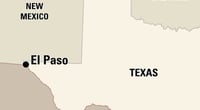
 Tomex Train Uncle |
 hexon |
 tredon |
 Spicy Immigration Life |
 clarion |
  valtri |
  August Snowman |
  Way to easy |
  Pirate Ship Popcorn Maker |
  USA Business News |
  Samsung My My |
  bubblo |
  tartbear |
  Washington Monument |
  Forever Young |
  crystalx |
  Spaghetti Flying Religion |
  sprinkletop |
  bongo |
  savannah choi |
  Successful Manager Kim's Team |
  crystalo |
  Canvas Pro Blog |