

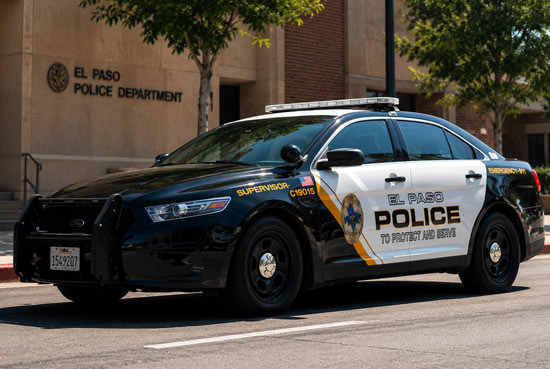
A study by LendingTree mentioned in the article shows that five Texas cities rank among the highest for DUI death rates in the U.S.
Due to the local bar culture of Texas cowboys and the vastness of the area, taxis and Ubers are not very common, making drinking and driving somewhat prevalent.
Among these, the number one city is El Paso, where we live....
Major cities like Houston, Fort Worth, Dallas, and Arlington have rates between 46% and 51%, but El Paso stands out with a rate of 61%.
Getting caught driving under the influence (DWI) is a serious issue. For adults over 21, a blood alcohol concentration (BAC) of 0.08% or higher is the threshold. For those under 21, it's 0.02%, and for commercial vehicle drivers, it's 0.04%.
In fact, even if your BAC is lower than these numbers, if you are deemed unable to drive properly due to alcohol or drugs, you can still be charged with DWI.
The first offense is classified as a Class B misdemeanor, which can result in a fine of up to $2,000, a maximum of 180 days in jail, and a license suspension of up to one year. Even for a minor offense, you must spend at least three days (72 hours) in jail.
However, there are more serious criteria that can escalate the situation.
If you exceed a BAC of 0.15% or have a child under 15 in the car, it becomes a Class A misdemeanor, with fines up to $4,000, a year in jail, and a license suspension of up to two years.
Moreover, repeat offenders face severe penalties. If you get caught again within five years of your first offense, you could face a $4,000 fine and at least one month in jail, and from the third offense onward, it becomes a felony. At this stage, fines can reach up to $10,000, and you could face up to 10 years in prison.
While legal penalties are daunting, the real headache comes afterward.
If convicted, you may be required to install an Ignition Interlock Device (IID) in your vehicle.
This device requires you to blow into it to measure your blood alcohol level before the engine will start.
Insurance premiums will increase, and when you add fines and attorney fees, the total cost of a DUI in Texas can reach $17,000.
Honestly, El Paso is a place where nightlife and drinking are part of everyday life.
With many bars and clubs around Union Plaza and downtown, and the drinking culture in Juarez with friends, it's very easy for "one drink to turn into two."
So, it seems we need to be more vigilant. This 61% figure is a reality that should not be overlooked.
In this town, developing the habit of thinking twice before grabbing the wheel is crucial.
Oh, and one common confusion is the difference between DWI and DUI.
Many people use the two terms interchangeably, but Texas law refers to it as DWI. DUI is also used, but only for minors.
For adults over 21, the charge is DWI (Driving While Intoxicated).
On the other hand, DUI (Driving Under the Influence) applies only to drivers under 21 in Texas. Texas has a zero-tolerance policy for underage drinking, so even a very low BAC or having just one drink can lead to a DUI charge.
In simple terms, adults are charged with DWI, while minors are charged with DUI.
Especially in El Paso and throughout Texas, it's good to know that adults caught drinking and driving will be charged with DWI, not DUI.
 traveler87
 MintStar
 TacoBellCandy




 Mr Oh |
 ollege Mom |
 Helpful Life Stories |
 prixon74 |
 Balancework |
 fortbliss |
 Tomex Train Uncle |
  hexon |
 Que Buena |
 Spicy Immigration Life |
  The Gelaton |
  Twist Kim |
  berlon93 |
  Physical Laws and Science |
  good thinking |
  Solo Yolo |
  laro90 |
  San Diego TOP Idol |
  Round and Round Children's Song Kingdom |
  American Golf Course Travelogue |
  MEDBIO American Doctor Blog |
  Hot Seat Driver |
  bryvexi |
  koala organic farm |
  riverstone |
  My Antonio |
  California Information News |
  chilli chilli |
  Moon Su San |