


When talking about colleges in El Paso, most people think of UTEP first. However, for parents who have to bear the cost of their children's college tuition, it's worth taking a serious look at El Paso Community College, EPCC.
This is especially true for families that think, "Is it really necessary to pay for four years of expensive tuition when a college degree is needed?"
EPCC is not just a school that offers vocational training. It offers a variety of degree and certification programs, including AA, AS, and AAS, and many students enter with the goal of transferring to a four-year university. There is also a strong connection with UTEP.
The most practical advantage is definitely the tuition.
For the 2026-27 academic year, the tuition for Texas residents at EPCC is $116 per credit hour. Additionally, there is a general fee of about $20 per credit hour.
Therefore, if you take 12 credit hours, the basic tuition and general fee would total approximately $1,632 for a semester. For 15 credit hours, it would be about $2,040.
Textbook costs and major-specific lab fees are separate. In contrast, non-residents pay $201 per credit hour plus the $20 general fee, totaling about $3,315 for 15 credit hours.
If a Texas resident completes about 60 credit hours at EPCC over two years, they can significantly reduce their tuition burden compared to starting at a four-year university from the beginning.
In El Paso, many consider completing basic courses at EPCC before transferring to UTEP.
The plan is to complete foundational courses like English, math, history, government, and science at EPCC and then transfer to UTEP according to their major.
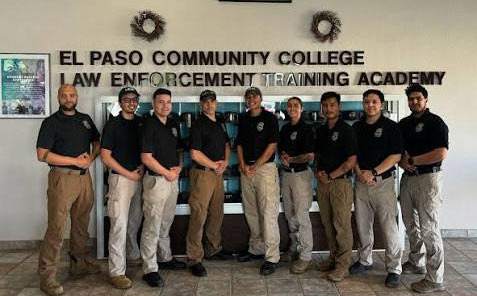
EPCC has transfer or credit articulation agreements not only with UTEP but also with Texas Tech, UT Arlington, New Mexico State University Global, and several other universities.
However, there is something parents must understand. They shouldn't assume that "if I take any 60 credits at EPCC, UTEP will accept them all."
It's important to first decide on the university and major you want to transfer to and then select courses that are recognized in that major. This is especially crucial in fields like engineering, nursing, and health sciences, where the order of major courses is important. If you choose incorrectly, you may transfer but end up with unnecessary courses that waste time and money.
Therefore, it's advisable to tell an advisor from the start, "I plan to transfer to UTEP for this major in two years," and create a course plan accordingly. UTEP also has dedicated admissions advisors for EPCC students.
When transferring, you need to submit the UTEP application and send official transcripts from any previous colleges attended. It's also wise to check the specific requirements for each school and major in advance.
If you have a high school student, there are additional opportunities to explore. EPCC offers Dual Credit courses for qualified high school students for free. Since students can earn college credits while attending high school, this can significantly reduce the time and cost needed once they enter college.
Given the high cost of college tuition in the U.S., starting at a well-known four-year university is not the only solution.
Completing foundational courses at EPCC while saving on tuition and then transferring to UTEP to earn a bachelor's degree is a very realistic path.
Especially for families living in El Paso, this method allows them to commute from home instead of sending their children far away to dorms.
While where you start college is important, what matters more is where you graduate from, what major you choose, and what you can do afterward. For ordinary families who need to consider tuition costs, EPCC is a solid starting point in El Paso.
 vibetowntraveler1989
 SugarMoon
 SnowLove




 morvex37 |
 Ari Songhan American Immigration Life |
 Bearded Strawberry Smoothie |
 Heart Ticker |
 Duck Duck Go |
 Tomex Train Uncle |
 clarion |
 An ant castle |
 tredon |
 Whale Roar Improvisation Band |
  La Bean |
  American History This and That |
  Monte Sori |
  U donn |
  Sarah's Blog |
  Holy Cow |
  monster |
  houston mama |
  Reggae Party |
  Thou Thou |
  Tennessee Land |
  custardnew |
  Chimhanbang Korea ACU |
  See South Carolina |
  dorex |
  Taek Jun |
  Choi Cho |
  Anova US Beauty Information |
  whiskerbread |
  Yo Lock Me Up |