
Last month, an elderly acquaintance asked me about the $90 that appeared in their bank app, wondering what it was. However, another person from the same church said they didn't receive anything.
Both pay Medicare premiums, so why did only one person receive it? Curious, I looked into CMS data and found that there were clear distinctions between those who receive it and those who do not.
The official name for this money is the Medicare Part B premium rebate. It's money taken from the Medicare Improvement Fund by CMS, and it's a one-time payment.
The amount is $90 per person, and the payment date is set for October 2026. It's intended to offset part of the Part B premium for October.
For reference, the standard Part B premium this year is $202.90 per month. So, $90 is less than half of the monthly premium.
Still, for someone like me, who gets nervous over a single coupon, $90 is not a small amount. It can easily fill a shopping cart.
According to CMS, the eligible recipients number 20.8 million. There are four conditions.
First, you must be enrolled in Original Medicare Part B. Second, you must reside in the United States.
Third, you should not have your Part B premium paid by Medicaid. Fourth, you should not be subject to the additional premium known as IRMAA due to income.
So, those who do not receive it meet the opposite criteria. The most confusing group is those enrolled in Medicare Advantage.
Most people enrolled in Advantage also pay the same Part B premium. However, CMS has clearly stated that Advantage enrollees are not eligible.
The elderly church member I mentioned earlier falls into this category. It's disappointing to see someone paying the same premium miss out.
The second group excluded consists of those receiving premium assistance through programs like the Medicare Savings Program. The logic is that since Medicaid is already paying their premiums, there's nothing to refund.
The third group is high-income individuals who pay IRMAA. As of 2026, if your income exceeds $109,000 for individuals or $218,000 for couples based on 2024 income, you will incur IRMAA.
Lastly, those living abroad are also excluded. If you've been residing in Korea for a long time, you might fall into this category.
There's no specific application process. There's no application form; if you're eligible, it will come automatically.
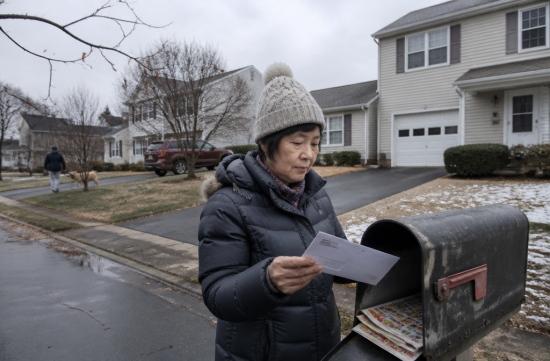
Most payments were directly deposited into accounts receiving Social Security benefits. For those without direct deposit information, checks were mailed to the address registered with Medicare.
Reports indicate that direct deposits began in early October, while paper checks were sent out later in mid to late October. So, if you were expecting a check, it's a good idea to check your mailbox again.
Medicare.gov also has a sample rebate notification letter explaining this payment. If you received a similar letter at home and ignored or discarded it, you might want to check it out.
The check will have the phrase Medicare Improvement Fund Payment written on it. If you see this phrase on a Treasury check, it's legitimate.
But what if you meet all the conditions and still haven't received it? CMS advises calling 1-800-MEDICARE, or 1-800-633-4227, to verify.
One important point to emphasize is the issue of scams. Whenever news of such payments comes out, fake calls and texts often follow.
Be suspicious of any contact asking for your account number or Medicare number to receive the $90. Since it's an automatic payment, there's no reason for anyone to ask for your information.
The same goes for any requests to pay a fee upfront. There are no fees involved in receiving government money.
What about taxes? The federal government has not yet provided specific guidance on whether this $90 will be taxed.
So, if you're confused during next year's tax filing, it's best to ask a tax professional. It can vary based on individual circumstances, so confirming with an expert is the safest approach.
And one more thing. The 2027 Part B premium is typically announced by CMS around November, and many expect it to increase.
Organizations like KFF analyze that the increase in premiums will likely take back most of the $90 received. So, it's not a time to celebrate too much.
KFF also noted that this payment reminds them of a similar proposal from 2020. Back then, there was an announcement to provide benefits to Medicare enrollees ahead of the elections.
Regardless of the political perspective, I believe it's right to accept money that is available. Just don't be under the illusion that this resolves all concerns about premiums.
Still, I think it's better to set aside this money separately instead of mixing it with living expenses. It can serve as a small cushion to cover the increase in next year's premiums.
If you know any elderly individuals using Original Medicare, help them check their accounts. Even if they find nothing, I believe it's wise to ensure they're not missing out on what they're entitled to.
 DBIOTV
 FunnyPanda




 Nevada Vegas UNLV |
 Things to know |
 West Kong |

 havero70 |

 Grow Your Gut Bacteria Well |

 Misstic M |




 Shining Our Own World |
 Raymond K. |
 gravity |
 714 Success Era Real Estate |
 Investment Beginner Company Information Encyclopedia |
 musicque |
 The Gelaton |
 ovelion |
 Chicagonian |
 Freedom Yea |
 AZ Road Master |
 glenix39 |
 Something is popping in the situation |
 orvella |
 vella |
 comets |
 Banana |
 Yes Dorian |
 Minnesota Sonata N |
 zentar |