
This Friday is Black Friday. My inbox is already flooded with dozens of emails titled early deals, pre-Black Friday, and last chance.
This year, I want to try something different. On that day, I will really not buy anything.
This isn't my idea. There's already a day called Buy Nothing Day that has been observed for over 30 years.
It started in 1992 in Vancouver, Canada. It is said that a local artist named Ted Dave first proposed it.
The idea was widely spread by the Vancouver-based ad parody magazine Adbusters. They were known for satirizing consumer advertising, so this campaign fit well with their mission.
Initially, the date was not Black Friday. It was later moved to the Friday after Thanksgiving in North America, while many other countries observe it on the last Saturday of November.
It's a clever strategy to attach a movement of not buying to the day when people buy the most. They chose a day when the message to stop consuming would be most noticeable.
Looking at the numbers, you can immediately feel how small this rebellion is. According to Adobe Analytics, last year's Black Friday online sales in the U.S. reached $11.8 billion.
This was a record high, up 9.1% from the previous year's $10.8 billion. Of that, 55.2%, or $6.5 billion, came from mobile sales.
Honestly, I was a bit shocked by these numbers. It means that fingers are moving that much on a phone while lying on the couch.
Cyber Monday was even bigger. It reached $14.25 billion in a single day, setting the record for the largest single day in U.S. e-commerce history, and online spending from Thanksgiving to Cyber Monday totaled $44.2 billion.
On the other hand, the number of in-store visitors decreased by 3.6% compared to the previous year, according to RetailNext data. People aren't buying less; they're just moving their shopping to the palm of their hands.
So, I think today's Buy Nothing Day is more about turning off app notifications than holding signs in front of shopping malls. At least for me, that's the hardest part. It's not just a lack of willpower when my finger reacts first to a discount notification; it's also because of how the screens are designed.
Interestingly, this idea isn't just for activists. Some companies have outright rejected Black Friday.
A frequently mentioned example in this trend is the outdoor brand REI. In 2015, they closed all 143 stores nationwide on Black Friday.
They paid their employees to go outside and play instead. The campaign was called #OptOutside.
Initially, it was a one-year experiment, but it continued every year, and in 2022, REI made it a permanent policy. If they close again this year, it will be their twelfth Black Friday.
Of course, there is criticism. Some argue that when companies do this, it ultimately becomes brand marketing. In fact, that year, REI saw tremendous publicity benefits.
There are also counterarguments to Buy Nothing Day itself. Some business groups have claimed that the movement to reduce consumption is harmful to the economy.
I find it hard to take just one side on this issue. For small local shops, year-end sales can determine their entire year's business. I don't agree with the view that consumption is inherently bad.
So, my rules are simple. Not buying means not purchasing something just because it's on sale, not necessarily refraining from buying what I truly need.
If I have items in my cart, I will leave them for a week. If I still think about them after a week, then it's not too late to buy them.
I focus on the price itself, not the discount rate. Buying a $200 item that is 40% off means I'm spending $120, not saving $80.
And on Friday, I plan to turn off all shopping app notifications on my phone. Surprisingly, I find this to be the most effective strategy.
One more thing I might add is to find items I already own that I don't use and give them to someone who needs them. I've realized I have more unworn clothes with tags still on them than I thought. It's about turning a day of buying into a day of sharing.
In the spare time, I plan to walk the trails, read a book I've been putting off, or have one more meal with friends using leftover Thanksgiving food.
In fact, I believe the core of this movement isn't about the money not spent in a day, but about taking a moment to reflect on why I buy. Just like a day of fasting makes you reconsider your eating habits.
Seeing that a playful campaign started by a few people in 1992 has survived for over 30 years suggests that many people resonate with that question.
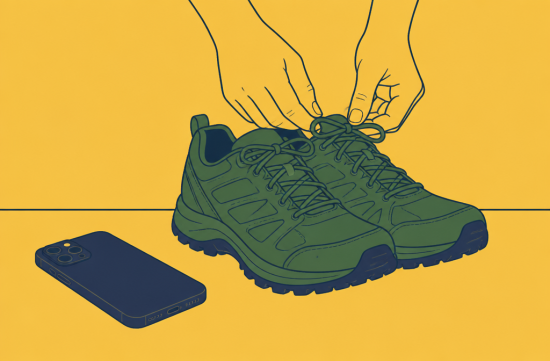
This year, I plan to send Black Friday off with shoelaces instead of a checkout button. After the weekend, I'll definitely record how my bank balance and mood are doing.
 MintStar
 SoftEggWaves







 moodansa 77 |

 Conflite Teacher |

 US Snowboard Information Exchange |

 There Are Such Things in the World |

 San Diego TOP Idol |

 vrixen73 |


 havero70 |



 Dala Dala |
 gravity |
 714 Success Era Real Estate |
 Investment Beginner Company Information Encyclopedia |
 musicque |
 The Gelaton |
 ovelion |
 Chicagonian |
 Freedom Yea |
 AZ Road Master |
 glenix39 |
 Something is popping in the situation |
 orvella |
 vella |
 comets |
 Banana |
 Yes Dorian |
 Minnesota Sonata N |
 zentar |
 mykiwi blog |
 shinramen wang |