
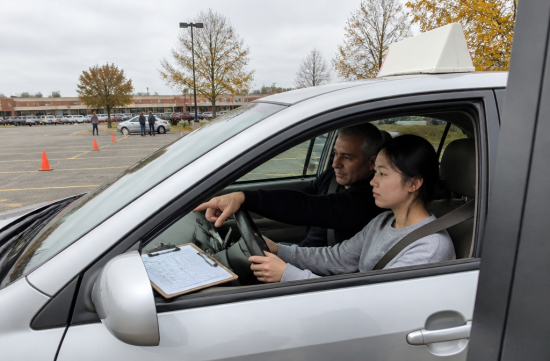
Last week, I heard that a friend's older child postponed getting their license after graduating high school, but now the regulations have changed. I looked up the DMV announcements and the legislation myself, thinking it might help someone if I organized the information.
To get straight to the point, it's true. Starting January 1, 2027, the process for obtaining a license in Virginia for those aged 18-20 will definitely become longer.
The law in question is House Bill 1224. It was signed by the governor on April 13, 2026, and the effective date is set for January 1, 2027.
Until now, if you were over 18, you had two options. You could either hold a learner's permit for more than 60 days before taking the DMV road test, or complete a state-approved driver education course while holding the permit.
This meant that some people would skip driver education in high school and wait until they turned 18 to just fulfill the 60-day requirement. I've heard of such cases from people around me.
With the new law, those aged 18-20 will have to do both. They must hold the permit for at least 90 days and complete a state-approved driver education course during that time.
While the increase from 60 to 90 days is significant, I believe the requirement for driver education is the bigger change. It involves both time and cost.
For those aged 21 and older, nothing will change. They can still choose between holding a permit for 60 days or completing driver education.
For those under 18, the existing regulations remain the same. They must complete driver education, hold a permit for at least 9 months, and have a parent or guardian verify 45 hours of driving practice, including 15 hours after dark.
It's also important to note the scope of the law. It applies only to individuals who have never held a license in any state or territory of the U.S. or abroad.
This could be good news for immigrant families. The DMV indicates that if you can prove you held a license from another state or country, you may not need to retake driver education or the written and road tests. However, since it says "may not," it's safer to check in advance with the necessary documents.
A confusing aspect is the transitional provisions. Even if an 18-20 year-old obtains their permit before 2026, if they get their license after January 1, 2027, the new regulations will apply.
However, the time already held with the permit will count towards the 90 days. So, if you have a child who currently holds a permit, check if they can complete the road test by the end of this year.
I also looked into what the driver education course entails. According to the DMV, it consists of 36 classroom sessions, 7 hours of actual driving, 7 hours of observation, and a final road skills evaluation. Each session lasts 50 minutes.
The classroom sessions can be taken online through a driving school. Actual driving practice, of course, must be done in person.
The driving school submits the completion certificate directly to the DMV. The DMV specifies that they do not accept certificates brought in by applicants, so make sure to verify that the school is DMV-approved when registering.
If you received driver education in another state, you must prove at least 30 hours of classroom instruction and 6 hours of in-car training for it to be recognized.
Costs vary by school, and the DMV does not list any amounts. You'll likely need to get quotes from several places to compare.
Realistically, a 19-year-old who gets their first permit after January will need at least three months before they can obtain their license, even if they hurry. Coordinating with the school's schedule may take even longer.
If a child is living in a college dorm and only comes home during breaks, the planning becomes more complicated. They might need to get their permit during winter break and take the classroom sessions online during the semester.
Initially, I honestly thought it was a bit cumbersome. It could be a burden for young people who need a car while working.
However, upon reflection, the structure of allowing someone to hit the road after just 60 days without any education at 18 seemed rather lax. Driving skills don't just develop automatically with age.
I believe this change is a necessary direction. However, I do wish there would be more affordable public programs available for families who find driving school fees burdensome.
In summary, starting January 2027, first-time licenses for those aged 18-20 will require both a 90-day permit and driver education. The rules for those 21 and older and under 18 remain unchanged. There may be exceptions for those with foreign license histories.
If you have a child aged 18-20 who currently holds a permit, check if they can schedule their road test by December. Once January 1 hits, the new regulations will apply, so it's wise to mark the remaining dates on your calendar and act accordingly.
Detailed conditions are summarized on the DMV website under the permit holding period and driver education change FAQ. If the situation is unclear, I recommend reading that page first and then contacting the DMV.
I will also keep track of how things go after the implementation and record what I hear.
 WisconDriver
 MelonRap






 donggul donggul |

 Mr. Largo |

 Silent Sea |

 Noodle Noodle |

 figtop |

 monica hong |

 victoria jung |



 gravity |
 714 Success Era Real Estate |
 Investment Beginner Company Information Encyclopedia |
 musicque |
 The Gelaton |
 ovelion |
 Chicagonian |
 Freedom Yea |
 AZ Road Master |
 glenix39 |
 Something is popping in the situation |
 orvella |
 vella |
 comets |
 Banana |
 Yes Dorian |
 zentar |
 mykiwi blog |
 shinramen wang |