
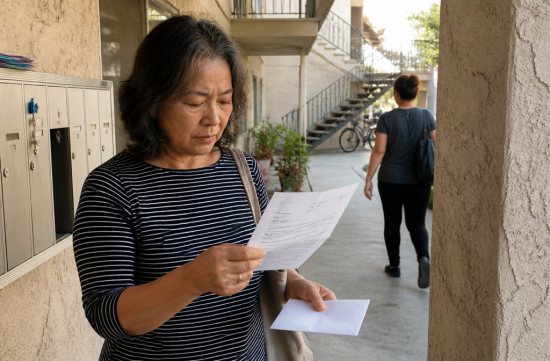
People living in older apartments in San Jose often ask a common question these days. They wonder if their rent can only increase by 5% per year since their building was constructed before 1979.
To put it simply, if the conditions are met, then yes, it can. However, it's easy to make mistakes by only looking at the construction year, so let's go through the items to check one by one.
The basis for this standard is the city's apartment rent ordinance, commonly referred to as ARO. The city's housing department manages the rent stabilization program, and the following information is organized based on the official guidance page from late November.
The first thing to look at is the date. The city's notice specifies that the target buildings must have been constructed and occupied before September 7, 1979.
Many people simply remember it as before 1979, but it's good to know that there is a specific cutoff date. Some older articles mention different dates, so you should refer to the date currently used by the city.
The second factor is the size of the building. The apartment must have three or more units in one building to qualify.
Therefore, duplexes, condos, townhouses, single-family homes, and accessory dwelling units attached to houses are not subject to ARO. Even in the same neighborhood and of the same age, the type of housing can lead to different outcomes.
In the past, I had a client who lived in a condo built in the 1970s and believed that the 5% cap applied to them. However, upon reviewing the documents together, it turned out they did not qualify.
The third factor is the frequency and amount of increases. Target apartments can only increase rent once every 12 months, and the maximum increase is 5%.
This 5% is not the original number. In the past, an 8% increase was allowed, but the city council lowered it to 5% through a temporary ordinance.
Since then, there have been several discussions about linking it to the consumer price index, but the standard currently stated in the city's notice remains a fixed 5%. As far as I have found, there has been no decision by the city council this year to change this number.
However, that doesn't mean it will always stay the same. Ordinances can change through city council votes, so it's wise to check the city's guidance again before renewing your lease.
The fourth factor is the rent registry. Landlords of ARO-targeted apartments must report occupancy status and rent information to the city registry every year.
From a tenant's perspective, this part is quite important. The city's tenant petition form includes a section for units not listed in the registry as a reason for objection.
The fifth factor is how to file an objection. If the increase seems unreasonable, tenant household members can file a petition with the rent stabilization program.
Once the petition is received, a mediation or hearing process will be scheduled. The city advises that it's better to file a petition immediately upon receiving a rent increase notice, so it's best not to delay.
So, can landlords of non-ARO-targeted homes raise rent freely? Not necessarily.
This is because California state law, the Tenant Protection Act, AB 1482, has its own rules. This law caps annual increases at the lower of 5% plus the local consumer price index increase or 10%.
This cap is recalculated every year as of August 1. Since the price index varies by region, the actual allowable increase also differs slightly by area.
However, AB 1482 does not apply to all homes. Newly constructed buildings or single-family homes and condos that meet certain conditions may be exempt, so you should review the lease and notice together.
If an apartment falls under both city ordinances and state law, the lower city cap takes precedence. This is why the 5% cap applies to apartments built before 1979.
It's also good to be aware of eviction issues. The city's tenant protection ordinance requires a valid reason for eviction notices, and landlords must submit a copy of the notice to the city within three days.
To summarize, the order of checks is as follows: first, verify if the building was constructed and occupied before the cutoff date, and if it has three or more units. Then check if the increase is within the 5% limit and if the unit is listed in the registry. If any of these are unclear, it's best to contact the rent stabilization program directly.
You can verify the construction year through county property records or the city registry. You can ask the landlord, but I recommend checking the official records once more.
Having observed this market for a long time, I've found that many rent disputes arise not from ignorance of the regulations but from a lack of understanding of where one's home falls within them. Classification comes before numbers.
If I were you, I would check the building information before receiving a renewal notice. If you start looking after receiving the notice, you may feel rushed and miss something important.
The same goes for landlords. If the building is subject to ARO, properly following the registration and notification procedures is the most reliable way to reduce future dispute costs.
 SongHaeVita






 Something is popping in the situation |
 lumix88 |

 quiet river |

 Doori Ark |

 My Town My Way Blog |

 DaeBak Electronics CNET |

 Reggae Party |

 Breaking Bad Drama |

 Tarzan's Joyful Imagination |

 Information on All Regions of the United States |
 Shining Our Own World |
 Raymond K. |
 gravity |
 714 Success Era Real Estate |
 Investment Beginner Company Information Encyclopedia |
 musicque |
 The Gelaton |
 ovelion |
 Chicagonian |
 Freedom Yea |
 AZ Road Master |
 glenix39 |
 orvella |
 vella |
 comets |
 Banana |
 Yes Dorian |
 Minnesota Sonata N |
 zentar |