
When icicles start to form thickly at the edge of the roof, homeowners begin to call. Most of the questions are whether the yellow water stains on the ceiling can be covered by insurance.
Rochester is a city that gets a lot of snow. According to NOAA's average from 1991 to 2020, the annual snowfall is 102.0 inches.
When this much snow accumulates on the roof and melts repeatedly, ice dams form. Today, I will summarize how leaks from these ice dams are handled by insurance, focusing on key points to check.
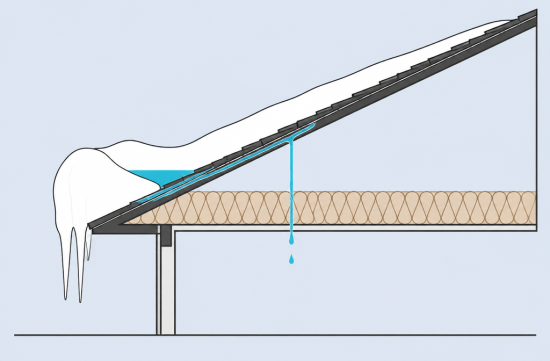
First, let's clarify the principle. When warm air inside the house heats the attic, the snow on the roof melts and the water flows down.
However, the edge of the roof is cold because it doesn't receive indoor heat. The water that flows down freezes again at that point, piling up like a dam, which is the ice dam.
The water that collects behind the dam has nowhere to go, so it seeps through the gaps in the roof boards. That water soaks the insulation and comes down to the ceiling and walls.
The problem is that this process is not easily visible. From the outside, only icicles are seen, but inside, it is common for the insulation to be soaked within a few days.
Now, let's talk about insurance. In general homeowners insurance, commonly referred to as HO-3, damage caused by sudden water from ice dams is often covered.
This includes ceiling drywall, wall finishes, and wet insulation. Of course, the deductible is initially borne by the homeowner.
On the other hand, the cost of breaking or removing the ice dam itself is treated differently. If it is removed as a preventive measure before any damage occurs, it is usually not covered.
However, if emergency removal is done to prevent further damage after a leak has already started, the situation may be different. In this case, you must keep the receipts and work details.
In the past, many people would fix the roof first and then file a claim later. Now, insurance companies are much more meticulous about checking photos and date records.
The most common reason for denial is neglect. If it is determined that the roof has been leaking little by little for a long time, it is classified as a maintenance issue rather than a sudden accident.
Insurance companies may also argue that poor insulation or ventilation caused the ice dam. This part is a significant point of contention.
New York State does not have many precedents related to ice dams, so ultimately, the wording of each policy becomes the judgment criterion. This means that even the same leak can lead to different conclusions depending on the company and product.
Another confusing aspect is the distinction from flood coverage. If melted snow flows into the basement, it may be classified as a flood, which is excluded from general homeowners insurance.
Water that enters from above through the roof and water that rises from the ground are considered entirely different incidents in insurance. This is why it is important to accurately record the location of the damage.
Coverage for personal items like furniture and electronics varies by policy. Please check the personal property coverage clause in your policy.
Since the coverage and deductible vary by household, it is best to confirm with your agent or a licensed adjuster for an accurate assessment. This article is merely a summary of general criteria.
So, what should you do when water starts dripping from the ceiling? I will outline the steps.
First, take photos and videos before doing anything. Record the ceiling stains, ice on the eaves, icicles, and wet floors with dates.
Second, take reasonable measures to prevent further damage, such as placing a bucket and moving furniture. If you do not take these measures, the insurance company may question the additional damage.
Third, contact your insurance company or agent immediately. It is safer to get an estimate for repairs and confirm with the insurance company before proceeding.
Fourth, after a heavy snowfall, contractors will start knocking on doors. It is advisable to check their licenses and references, and avoid those who demand a large deposit upfront.
If a claim is denied, request the specific policy clause that was the basis for the denial in writing from the insurance company. If you still do not understand, you can file a complaint with the New York State Department of Financial Services (DFS).
Prevention should also be addressed. The root cause is the heat in the attic, so checking insulation and ventilation is the most reliable method.
On days with heavy snowfall, using a long roof rake to remove snow from the eaves while standing on the ground can help. Climbing directly onto the roof is not recommended.
If leaves are blocking the gutters, water cannot drain properly, leading to more ice formation. It is advisable to clean them before the heavy snowfall begins.
In summary, sudden indoor leak damage is often covered, while preventive removal costs and damage deemed neglectful are difficult to get compensated. Ultimately, records and policy terms determine the outcome.
If I were a homeowner, I would pull out my policy this weekend before the snow starts falling heavily. Reading the policy after damage occurs is already too late.
 RunWhatcha







 Dolly |
 B.I.G. Victor |

 Amber H |
 uplifted |

 Dr. Kelso |
 Elastico |
 Misstic M |



 American Travel Cruise Information |
 vanillatop |
 namico |
 Karina's Blog |
 ASURA |
 parlon |
 Mrs New Mex |
 MBTI Detective Agency |
 ShyShy dating |
 hihihi |
 kiwifox |
 Silent Sea |
 Masa Masa |
 dewyo |
 summita |
 coconutpath |
 moonlight |
 Curry Dragon |