
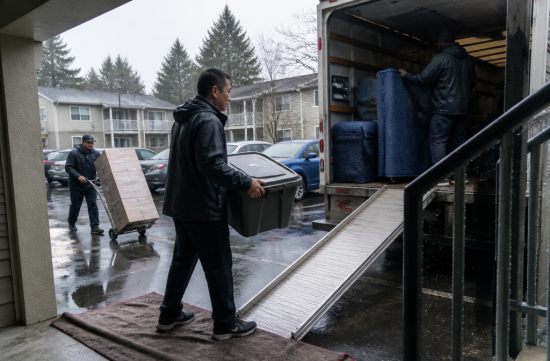
As November approaches, the response from moving companies changes. In the summer, they might say they can only schedule you weeks later, but now they can accommodate you this weekend.
It's generally true that moving in winter is cheaper. However, to keep costs down, there are specific things you need to consider during the winter.
The reason for the lower prices is simple. Major moving company Allied Van Lines explains that 60-80% of household moves in the U.S. occur between May and September.
This demand is driven by school schedules and summer weather, leading to a concentration of moves during those months. Consequently, there are more trucks and labor available in winter.
It's common in the industry to hear that peak season rates are 20-30% higher than off-peak rates. However, this is based on figures provided by company blogs and should not be considered official statistics.
Therefore, I recommend comparing actual estimates from two or three companies rather than relying solely on percentages. The more flexible you are with dates and times during the off-peak season, the more room you have for negotiation.
The weather is a significant factor. According to NOAA's average data from 1991 to 2020, Sea-Tac Airport receives 6.3 inches of precipitation in November, making it the wettest month of the year.
Considering that the average for July is only 0.6 inches, that's a tenfold difference. Moving in the Puget Sound area during winter essentially means moving in the rain.
Cardboard boxes can easily collapse when wet. It's safer to pack heavy books or dishes in plastic containers.
Make sure to lay down floor protection sheets or old blankets in the entryway and hallways. Wet shoe prints can lead to issues with your security deposit later.
The shorter days are also a factor. If you start late in the afternoon, it will get dark quickly, so it's better to schedule your move for the early morning.
Be sure to apply for the transfer of electricity, gas, and internet at least a week in advance. Spending your first night in a new home without heating can be quite uncomfortable in winter.
Now, let's move on to choosing a moving company. Moves that start and end within Washington State are regulated by the Washington Utilities and Transportation Commission (UTC).
Moving companies operating without UTC authorization are violating state law. You can check their licensing status on the UTC website's registered companies list or by calling 1-888-333-9882.
According to UTC regulations, moving companies must provide a free written estimate, and verbal estimates are not allowed. This is why you shouldn't just trust a rough estimate given over the phone when scheduling your move.
There are two main types of estimates. A binding estimate guarantees the price for the specified items and services.
A non-binding estimate may result in a final amount that exceeds the estimate. However, UTC regulations state that the final amount cannot exceed 25% more than the estimate and additional estimates.
If the scope of work increases on-site, the company must create an additional estimate, and they can only proceed with the work after the customer signs it. Be sure to read the amount carefully before signing.
When getting estimates, it's important to show everything in the garage, attic, and storage without missing anything. Any items you forget will incur additional charges on the day of the move.
It's also essential to discuss damage compensation. The basic liability limit for companies is usually lower than the actual value of your items, and full compensation requires an additional fee.
If you're moving out of state, the jurisdiction changes to the federal FMCSA. Remember to check the USDOT number and that binding estimates are only obligated to charge 100%, while non-binding estimates can charge up to 110% upon delivery.
Federal regulations require out-of-state moving companies to provide customers with a guide titled Your Rights and Responsibilities When You Move or a link to it. If a company does not provide this, it's wise to be suspicious.
If you're renting, the notice date must come before the moving date. In Washington State, you must notify your landlord in writing at least 20 days before the end of your rental period.
The end of the rental period is typically the day before your rent is due. If you delay your notice, you might have to pay rent for the next month, so check your lease terms as well.
The security deposit preparation starts from the moment you move in. Washington State law requires that landlords have a signed move-in checklist from both parties to collect the deposit.
When you move out, the landlord must return the deposit within 30 days of the lease termination and move-out, or they must send a written explanation for any deductions. If they unjustly withhold it, the court can order them to pay up to double the deposit amount.
So, on moving day, be sure to take photos and videos of each room. If it's raining, pay special attention to the condition of the floors and entryway.
Thanksgiving and the week of the year-end holidays are exceptions even within the off-peak season. Companies may have closures or staffing shortages, so it's best to avoid scheduling during that week.
Contract terms and security deposit disputes can vary based on individual circumstances, so if you're unsure, it's advisable to consult Washington State legal aid organizations or professionals.
If I had to choose, I would opt for a winter weekday morning move if I had some flexibility. Just preparing for the rain and getting a written estimate would be enough to ensure significant off-peak discounts.
 CloudPoint







 Dolly |

 B.I.G. Victor |

 Amber H |
 uplifted |

 Dr. Kelso |
 bluebird |



 legalway |
 timemachine |
 San Diego TOP Idol |
 kerkee |
 HAWAII Korean Church News |
 stalion |
 Dala Dala |
 Noodle Noodle |
 Encyclopedia of New York and Surrounding Areas |
 New York New York NYC |
 Finding Superfoods |
 Valley Hong |
 Georgia Springcamp |
 myheart |
 Missouri Kings News Information |
 Going Once |
 monica hong |
 Tainami American Travel Story |
 tarve7 |
 Something is popping in the situation |