
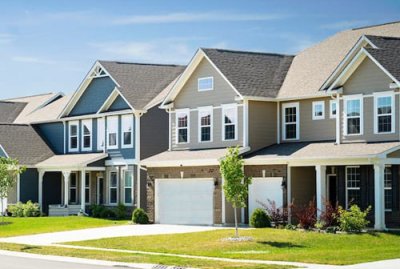
Looking at the housing price trends in Alston over the past year, there has been a continuous upward trend. According to Zillow, the median home value in Alston is $605,894, which is a 3.0 percent increase compared to the previous year (as of 2026). Due to its proximity to Boston University and Harvard, there is a steady demand for rentals, which naturally raises the question of how much property tax one can expect.
The effective property tax rate in Massachusetts averages around 1.11 percent (based on a median home value of $525,800, resulting in an annual tax of $5,813). However, this figure is just the state average, and actual rates can vary significantly by municipality (ranging from $2.18 to $20.50 per $1,000 for residential properties), so it's advisable to check the specific tax rate for the city of Boston.
The most common question is how much down payment is needed. For FHA loans, a credit score of 580 or higher requires a 3.5 percent down payment, while a score between 500 and 579 requires 10 percent. Conventional loans can start at 3 percent for first-time homebuyers or those with an income at or below 80 percent of the area median income, with 5 percent being more typical. If the down payment is less than 20 percent, PMI will apply, but it is waived for 20 percent or more.
Another frequently asked question is about interest rates. As of early July 2026, rates are approximately 6.59 percent for scores above 780, 6.66 percent for the 760 range, 6.75 percent for the 740 range, and 6.91 percent for the 700 range. The average for a 30-year fixed mortgage is around 6.6 percent (ranging from 6.55 to 6.72 percent, according to Freddie Mac PMMS). In areas like Alston, where home prices are high, the impact of credit score differences on monthly payments is more pronounced.
Questions about how to prepare for pre-approval are also common. Basic documents include proof of income for the past two years, two months of bank statements, pay stubs, and identification. DTI (debt-to-income ratio) will also be reviewed. Closing costs should be estimated at 2 to 5 percent of the loan amount, and in high-priced areas like Alston, this cost can be significant. If you plan to stay long-term, a fixed-rate mortgage is advisable, while an ARM may be worth considering if you might move within a few years.
People often ask about assistance if the down payment is a burden. MassHousing offers a standard down payment assistance program that can provide up to $30,000, but the interest-free $25,000 expanded assistance that was temporarily available in the first half of 2026 ended on July 2, 2026, so please check the standard program for details. The income limit is set at 135 percent of the area median income.
When asked about school districts, it can be noted that nearby Newton or Brookline often receive higher ratings on GreatSchools compared to Alston, and Korean families frequently compare these options. School district boundaries change often, so it's important to verify the assigned school before signing a contract.
Questions about the process after making an offer are also common. It is typical to deposit 1 to 3 percent of the purchase price as earnest money, and in competitive areas like Alston, a larger amount can enhance credibility. The home inspection period usually lasts about 7 to 10 days, during which the roof, foundation, plumbing, and electrical systems are checked. Given the prevalence of older buildings in the area, it's common for inspection reports to highlight issues, so it's wise to leave room for negotiation. You should also calculate in advance whether you can cover any cash difference if the appraisal comes in below the contract price. Finally, the question of whether renting or buying is better depends on your plans for residency and financial situation, making it difficult to provide a one-size-fits-all answer. This article does not constitute investment or legal advice, and consulting a professional before making any agreements is recommended.
 HeartPopper
 ChzSlider





 moo moo |
 ultron78 |
 garlic bread |
 Sugar Cream Door Bulletproof Noodles |
 urbanmint |
 Investment Information News Update |
 Later Never Comes |
 Lime berry |
 urban legend |
  coolriver |
  Good Neighborhood, Wealthy District Information |
  Ro Ro Car |
  Amber H |
  new sugar |
  Palm 1000 |
  loran |
  donutfield |
  Tennis City |
  sunny7 |
  Questions about firearms while living in America |
  Shoot Me |
  mochifox |
  zucchini |
  Anna Life |
  Exciting FM Radio |
  pet dog |
  toodin |
  rosed |